Could Quantum Entanglement Explain Telepathic Communication?
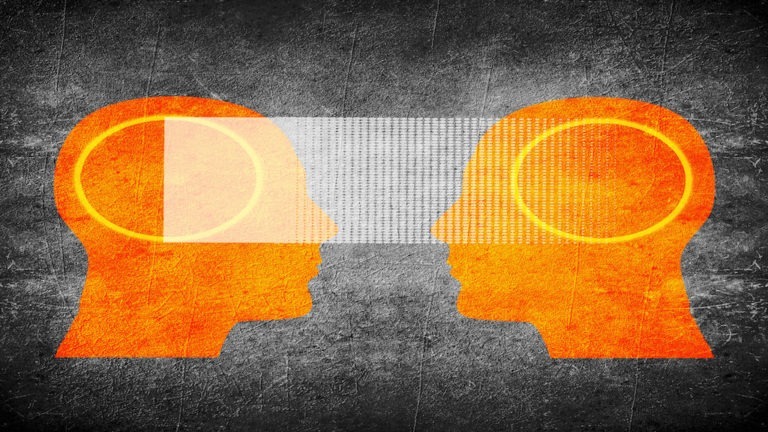
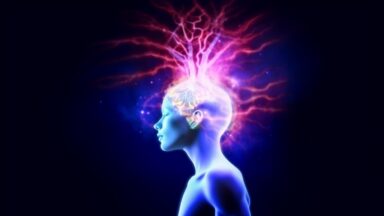
A few years ago, an experiment allowed a test subject in India to communicate with someone in France without speaking or typing. Later that year, another group developed a telepathic interface that allowed two people to collaborate using their minds to play a video game. But these telepathic modalities for our tech gadgets seem analog compared to the psychic telepathy many of us experience at some point in our lives. Could quantum entanglement bridge the gap?
Telepathy Research
Brain-to-brain communication, or what most of us might call telepathy, is currently being developed to build more advanced, convenient interfaces for technology we use today. Though it’s pretty slow at the moment, these interfaces may soon be used to telepathically manipulate wireless devices, control prosthetics, and communicate in new ways.
Our brains are an intricate network of neurons and synapses transmitting electrical signals that become memories, commands, and ideas. And when these neurons transmit data back and forth, they in turn create brain waves, or synchronous oscillations that aggregate and transfer information across different segments of the brain.
Today, those brain waves can be externally translated through the use of electroencephalography, or an EEG cap. These swim caps dotted with electrodes continuously measure the brain’s electric signals in different regions, translating them to data that can pinpoint where in the brain those signals are coming from and what their general intentions are.
In a 2014 experiment, researchers made a breakthrough with a new interface that allowed signals from an individual’s brain to manipulate a robotic exoskeleton, allowing a once-paralyzed man to deliver the opening kick at the World Cup. Scientists involved in these experiments believe they portend a future in which this technology becomes so common, that we will surf the internet and manipulate our devices using thought alone.
So, Does Telepathy Exist?
In this sense, telepathic communication has essentially been proven possible, but what about the type of telepathic phenomena we experience naturally? Most people have experienced some type of uncanny ESP, whether it comes in the form of precognition, clairvoyance, intuition, or remote projection.
But if this phenomenon was measured in the way that brain interfaces work, we would expect to see things like a decay of the brain wave signal over long distances, or interference from other brain wave emissions. Instead, when we experience ESP phenomena, it seems impervious to these things. But, why?
Rupert Sheldrake’s theory of morphic resonance proposes an idea whereby all self-organizing systems in nature tap into a sort of collective memory that is not stored in the brain. Instead, this inherited memory exists psychically and can be accessed without regard to distance.
One aspect of this concept is that memory is passed down through genetics, but not in the sense that the information is written in to our DNA. To the contrary, Sheldrake provides the example of the failure of the Human Genome Project, which was unable to predict whether disease or physical attributes would be passed down based on one’s DNA.
Even for something as simple as height, it turned out that the information gleaned from genetic sequencing provided only five percent confidence in predicting the height of subjects’ progeny, compared to 80 percent confidence in simply measuring the parents’ height.
Instead, this collective memory seems to be passed on within groups of the same species that coexist together, and the more tight-knit a group is, the stronger a psychic bond exists.
In nature, this can be seen in the flocking behavior of birds or fish. When these animals swarm in schools or murmurations they change directions sharply without running into each other. This hive mindset is something unexplained by science, while evidence of some type of telepathic communication may be likely.
But what is the mechanism behind all this? Could it be explained by quantum theory?
The Possible Quantum Explanation
Physicists aren’t fond of what’s becoming a hackneyed theory that there may be a link between quantum physics and our consciousness; nonetheless there seems to be increasing evidence of a connection.
Einstein wasn’t the biggest fan of quantum entanglement, dismissing it as “spooky action at a distance,” because it didn’t fit into his general theory of relativity. But quantum entanglement is now a proven concept being used for quantum computing, and some physicists believe it could play a role in our consciousness.
Sir Roger Penrose first proposed the idea of a connection between quantum processes and consciousness, and he was quickly ostracized for it. The idea was considered sacrilegious to his materialist colleagues, who believed consciousness to be a physical product of the brain.
However, there has been another wave of acceptance for this theory supported by the research of esteemed U.C. Santa Barbara physicist Matthew Fischer. His theory came to him while he was recovering from depression.
Fischer was prescribed antidepressants finding them highly effective and able to lift him out of his slump. But he was astounded to learn that modern medicine doesn’t really have any idea why anti-depressants work the way they do to affect brain function.
Fischer did some research and found an experiment in which scientists gave mice two different isotopes of lithium and observed their behavior. He found that the mice given lithium-6 showed stronger maternal behaviors compared to those given lithium-7. The only difference between the two ions? Nuclear spin.
Nuclear spin determines how long an atom can remain in an entangled state, or how long it remains coherent. With lower spins, the nucleus of the atom interacts with electric and magnetic fields less, slowing its decoherence. In the mice’s brain, the lithium-7 with a higher spin would decohere too quickly, but the lithium-6 worked, despite just a one neutron difference in weight.
This led Fischer to the idea that lithium might interact with the brain through quantum entanglement – for particular chemicals, the spin needs to be just right to entangle with neurons in the brain. This had the profound implication that our cognition may involve quantum processes.
Dean Radin is one of the most notable names studying what he calls “entangled minds.” Radin is the Chief Scientist at the Institute of Noetic Sciences and has devoted much of his career to studying psychic phenomena, under the premise that quantum entanglement may bridge the gap between a seemingly paranormal function and provable science.
Radin says that based on 17th century science, or Newtonian physics, it’s easy to consider telepathy and psychic phenomena as paranormal, but now that quantum entanglement has been proven, and separate objects can be connected at great distances, psi could potentially become a replicable, natural function.
In this regard, it may be possible that the universe itself could be a single, self-entangled object and so could our brains. And if quantum physics is able to prove this, it just might change our entire conception of reality and consciousness itself.
Watch Regina Meredith’s interview with Dean Radin on Open Minds below:
About the Author

Dowsing: What It Is, How It Works, and What It’s Used For

Dowsing is a technique that allows one to detect vibrations or subtle fields present in people, objects, and places. It relies on the natural human ability to perceive energetic frequencies that escape the physical senses but can influence our well-being and our environment.
In this article, we explore what dowsing is, how it works, and how it can help us understand the relationship between mind, energy, and matter.
Table of Contents
- What Is Dowsing?
- Brief History and Evolution of Dowsing
- How Dowsing Works and What Energy It Detects
- Uri Geller and His Relationship With Dowsing
- Tools Used in Dowsing
- Applications of Dowsing in Everyday Life
- Everything Is Energy: Understanding the Basis of Dowsing
What Is Dowsing?
Dowsing is based on the idea that everything in the universe emits a vibrational frequency that can be perceived by the human body. Using tools like pendulums or rods, it is possible to translate this energetic information into physical movements that reveal data about the state of a person, a space, or a situation. This technique starts from the principle that we are sensitive receivers of subtle fields and that this perception can be trained for practical or introspective purposes.
The body acts as a bridge between the visible and the invisible: when it is in a receptive state, it can register signals that bypass logical reasoning and instead reach us through intuition. The movements generated in dowsing tools—such as spins, oscillations, or vibrations—are not caused by the object itself, but by an interaction between the energetic field of what is being consulted and the sensitivity of the dowser.
In addition to its use in the search for water, minerals, or lost objects, dowsing is also used to explore emotional, physical, or spiritual aspects of a person. It serves as a gateway to a more subtle dimension of reality, where mind, energy, and consciousness intertwine in a deep dialogue.
Brief History and Evolution of Dowsing
The use of dowsing dates back to ancient civilizations that used rods or Y-shaped branches to locate underground water or minerals. In cultures such as the Chinese, Egyptian, or Roman, it was acknowledged that the Earth emitted energetic currents that could influence people’s well-being and the harmony of spaces. Over time, this practice took on different approaches depending on the spiritual and scientific traditions of each era.
During the 19th and 20th centuries, dowsing began to be systematized and studied as an energetic discipline. More precise instruments were developed, such as the dowsing pendulum and vibrational measurement scales, which allowed the technique to be applied in fields as diverse as health, geobiology, and the exploration of natural resources. Today, it continues to be used as a complementary tool to explore the relationship between energy, consciousness, and matter.

How Dowsing Works and What Energy It Detects
Dowsing works through the interaction between the energetic field of the environment and the sensitivity of the dowser. When a person enters a relaxed state of attention and holds a tool such as a pendulum or a rod, their body acts as an amplifier that responds to subtle stimuli. The movements produced in the instruments are not random; they reflect an unconscious response that can be interpreted as “yes,” “no,” or as a direction to follow.
The energy detected in dowsing corresponds to vibrations present in everything that exists. These may be related to a person’s vital state, the geobiological energy of a piece of land, the vibrational quality of food, or even emotional imprints that persist in a space. The technique helps identify variations in these fields, aiding in more balanced and aligned decision-making.
The key to how dowsing works lies in its ability to translate the invisible into observable signals. It is not a form of divination, but rather an energetic reading based on a fundamental principle: everything is made of energy, and it is possible to tune into it by training perception and using the right tools.
Uri Geller and His Relationship With Dowsing
Uri Geller, world-renowned for his psychic abilities and telekinetic phenomena, also explored dowsing as a way to understand the energetic field that surrounds us. In the series Uri Geller’s Legacy of Paranormal Experiences, available on Gaia, his experiences with this practice are explored in depth—from its use in the search for deposits to its role in his spiritual transformation.
In the episode From Dowsing to Spirituality, Geller reveals how this technique was key to opening new dimensions of perception in his life.
Tools Used in Dowsing
Although energetic perception can be developed without instruments, many people use tools that amplify and translate subtle impulses into physical signals. These tools hold no inherent power but function as extensions of the operator’s field of consciousness. Each one serves a specific purpose and can be adapted to different types of energetic inquiry.
- Dowsing pendulum: A small mass suspended by a thread or chain. It moves according to the energetic vibrations of the environment and provides simple answers (yes, no, maybe).
- L-shaped rods: Two metal rods bent at right angles. They are used to explore physical spaces and detect energetic alterations in a location, such as geopathic stress or underground currents.
- Y-shaped rod (or forked stick): Traditionally used to find underground water. The tip lowers when the operator approaches a source or flow.
- Aurameter: A rod with a spiral or sphere at the tip. It is used to measure the energetic field (aura) of people, animals, or objects.
- Biometer or Bovis scale: A numerical scale that measures the “energetic vitality” of something. It helps determine whether an energy is high, low, or neutral.
- Witnesses or energetic samples: Objects or photographs that represent what is being searched for. They help focus the search by acting as a point of connection with the target’s energy.
- Dowsing charts or bases: Templates with symbols or geometric shapes. These are placed under the pendulum to guide and refine responses.
Applications of Dowsing in Everyday Life
Dowsing is not only used in spiritual or therapeutic contexts, but also in practical aspects of daily life. Thanks to its ability to detect energetic imbalances, it is used as a tool for guidance, diagnosis, and harmonization at both a personal and environmental level.
- Energetic health: It can be used to identify blockages or imbalances in a person’s energetic field. This helps guide complementary healing practices.
- Food selection: Dowsing helps evaluate the vibrational charge of foods before consuming them, allowing for choices that are more aligned with physical well-being.
- Space harmonization: It is used to detect areas with dense energy in the home or workplace. Measures can then be applied to restore balance to the environment.
- Searching for objects or water: Traditionally, it has been used to find lost objects or underground water sources. The tool acts as a sensor that responds to energetic traces.
- Decision-making: Some people consult dowsing when choosing between important options. The pendulum, for example, may reflect which alternative is more aligned with the person consulting.
- Evaluation of objects or crystals: Dowsing allows the energy of amulets, crystals, or ancient objects to be measured, helping determine whether their frequency is beneficial or needs cleansing.
Everything Is Energy: Understanding the Basis of Dowsing
The foundation of dowsing lies in a fundamental understanding of the universe: everything is made of energy. Beyond visible matter, every being, object, and place emits a unique frequency that can be perceived by those who refine their sensitivity. This energy is not mystical or exclusive to spirituality; it is part of the invisible fabric that sustains physical reality.
When a person trains their ability to perceive these subtle fields, they can access a deeper dimension of the world around them. Dowsing is a tool that facilitates this access, acting as a translator between the energetic and the tangible. By detecting vibrations, it allows for more conscious decision-making, the harmonization of environments, and a deeper understanding of the connections between body, mind, and surroundings.
In the series Superhuman: The Invisible Made Visible, available on Gaia, cases and experiments are presented that demonstrate the power of the mind to interact with energy. Through scientific research and real-life experiences, the series offers a fascinating look at our perceptual abilities and how they can be trained to expand our understanding of reality.