The Minor Arcana of Tarot and Their Meanings
The minor arcana are a set of cards within the tarot deck that reflect concrete situations, emotions, and decisions that form part of everyday life. Through their symbols, they allow us to understand how internal processes manifest in actions, relationships, and real experiences.
In this article we explore what the minor arcana are, how they differ from the major arcana, and what the meaning of their main structures is.
Table of Contents
- What Are the Minor Arcana of Tarot?
- Differences Between Major and Minor Arcana
- Meaning of the Suits in the Minor Arcana
- General Meaning of the Cards in the Minor Arcana
- How to Interpret the Minor Arcana in a Reading
What Are the Minor Arcana of Tarot?
The minor arcana are a set of 56 cards within the tarot deck that focus on practical and concrete aspects of life. Unlike the major arcana, these cards reflect daily situations, emotional states, and decisions that arise in different contexts, showing how processes develop on the most immediate level.
They are organized into four suits: wands, cups, swords, and pentacles, each associated with a specific area of human experience. In turn, each suit is made up of numbered cards from the ace to the ten and court figures, which allows for interpretation of everything from initial impulses to the complete development of a situation with greater precision.
Differences Between Major and Minor Arcana
The tarot deck is divided into major and minor arcana, two groups that function in a complementary way within a reading. The major arcana are composed of 22 cards that represent deep processes of transformation, essential lessons, and key moments that mark important stages in life, pointing to internal changes and situations of great impact on personal and spiritual development.
On the other hand, the minor arcana focus on the immediate, on what happens day to day and builds everyday experience. They reflect relationships, challenges, thoughts, and emotions that, although they may seem simple, are fundamental for understanding the complete context of a spread and complementing the message of the major arcana.
In the series Mystery Teachings of the Tarot, available on Gaia, the symbolic meaning of each card is explored in depth, as well as how to interpret the minor arcana within a complete reading. This series shows how to integrate these messages into daily life, facilitating a clearer understanding of tarot as a tool for self-knowledge.
Meaning of the Suits in the Minor Arcana
The suits in the minor arcana represent different dimensions of human experience and allow the type of energy present in a reading to be classified. Each one — wands, cups, swords, and pentacles — is associated with a specific area, such as action, emotions, thought, or the material world, facilitating a clearer and more structured interpretation of the cards.
-
Wands: Energy, Action, and Purpose
The suit of wands is linked to energy, initiative, and the motivation that drives action. These cards tend to appear when there are projects underway, ideas beginning to develop, or situations that require decision and focus to move forward with clarity. They represent the initial impulse and the force needed to set something in motion.
They are also related to personal purpose and the direction one chooses to follow at different moments in life. Wands reflect how internal energy is channeled toward concrete goals, showing both the initial enthusiasm and the challenges that may arise in sustaining commitment over time.
-
Cups: Emotions, Intuition, and Relationships
The suit of cups is associated with the emotional world, intuition, and the affective bonds built with other people. These cards speak of feelings, deep connections, and internal experiences, allowing us to understand how a person relates emotionally in different contexts.
In addition, cups reflect sensitivity and intuitive perception in the face of different life situations. They indicate processes of emotional opening, healing, or relationship dynamics, showing both states of harmony and possible imbalances in the emotional realm.
-
Swords: Mind, Conflict, and Truth
The suit of swords is related to thought, communication, and the mental processes that influence decision-making. These cards tend to appear in contexts where there is analysis, questioning, or a need for clarity, reflecting how situations are interpreted through logic and reason.
They are also associated with conflicts, tensions, and truths that must be faced, even when uncomfortable. Swords show both mental challenges and the capacity for discernment, pointing to the importance of seeing things objectively and acting with honesty in the face of reality.
-
Pentacles: Matter, Work, and Abundance
The suit of pentacles is linked to the material world, resources, work, and economic stability. These cards reflect how security is built in concrete life, including aspects such as money, profession, long-term projects, and the relationship with the tangible.
In addition, pentacles speak of the value of effort, consistency, and planning in achieving results. They represent processes of sustained growth and practical development, showing how concrete actions can generate stability, abundance, and well-being over time.
General Meaning of the Cards in the Minor Arcana
Just as the major arcana describe a journey of transformation through different stages, the minor arcana also present an evolutionary structure within each suit. Each series, from the ace to the ten, along with the court figures, shows how an energy develops from its initial appearance to its maturity and most complete expression.
This sequence allows the cards to be understood as part of a process in motion and not as isolated events. Through this logic, tarot offers a more precise reading of the moment being experienced, showing not only what is happening, but also where that situation is heading and what learning it implies within the process.
General Meaning of the Numbered Cards
The numbered cards of the minor arcana describe the progressive development of an energy within each suit, from its beginning to its culmination. Each number represents a specific stage that allows us to understand at what point a situation stands, showing evolution, challenges, and lessons throughout the process with greater clarity.
- Aces — beginnings, potential, and opportunities: They represent the start of a cycle and the emergence of new possibilities in a specific area of life. They indicate available energy that can develop if approached with intention and clarity.
- Twos — duality, choice, and balance: They reflect the need to make decisions and find balance between two forces or paths. They can also point to initial tensions that require adjustment and awareness to resolve.
- Threes — growth, expansion, and expression: They indicate development and first results after an initial stage, showing that energy is beginning to manifest. They are also associated with collaboration, creativity, and shared progress in different contexts.
- Fours — stability, structure, and pause: They represent moments of consolidation, order, and the search for security within a process. They can point to both stability and a certain rigidity, depending on the context in which they appear.
- Fives — change, tension, and learning: They express conflicts, challenges, or ruptures that force adaptation and growth. These cards invite one to move through discomfort as a necessary part of learning and transformation.
- Sixes — harmony, transition, and progress: They signal a stage of balance after difficulty, where stability begins to be restored. They also reflect movement toward a more favorable and conscious resolution.
- Sevens — reflection, challenge, and strategy: They indicate moments of internal evaluation and analysis before moving forward. They can also imply tests that require focus, strategy, and a greater taking of awareness.
- Eights — movement, mastery, and transformation: They represent sustained progress, continuous action, and the development of skills through practice. These cards show active advancement and changes that consolidate over time.
- Nines — culmination, maturity, and introspection: They signal the near closing of a cycle, accompanied by deep reflection and understanding. They also invite evaluation of what has been learned before moving on to a new stage.
- Tens — closure, integration, and a new cycle: They represent the culmination of a process and the integration of its results into experience. They often indicate the end of a stage that opens the way to a new beginning with greater clarity.
General Meaning of the Court Figures
The court figures in the minor arcana represent aspects of personality, attitudes, or ways of acting in the face of different situations. Unlike the numbered cards, which show processes, these cards tend to indicate how energy is expressed on a more conscious level, whether through a person, an internal attitude, or a specific way of facing reality.
- Pages — learning, curiosity, and messages: They represent the beginning of knowledge and openness to new experiences. They also indicate news, exploration, and a receptive attitude toward the unknown.
- Knights — action, pursuit, and movement: They reflect impulse, direction, and the need to move toward a concrete goal. These cards show active energy, though they can sometimes point to impulsiveness or a lack of reflection.
- Queens — intuition, maturity, and receptivity: They represent a more internal energy, associated with deep understanding and emotional or mental management. They indicate maturity, sensitivity, and a more conscious connection with one’s surroundings.
- Kings — authority, mastery, and leadership: They symbolize control, structure, and the capacity to direct situations with clarity. These cards reflect leadership, decision-making, and mastery over a specific area of life.
How to Interpret the Minor Arcana in a Reading
Interpreting the minor arcana requires observing both the individual meaning of each card and its place within the sequence of the suit. Understanding at what stage the energy stands — beginning, development, conflict, or closure — allows context to be given to the reading and avoids isolated or superficial interpretations.
It is also important to consider the interaction between cards and how they relate to one another within the spread. The minor arcana provide concrete details about situations, emotions, and decisions, helping to build a more complete and precise vision of what is happening.
Finally, an effective reading integrates the technical meaning of the cards with the intuition and experience of the reader. By combining structure, observation, and sensitivity, the minor arcana become a clear tool for understanding everyday processes and making decisions with greater awareness.
About the Author

What Are Master Numbers and What Do They Mean in Numerology
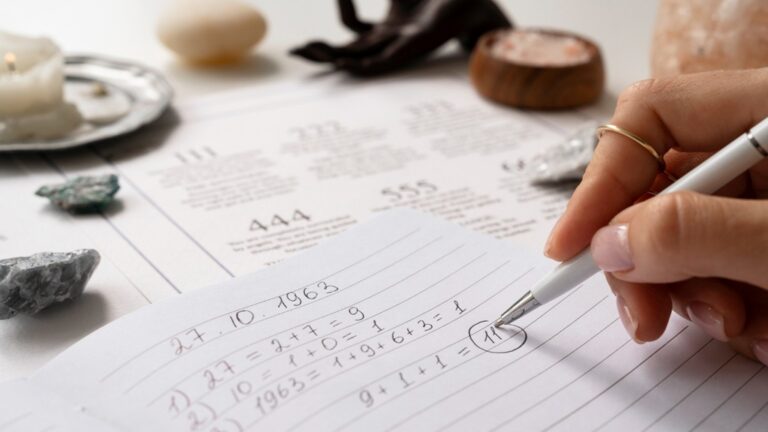
In numerology, some numbers carry a different significance than the rest and are considered especially important within the numerological chart. These numbers appear in various calculations and are associated with a deeper level of personal development and more demanding processes.
In this article, we explore what master numbers are, why they are considered special, and what meaning they hold within numerology.
Table of Contents
- What Are Master Numbers and Why Are They Special?
- The Meaning of Master Numbers in Numerology
- How to Know If You Have a Master Number in Your Numerological Chart
- How to Integrate the Energy of Master Numbers Into Your Life
What Are Master Numbers and Why Are They Special?
Master numbers are those that, within numerology, hold a special significance and are interpreted differently from the rest. They are considered numbers with greater relevance within the numerological chart, as they are associated with deeper development processes and a broader potential.
Unlike other numbers, which are reduced to a single digit (for example, 14 becomes 5), master numbers are not simplified. This is because they are not interpreted the same way as single-digit numbers — they carry an additional meaning that can only be understood when kept in their original form.
The best-known master numbers are 11, 22, and 33, although some approaches also include 44 as an extension of this category. Each of these numbers combines the energy of its base number with a deeper level of development, which can manifest as greater sensitivity, responsibility, or capacity for influence.
Compared to single-digit numbers, which represent more defined and concrete qualities, master numbers imply a more demanding development process. This means their energy does not always express itself automatically — it requires awareness and inner work to manifest at its highest level.
In the series The Other Side, available on Gaia, numerology is presented as a tool for analyzing the relationship between numbers and human experience. In the Numerology episode, it is explained how this practice has evolved over time to illuminate behavioral patterns and inner processes.
The Meaning of Master Numbers in Numerology
Each master number holds a specific meaning within numerology and expresses a particular form of personal development. Although they share the characteristic of not being reduced and carrying a broader potential, each one is associated with distinct qualities, challenges, and forms of expression that influence the way a person lives their process.
-
Master Number 11
Master number 11 is associated with intuition, perception, and the ability to understand aspects that are not always apparent. It tends to appear in people with a heightened sensitivity, who easily pick up on what is happening around them and have a more direct connection with the emotional or symbolic.
At the same time, this sensitivity can generate instability or doubt if it is not managed consciously. The challenge of number 11 is learning to trust that perception without being overwhelmed by it, developing inner clarity and balance in the way what is perceived is interpreted.
-
Master Number 22
Master number 22 is linked to the ability to bring ideas into practice and build concrete results. Unlike the 11, which is more oriented toward perception, the 22 combines vision with action, making it possible to transform concepts into real and sustainable projects.
Its main challenge is sustaining that capacity over time without losing direction or falling under the pressure of achieving results. When expressed in a balanced way, the 22 can generate long-term impact, as it unites planning, commitment, and a clear vision of what it seeks to build.
-
Master Number 33
Master number 33 is related to accompaniment, responsibility toward others, and the ability to generate well-being in one’s environment. It is associated with an attitude of service, where the person tends to become involved in the growth or care of those around them.
However, this orientation can lead to overload if clear boundaries are not established. The learning of the 33 consists of helping without neglecting oneself, maintaining a balance between dedication to others and one’s own well-being.
How to Know If You Have a Master Number in Your Numerological Chart
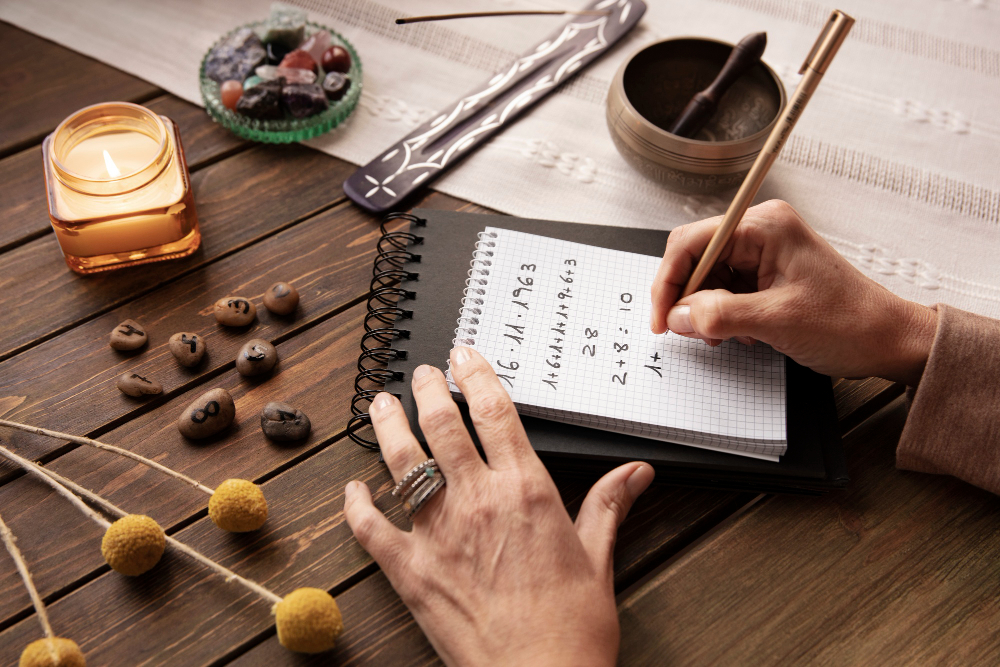
Master numbers can appear in various results within a numerological chart, which is the analysis carried out from the date of birth and full name to understand different aspects of a person’s life. Through these calculations, it is possible to identify tendencies, challenges, and forms of personal development.
To find out if you have a master number, you first need to calculate the main numbers of your numerological chart and check whether an 11, 22, or 33 appears in any of them. If one of these numbers is present, it means that area of your chart expresses a more intense energy and a broader potential, which can manifest as greater sensitivity, responsibility, or depth in that aspect of life.
Master numbers can influence different areas of your chart, and each one shows how that potential expresses itself in your life:
- Life path number: Represents the general path of life and the most important lessons. If a master number appears here, it indicates a more demanding process, with challenges that drive deeper personal development.
- Destiny number: Related to what you are here to develop and express in the world. A master number in this position points to broader talents, but also a greater responsibility in how they are used.
- Soul number: Reflects what moves you internally and your deepest motivations. When a master number appears here, it indicates greater emotional intensity and a deeper inner search throughout life.
How to Integrate the Energy of Master Numbers Into Your Life
Integrating the energy of master numbers means understanding that this is a potential that develops over time. In many cases, this energy does not fully manifest from the beginning — it first expresses itself through the qualities of the base number, and over time it can evolve toward a deeper and more conscious form.
It is also important to learn to observe how it manifests in daily life. In many cases, this energy may first appear as challenge, doubt, or emotional intensity, before expressing itself more clearly. Identifying these patterns allows you to work with greater awareness and avoid rejecting aspects that are actually part of your own growth process.
Finally, integrating a master number means bringing that potential into the concrete. It is not only about understanding its meaning, but about applying it in decisions, relationships, and personal projects. When this energy is channeled in a practical and balanced way, it ceases to be an abstract idea and becomes a real tool for personal development.