Consciousness Might Be Explained By Multiple Personality Disorder

Consciousness Might Be Explained By Multiple Personality Disorder
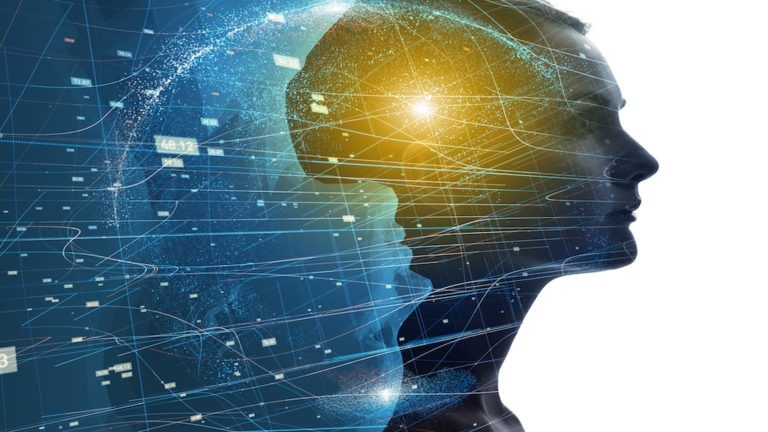
The idea that our sentience may be the product of a conscious universe experiencing itself is not a new one – in fact, it’s the central philosophy behind more than one religion, i.e. Hinduism, Buddhism. But now, a paper published by philosopher Bernardo Kastrup, has laid out a convincing argument to reconcile this idealist theory with dissociative identity disorder (DID), otherwise known as multiple personality disorder.

Those suffering from DID exhibit at least two disparate personalities experiencing reality through distinctly separate lenses, despite inhabiting the same physical body. These personas, known as “alters,” can sometimes be completely unaware of each other’s being, compartmentalizing their lives and essentially leading parallel existences.

Scientists discovered that DID sufferers’ various alters can affect attributes of the body to the point that brain functions will literally change when a new personality takes over. For instance, EEG tests showed that the region of the brain associated with vision actually shut down while a blind alter took over a patient’s body. When a sighted alter took over, that region of the brain resumed normal function.

It’s undoubtedly difficult to lead a normal life if you suffer from DID, but if it’s possible for this level of dissociation, in which multiple personalities with their own sense of individual self can occupy a single psyche, then what’s to say that an analogous mechanism isn’t at work in the relationship between our individual consciousness and a greater universal consciousness?

Kastrup likes to call this universal consciousness “mind at large,” and he describes our relationship with it like the essence of a tree. Our individual psyches branch off in their own directions, but at their roots beneath the soil, they grow out of a greater individual organism. And the reason we’re unable to see that connection is due to that layer of soil, or what Kastrup refers to as the obfuscation of our collective consciousness.

Maybe a better example of this can be seen through the individual neuron in the brain; a microscopic cell that receives, processes, and transmits information through electrical and chemical signals. There are billions of individual neurons throughout the brain, connected through dendrites and axon fibers, which pick up small bits of data to transfer and inform the greater organ as a whole.

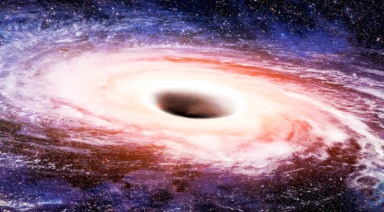
Our individual consciousness is much like an individual neuron in the brain, receiving, processing, and transmitting data between other neurons within synapses and neural circuits, informing the greater whole we call society and humanity. This comparison is even more intriguing when you compare images of a simulated map of the known universe with the brain cells of a living being; the similarities are uncanny.
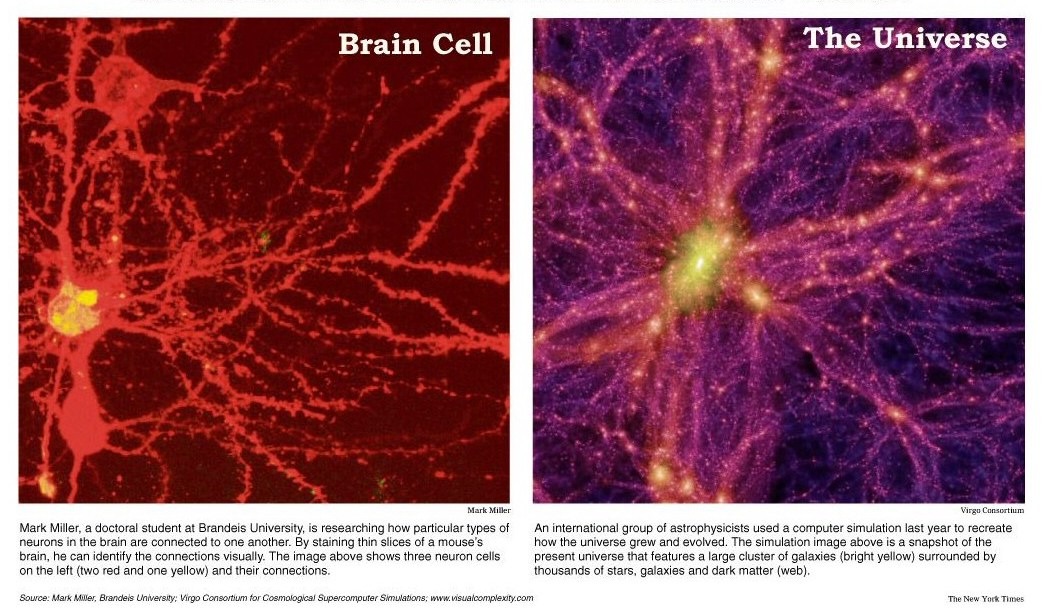
neuron galaxy 2

Kastrup is a staunch opponent of the materialist view that our mind is a product of the brain. This view says that the physical world, or matter, is the fundamental substance of nature, and that it dictates reality. It says our minds, and subsequently our consciousness, can be reduced to the product of predictable, physical interactions in the brain, explained through metrics such as mass, momentum, charge, and spin.

But materialism has an irresoluble issue, known as the hard problem of consciousness; that these metrics used to define matter can’t be applied to our subjective experience of reality. We have no universal measurement to describe the way something makes us feel. Try explaining the color red or the happiest you’ve ever felt – qualia prevent our consciousness from being defined by these standards.

And according to Kastrup, any attempt to solve the hard problem of consciousness by viewing consciousness as the product of our reality is futile. Conversely, viewing reality as the product of our consciousness makes the hard problem of consciousness a moot point. You can’t prove that this reality exists without consciousness, and if we continue to try to argue this point we find ourselves trapped in circular reasoning.

There’s no consciousness in our body/brain system, our body/brain system is in consciousness. Our brain is a second-person perspective of a first-person experience. These are Kastrup’s intrinsic tenets.

When we look back at the cosmos, or our reality, we’re observing the universe’s mental processes outside of our own individual alter. Our lives are a dissociative process of the universe’s consciousness and everything we see is simply another dissociative process of the mind at large.

Has Kastrup’s monistic idealism solved the hard problem of consciousness or simply sidestepped it?


Watch the documentary Conscious States of Dying in which Stanislav Grof discusses various cultures’ perspectives on our state of consciousness after death:


How to Remember Your Past Lives: 3 Ways to Access Past Life Memories

Sometimes life feels familiar in ways that are hard to explain. You meet someone and feel you’ve known them forever. Or you travel somewhere new and something deep inside stirs, like a memory you can’t quite place. Maybe these are traces of memories of past lives, or maybe they’re just intuition. Either way, they’re worth paying attention to.

Patterns often repeat themselves. Unexplained fears. Sudden talents. Relationships that circle back to the same lessons. These moments might be echoes from a previous life still influencing your present life.

Exploring past life experiences is not only about curiosity. It can be about understanding how your soul’s history continues to shape who you are. You might not find clear answers at first. Insights rarely arrive as complete stories. They show up in fragments, symbols, and emotions. Sometimes they make sense only later.

Table of Contents

Can You Access Past Life Memories?

The idea of reincarnation suggests that human beings live more than one lifetime, each one leaving behind energetic and emotional imprints. Most people don’t consciously recall memories of previous lives, but certain practices can help open the door to them. Techniques like deep meditation, past life regression, or exploring the Akashic Records can reveal glimpses that feel older than this lifetime.

For some, these insights appear as flashbacks, vivid dreams, or waves of emotion. For others, it’s just a subtle pull toward a person, a place, or even a time period. In my experience, it’s unpredictable. You can’t force it, and that’s often what makes it meaningful.

The process takes patience. Sometimes fragments come together slowly, piece by piece. You might feel a sensation before you see an image, or recognize a lesson before you know its origin.

How Past Lives Might Shape Your Present Life

Emotional patterns often carry forward from former lives. Dr. Ian Stevenson, a psychiatrist who studied young children recalling memories of past lives, documented cases where birthmarks matched fatal injuries described in these memories. Whether you see this as scientific or spiritual, it’s hard to ignore the consistency of such reports.

These imprints may not prove anything, but they do suggest continuity between lives. A certain fear, gift, or attraction could reflect something unresolved or unfinished from a previous life. Recognizing these connections can bring clarity and healing in current life.

I once worked with someone who had a deep fear of the ocean. Through past life regression therapy, guided by a trained hypnotist, she recalled a drowning incident from what felt like another lifetime. The memory came in pieces, more feeling than image. Still, acknowledging that connection helped her let go of the fear over time. Experiences like this show how understanding past life experiences can release something held deep in the subconscious.

Watch Full Video FREE!

Signs You Might Have Lived Before

Even if you never access vivid memories, signs of former lives can appear in subtle ways:

  • A powerful connection with someone you’ve just met
  • Fascination with a specific era or culture
  • Unexplained fears or emotional triggers
  • Skills or talents that seem to come naturally
  • Dreams or visions that feel oddly specific

Most people notice just one or two of these patterns. Others find the signs everywhere once they start paying attention. Sometimes a single clue opens a path toward remembering more.

In my experience, recognizing a familiar emotion or attraction can be just as revealing as a full flashback. It’s less about proving a past and more about noticing what the soul is trying to show you now.

Recordar Vidas Pasadas

Three Ways to Explore Past Life Memories

1. Deep Meditation

Deep meditation is one of the simplest ways to open the mind to memories of past lives. The key is to relax and observe whatever comes up without judgment. Images, sensations, or feelings may surface. Some might seem random. Others might carry a weight that feels ancient.

Before beginning, it can help to set a quiet intention, such as:

“I’m open to seeing what my soul wants me to understand.”

Then you simply allow the experience. Don’t chase it or analyze too soon. In my experience, the most authentic insights from former lives come gently, not dramatically. Even a fleeting moment of recognition can hold meaning.

2. Past Life Regression Therapy

Past life regression therapy uses relaxation and visualization to uncover memories of previous lives stored in the subconscious. A trained hypnotist guides you into a meditative state, helping you move beyond surface thoughts. Some people experience vivid scenes or sensations that feel like a flashback to another existence.

Whether these experiences are literal or symbolic, they often reveal emotional truths. They can explain patterns that don’t make sense in your present life or help resolve fears that seem to have no origin.

I once met someone who had always struggled to speak publicly. During past life regression, she recalled a lifetime where her voice had been silenced by strict authority. That realization gave her the courage to use her voice more freely in her current life. Even if symbolic, the experience carried emotional truth.

3. Exploring the Akashic Records

The Akashic Records are said to contain every thought, action, and experience the soul has ever had. Accessing them, either independently or through a reader, allows you to explore lessons across past lives and recurring patterns of growth.

When people tap into these records, they often describe sensations of recognition more than visual imagery. Insights come as feelings, intuitive words, or brief impressions. You might discover why certain people or challenges keep reappearing, or how your soul’s history is guiding your spiritual awakening.

Even a few minutes of connection can shift how you see your current life. These insights don’t have to be dramatic to be meaningful.

Integrating What You Discover

Exploring past life memories is not about getting lost in the past. It’s about using what you find to better understand your choices now. A glimpse into a previous life might explain an ongoing struggle or illuminate a hidden strength.

In some cases, the lesson might be an emotional release. In others, it could be creative inspiration or reconciliation. What matters most is how the experience influences your perspective in the present life.

It helps to write down what you recall after meditation or regression. Don’t try to label everything as fact or fiction. Treat it as information from your inner world, something your soul is offering for reflection.

The Story of Matías De Stefano

Spiritual teacher Matías De Stefano has captivated audiences with his extraordinary ability to recall multiple past lives since childhood. Unlike those who access memories through regression, Matías’ recollections emerged naturally and in vivid detail, spanning ancient civilizations, planetary histories, and metaphysical dimensions.

Through his Gaia podcast and original series The Journey of Remembering, Matías shares how his memories shaped his understanding of the universe and his role in the collective spiritual awakening. His story offers profound insight into how connecting with the memories of past lives can guide us toward purpose, unity, and a deeper remembrance of who we truly are.

Just as with Matías’s experience, remembering past lives invites us to explore the continuity of consciousness and to see life as an unfolding journey rather than a single chapter. Whether through meditation, past life regression, or the Akashic Records, these methods can open the door to self-discovery and healing.

Ultimately, the value of these experiences lies not in proving their accuracy but in how they help us grow, evolve, and live our present life with peace, clarity, and a renewed sense of purpose.

Living With Past Life Awareness

Understanding past life experiences and exploring the soul’s history is not about proof or persuasion. It’s about awareness. Insights from past lives can explain repeating patterns, clarify emotional attachments, or simply remind you that growth is continuous.

Whether through deep meditation, past life regression, or the Akashic Records, each method opens a doorway to reflection. Sometimes that reflection is subtle, almost imperceptible. Other times it feels profound, as if you’ve remembered something essential about who you are.

Ultimately, remembering past lives isn’t about living in the past. It’s about carrying forward what matters most into the present life. Each glimpse, each small understanding, becomes part of how you live more consciously now.

Read Article

Our unique blend of yoga, meditation, personal transformation, and alternative healing content is designed for those seeking to not just enhance their physical, spiritual, and intellectual capabilities, but to fuse them in the knowledge that the whole is always greater than the sum of its parts.


Use the same account and membership for TV, desktop, and all mobile devices. Plus you can download videos to your device to watch offline later.

devices en image
Testing message will be here