Scientists Just Inserted a Human Intelligence Gene Into Monkeys
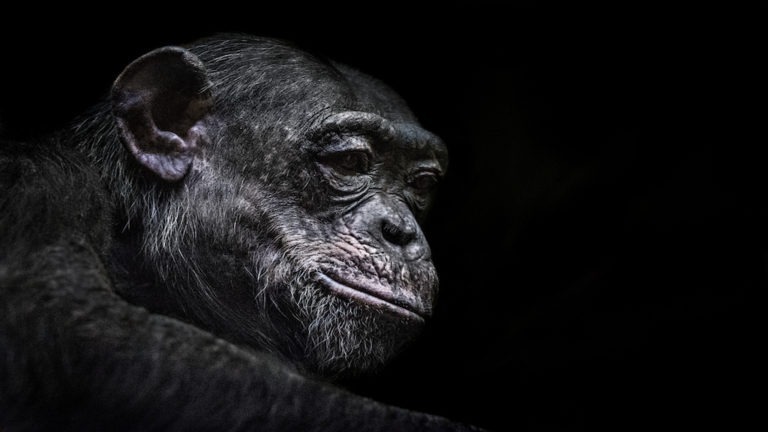
A team of Chinese scientists recently inserted copies of a human gene believed to be associated with intelligence, into the brains of rhesus monkeys in an attempt to narrow the intellectual evolutionary gap. And according to their results, monkeys who were introduced to MCPH1 showed “remarkable” improvements in short-term memory.
The experiment sparked similar ethical concerns as when a Chinese scientist modified the genes of a human baby late last year, using CRISPR technology to give it HIV immunity.
But despite the dreadful image of an ape with near-human sentience, à la Cornelius from Planet of the Apes, the study arouses some interesting relevance to the ancient astronaut theory that humans may have been seeded by an advanced species from elsewhere in the cosmos.
Unlike the incredibly extensive amount of time it takes for most physical traits to evolve, the human brain’s evolution happened extraordinarily fast. In the span of about two to three million years – a blip on evolutionary timelines – our brains doubled in size, and subsequent intellect. What was the catalyst for such rapid growth? Did someone introduce some gene(s) to our ancient hominid ancestors, like Australopithecus, which turned us into the intelligent Homo sapiens we are today?
The specific gene involved in the Chinese study is known as MCPH1, or microcephalin, which can lead to babies with small heads if damaged in humans. In addition to improved memory, scientists noticed the monkeys’ born with the MCPH1 gene took longer for their brains to develop, much like the extensive time it takes human brains to fully develop, though there wasn’t a noticeable increase in the monkeys’ brain size.
Scientists introduced between two and nine copies of MCPH1 into a group of monkey embryos, raised them, and then gave them memory tests.
But after the negative backlash from the international community of biologists it’s unlikely Bing Su, the leading geneticist involved in the study, will continue these experiments much further.
Though with China’s lax ethical standards when it comes to this type of bioengineering, it’s tough to say for sure.

“Although their genome is close to ours, there are also tens of millions of differences,” Bing Su told the MIT Tech Review. “Impossible (that the monkeys would become something other than a monkey) by introducing only a few human genes.”
It doesn’t seem too far off that messing around with a few more genes or introducing enough of a specific gene from another species might tilt the scales in the direction of some chimeric creature. Scientists have already experimented with the creation of chimeras – just ask Alex Jones. Of course, they didn’t allow them to develop past fetal stages, or so they claim.
And China certainly isn’t the only country experimenting with human brain cells in animals, as U.S. scientists have done the same with mini-brain organoids implanted in mice. They say these may be developed as mini cortex repair kits for humans someday to treat conditions like Alzheimer’s.
But is it even possible to bestow human intelligence on a less developed ancestral species, and if one allowed these species to continue to evolve over millions of years, would this subtle intervention eventually lead to a more advanced version of that species? If so, would this prove that our intelligence may have been seeded from a more advanced biological ancestor of our own?
For that we’ll have to defer to Erich von Däniken and this episode of Beyond the Legend:
About the Author

Should We Be Hesitant to Embrace Transhumanism?
The human body has somewhere in the vicinity of 50 to 100 trillion cells, depending on who you ask. Each of these cells has .07 volts of electrical energy potential — a relatively small number you might say. But when you multiply those .07 volts times 50 to 100 trillion, you get somewhere between two and a half, to five trillion volts. We are powerhouses of electrical energy potential.
Yet for some, this potential isn’t enough. In the minds of transhumanists, the body is a work in progress — one in which we must actively improve toward some perceived ideal. In some circumstances they may be right; our bodies are not all created equally, some face deformities and defects, or aren’t built as sturdy as others, making a good argument for the need to artificially augment.
But according to researcher and author Gregg Braden, this is a slippery slope — one in which we must tread with caution while appreciating the truly high-tech construction of the biological suits we’ve found ourselves born into.
“All of the technology that is now being developed in the world around us, and I worked in the Cold War years in the defense industry, space-based lasers, ‘Star Wars’ Defense Initiative… and I have yet to this moment, seen any tech in the world around us that does not mimic what we already do in our cells, except our cells do it better,” Braden said in a recent interview with Regina Meredith on Open Minds.
With advancements in microchip technology, futurists envision a world in which we begin to work toward almost complete integration with technology and computers. Some even go so far as to believe we will one day be capable of transferring our consciousness onto a hard drive composed of microscopic silicon chips, experiencing the world through that mechanistic, binary scope of the computer — potentially allowing humans to achieve something that looks like immortality.
But this reductionist mindset of the materialist, scientific lens is incredibly arrogant, Braden said.
Firstly, science’s “hard problem of consciousness” currently limits it from understanding what exactly consciousness is and where it comes from. And secondly, would this really even be the same kind of consciousness? Can you separate consciousness from our biological nature? And if you could, why would you?
Those are the two trains of thought when it comes to the views of our advancing technology and the transhumanist movement, Braden said.
One side views it as, “If we were never supposed to learn how to achieve such a feat, why have we gotten this far?”
While the other side says, “Just because we can, doesn’t mean we should.”