2026: A New World – The Year of Great Beginnings

Table of Contents
- The Fire Horse (Chinese Astrology)
- Key Planetary Alignments of 2026: The Celestial Forces
- January 2026: Decisions and Closures (Venus Star Point in Capricorn)
- February – March: The Digital Revolution (Eclipses in Aquarius and Virgo)
- The Historic Conjunction: Saturn and Neptune at 0 Degrees in Aries (February 20th)
- Uranus in Gemini: The Revolution of the Mind (Beginning April 26th)
- Jupiter in Leo: The Awakening of the Heart (Beginning June 30th)
- August: The Total Solar Eclipse in Leo (August 12th)
- Venus Retrograde in Scorpio (October-November)
- Preparing for 2026: A Quarterly Guide
- Final Advice: Being Human
This article is presented as an initiation to enter the great portal of 2026, which will be remembered as the year of great beginnings.
2026 is identified as a collective turning point, a quantum leap in human consciousness, and spiritual and technological revolution that will usher in a new generation. It will be a year of radical innovation, inevitable change, and a peace that will make it impossible to go back to the way things were.
The year 2026 is year 1 in numerology (2+0+2+6=1), the year of the seed, of destiny, and of a new karmic cycle.
2025 was the Year of the Snake, a year that bridged and created a threshold between two worlds. The Virgo-Pisces eclipses forced us to shed our skin and release our burdens, stripping humanity of the unnecessary.
The Fire Horse (Chinese Astrology)
In Chinese astrology, 2026 is the Year of The Fire Horse, which officially begins on February 17th. This archetype demands movement, decision, freedom and courage, and favors those who dare to gallop into the unknown.
Key Planetary Alignments of 2026: The Celestial Forces
2026 arrives with unprecedented force, marked by significant lineups.
January 2026: Decisions and Closures (Venus Star Point in Capricorn)
The year begins with the Venus Star Point on January 6 in Capricorn, accompanied by Mars. The conjunction marks the culmination and final resolution process (relationships, partners, and projects) that have been developing since January 2022.
- January is a month of reckoning: what was half built is completed, and what no longer served its purpose dissolves.
- The exact opposition to Jupiter on January 10th amplifies this climax, illuminating what must move forward.
- The New Moon in Capricorn on January 18th opens the door to the first eclipse season and acts as a fruitful void for redesigning the system from the ground up, demanding maturity and autonomy.
February – March: The Digital Revolution (Eclipses in Aquarius and Virgo)
The first eclipse season will set the technological and social tone for 2026. It will be the strongest of the year.
- The Annular Solar Eclipse in Aquarius (February 17th): The first eclipse in this series in over 18 years, it signals the end of technological codependency, the collapse of digital systems, and a collective reflection on social media and AI. This cycle will last until 2028 and will drive advancements in AI, robotics, and astronomical discoveries.
- The Total Lunar Eclipse in Virgo (March 3rd): Echoing the March 2025 eclipse, it reshapes how we work, care for our bodies, and organize our lives. It eliminates outdated routines and ushers in new technologies, automations, and the potential use of robots in service.
- Consequences: Solar events and geomagnetic storms may necessitate upgrades to energy infrastructure, leading to a search for new electricity sources in the face of a possible temporary digital collapse.
The Historic Conjunction: Saturn and Neptune at 0 Degrees in Aries (February 20th)
In the midst of eclipse season, the conjunction of Saturn and Neptune occurs at 0 degrees in Aires. This is the beginning of the zodiac, the earliest spark of creation.

-
Archetypal Meaning:
Saturn represents form, laws, and the tangible. Neptune represents mystery, dissolution, the collective unconscious, and the spiritual.
-
Global Impact:
The conjunction of these planets brings about the dissolution of structures and the birth of new ones. It causes the fall of walls, the collapse of political systems, and a wave of spirituality and consciousness.
-
Historical Examples:
- 1989 (Conjunction in Capricorn): Fall of the Berlin Wall and end of the Soviet bloc.
- 1953 (Conjunction in Libra): Death of Stalin, reconfiguration of the URSS, and the birth of peace movements.
- 1917 (Conjunction in Leo): The Russian Revolution and the irreversible collapse of the Tsarist order.
-
Zero Degrees in Aries:
This conjunction has never before occurred at zero degrees in Aries. This marks a complete reset of the world, where reality becomes malleable and the rules are rewritten. Digital, ideological, and political walls will fall, ushering in an unprecedented spiritual renaissance.
-
The New Leadership:
A leadership based on purpose and vision will emerge, seeking to unite science and spirituality, technology and ethics. Saturn will give form to the invisible, and Neptune will restore soul to the material.
-
Historical Context:
The last time the conjunction was in Aries was around 1522, during the Renaissance, which marked the transition from the Middle Ages to the modern worldview. In 2026, humanity will leave the digital age as we know it and enter a new era of planetary consciousness.
Uranus in Gemini: The Revolution of the Mind (Beginning April 26th)
Uranus enters Gemini on April 26th and will remain there until 2033.

-
Impact:
This accelerates everything: communication, information, technological networks, and breaks down mental paradigms. This combination of the human mind (Gemini) and lightning (Uranus) awakens new connections and ways of learning at an unprecedented pace.
-
Examples (1941-1949):
The last period coincided with World War II, the invention of radar, the first computers, and the initial steps toward the internet.
-
Present Day:
It won’t bring the same wartime context, but it will bring an equivalent revolution on the mental, technological, and communicational levels. New AI, new forms of transportation, and augmented realities are expected.
-
Grand Air Trine:
Uranus in Gemini is amplified by Pluto in Aquarius, creating a grand air trine. This will mobilize an unprecedented energy of innovation, intelligence, and cooperation.
-
Purpose:
To prepare the human mind for the quantum leap and the prelude to a more awakened and free humanity. The need for cleaner air will also become evident.
Jupiter in Leo: The Awakening of the Heart (Beginning June 30th)
Jupiter enters Leo on June 30th.
-
Impact:
It ignites hearts, expands creative desire, and brings a new wave of leadership, expression, and confidence. It will herald new cultural, artistic, and social trends.
-
Examples (2014-2015):
It coincided with the boom of visual social media, the rise of young figures to fame, and the culture of self-affirmation.
-
Current Events:
Jupiter in Leo will act as a spotlight, highlighting who leads, who creates, and who inspires. Changes will be seen in monarchies, along with the rise of younger, more charismatic leaders. Collective romantic drama and new ways of loving will also take center stage.
Fire Moments Highlights:
-
Opposition to Pluto in Aquarius:
It creates tension between the individual (Leo) and the collective (Aquarius), potentially leading to power struggles and major revelations about public figures.
-
Grand Fire Trine (July):
Jupiter in Leo, and Saturn and Neptune in Aries. This is a visionary and creative portal, destined to launch artistic, philosophical, spiritual, or technological movements that will define the coming years.
August: The Total Solar Eclipse in Leo (August 12th)
The second eclipse season begins on July 14th, culminating in a total solar eclipse in Leo on August 12th. Visible in Europe, it will be one of the most significant astronomical events of the decade.

-
Historical Significance:
In ancient times, a total eclipse in Leo (the sign of the king) was interpreted as an omen for the monarch (crisis, overthrow, succession).
-
Current Events:
It marks the end of an era, the fall of a highly influential public figure, and the birth of a new narrative of global leadership.
-
Key Players:
Jupiter in Leo and Pluto in Aquarius create tensions that signal a structural shift in power systems, monarchies, and governments. It suggests the end of a dynasty (symbolic or literal) and the arrival of a new generation of leaders.
-
Karmic Closure (August 28th):
The last eclipse of the year is a partial lunar eclipse, which acts as the emotional, energetic, and karmic closure of everything experienced since 2024. It marks the final resolution of breakups, moves, career transformations, or psychological crises that began in the fall of 2024 and 2025.
Venus Retrograde in Scorpio (October-November)
Venus retrograde in Scorpio is one of the most powerful events of the last quarter.
-
4-Year Cycle:
This transition culminates an emotional and financial story that began at the Venus Star Point in October 2022.
-
Key Dates:
The exact retrograde phase is from October 3 to November 14, 2026. Venus and Mercury will be retrograde at the same time, similar to March 2025.
-
Intensity in Scorpio:
Scorpio rules shared money, secrets, and emotional power. You will see the collapse of unsustainable relationships, revelations that shatter old dynamics, and profound reconciliations. Venus in Scorpio cleanses thoroughly and leaves nothing hidden.
-
Rebirth:
As the old falls away, strong and intense bonds will emerge, bringing you closer to your destiny. The process culminates around December 12th, leaving a sense of emotional, financial, and spiritual rebirth.
Preparing for 2026: A Quarterly Guide
First Quarter: Self-Knowledge and Mind (January-March)
-
Focus:
Self-Knowledge and Self-Analysis.
-
Energy:
The Saturn-Neptune conjunction in Aries and the eclipse in Aquarius enhance the “I Am” and mental capacities.
-
Reccomendations:
- Self-affirmation meditations and mental reprogramming.
- Check out Rewired with Joe Dispenza or Self-Love Yoga with Koya Webb.
- Tools such as astrology or family trees to explore life patterns.
- Get started with Astrology 101 on Gaia.
- Self-affirmation meditations and mental reprogramming.
Second Quarter: Awareness and Abilities (April-June)
-
Focus:
Awakening the mind and abilities.
-
Energy:
Uranus’s entry into Gemini activates air energy and the upper chakras.
-
Recommendations:
- Channeling practices.
- Dive into Channeling: A Bridge to the Beyond.
- Awakening the pineal gland, telepathy, or telekinesis.
- Watch Who We Are about transcending the physical.
- Channeling practices.
Third Quarter: Love and Compassion (July-September)
-
Focus
Cultivating love, compassion and reconnecting with relationships that have become stagnant.
-
Energy:
Jupiter’s entry into Leo and the shift of the nodal axis to Leo-Aquarius.
-
Recommendations:
- Use of high-vibration stones to activate energy centers.
- Watch Mystery Teachings with Sarah Elkhaldy.
- Yoga to open the chest and support the expansion of the heart.
- Practice Open Heart with Tiffany Bush.
- Use of high-vibration stones to activate energy centers.
Fourth Quarter: Detachment and Depth (October-December)
-
Focus:
Invest in wisdom that reveals the shadow and the path to enlightenment.
-
Energy:
Venus retrograde in Scorpio.
-
Recommendations:
- Practices of conscious detachment and working with symbolic death and impermanence.
- Listen to The Art of Letting Go meditation series.
- Drawing on the energy of Scorpio’s water element to work with emotions and memories.
- Watch the popular documentary Heal.
- Feeling and practicing hypersensitivity.
- Watch Sensitive is the New Strong from Gaia’s Emersion Conference.
- Practices of conscious detachment and working with symbolic death and impermanence.
Final Advice: Being Human
2026 will test the “robots” and reward the “human” who creates with awareness. The advice is to be loving, compassionate, and act with kindness and awareness that others help us see parts of ourselves that we cannot see alone.
About the Author
What Is Astrology: Origins, Purpose, and What It Is Used For
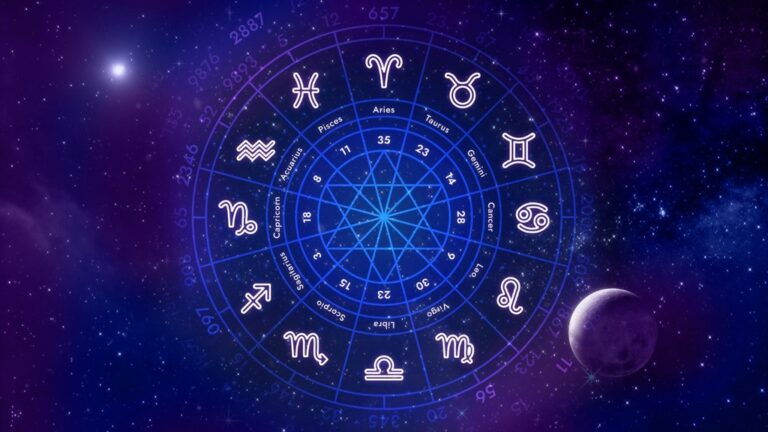
Astrology is one of the oldest disciplines humanity has developed to understand itself and the cycles and transformations that shape human experience. Through the observation of the sky, it built a symbolic language that is still used today as a tool for self-knowledge and personal guidance.
In this article, we explore what astrology really is, what the basic elements of a birth chart are, and why it continues to spark so much interest around the world.
Table of Contents
- What Is Astrology?
- The Foundations of Astrology: How It Really Works
- Basic Elements of a Birth Chart
- Difference Between Psychological Astrology and Predictive Astrology
- What Astrology Is Used for Today
- Why Astrology Continues to Resonate With Millions of People
- The Origins and Evolution of Astrology
What Is Astrology?
Astrology is the discipline that studies the correspondence between the movements of the sky and human experience. Its central premise is that the cycles of the Sun, the Moon, and the planets are connected to the internal, emotional, and life processes that people go through. It does not propose that celestial bodies cause what we experience, but rather that their movements can be read as a symbolic map of what is happening within us and in the world.
Throughout history, astrology was recognized as a respected field of knowledge by philosophers, astronomers, and physicians, and only in recent centuries was it pushed to the margins of official academic thought. However, it has always maintained a relevant place as a tool for self-knowledge and life guidance, especially in spiritual and philosophical contexts. Today, with the growing interest in inner development, its practice has once again gained strength throughout the world.
Understanding what astrology is requires stripping away the prejudices that surround it. It is not an exact science, but neither is it superstition. It is a structured symbolic language that, when properly interpreted, offers a valuable perspective for understanding who we are, how we relate to the world, and what processes we go through throughout life.
The Foundations of Astrology: How It Really Works
To understand how astrology works, one must first understand the central idea upon which this practice was developed: the existence of a symbolic relationship between the movements of the sky and human experience. Since ancient times, different cultures observed the cycles of the Sun, the Moon, and the planets and connected them with certain changes, stages, and processes present in human life. From those observations, astrology built a system of interpretation that seeks to understand what kinds of dynamics or transformations a person experiences at specific moments in life.
Astrology does not claim that celestial bodies control destiny or directly cause what happens. Its logic operates through symbolic correspondences: certain planetary movements are associated with particular emotional, psychological, or life processes. For this reason, astrology is used as a tool for interpreting periods of change, crisis, growth, or the closing of cycles, both in individual lives and in broader social processes.
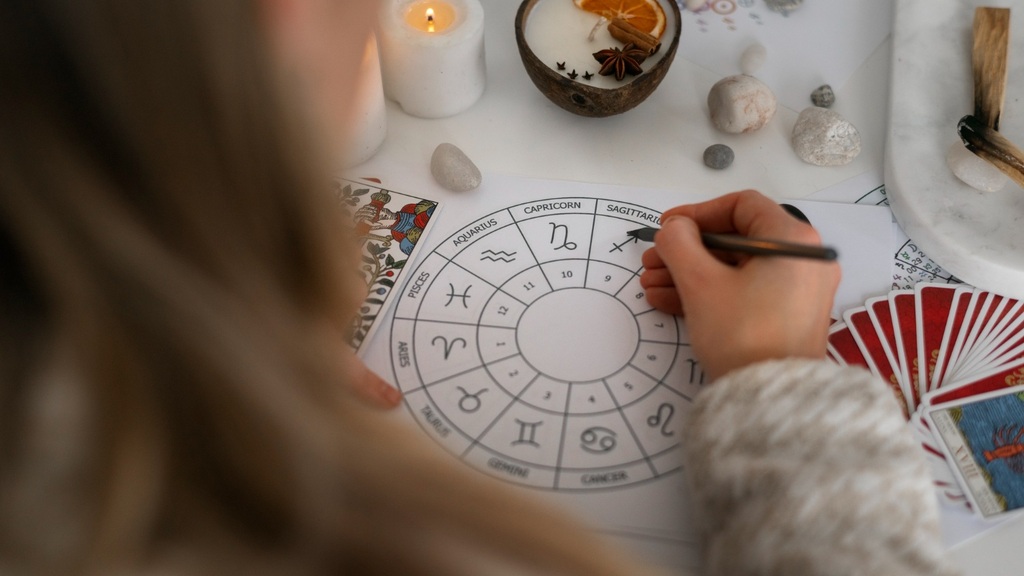
The main tool used for this interpretation is the birth chart, also called a natal chart. It is a map of the sky calculated from a person’s date, time, and place of birth. This configuration shows the position of the planets, the zodiac signs, the astrological houses, and the aspects at the exact moment of birth, and each of these elements provides information about different aspects of personality, relationships, and experiences that are part of each person’s life journey.
Basic Elements of a Birth Chart
A birth chart is composed of different elements that are interpreted together. Among them are the planets, the zodiac signs, the astrological houses, and the aspects, and each one provides information about different dimensions of personality and human experience. Understanding what each part represents is the foundation for beginning to read and interpret a natal chart.
The planets occupy a central place within astrology because each one symbolizes a different dimension of personality and human experience. The way these planets are arranged within a birth chart makes it possible to interpret different traits, dynamics, and personal processes.
Each planet is associated with specific themes. The Sun, for example, is linked to identity and self-expression; the Moon, to emotions and the inner world; Mercury, to communication and ways of thinking; Venus, to relationships and values; and Mars, to action and desire. In addition, Jupiter, Saturn, Uranus, Neptune, and Pluto are connected with processes of growth, structure, change, intuition, and transformation.
However, these planets do not act in the abstract, but rather manifest themselves through the zodiac signs. If the planets are the “what,” the signs are the “how.” The same planet can manifest in very different ways depending on the sign in which it is located. For example, Mars—associated with action and impulse—does not express itself in the same way in Aries, where it tends to act directly and impulsively, as it does in Capricorn, where it usually acts in a more strategic and disciplined way. The energy is the same, but the mode of expression changes completely.
Added to all of this are the astrological houses, which indicate the specific areas of life in which each combination manifests itself. They are twelve sectors that represent areas such as identity, close relationships, home, creativity, work, intimate relationships, or vocation. The same combination of planet and sign can be expressed very differently depending on the house in which it is located.
The planets also relate to one another within the chart through the aspects, which are the geometric angles they form when positioned at different points in the sky. These angles indicate how different energies interact with one another: some create flow and make things work effortlessly, while others create inner tension, which is often a driving force for growth. The aspects are what give depth to a reading because they show how all the elements connect with one another.
Finally, there is the ascendant, one of the most important elements of the birth chart. It is the sign that was rising in the sky at the exact moment of birth and is related to the way a person presents themselves to the world and moves through their experiences. This is why two people with the same Sun sign can have very different personalities and ways of living.
In the series Astrology 101, available on Gaia, renowned astrologer Rick Levine offers an accessible introduction to the basic concepts of astrology. Throughout the episodes, you can learn about the zodiac signs, the planets, the elements, and the houses, building a solid foundation for understanding the symbolic language of the stars.
Difference Between Psychological Astrology and Predictive Astrology
One of the most important distinctions for understanding contemporary astrology is the one that exists between the psychological approach and the predictive approach. Both perspectives work with the same elements—the birth chart, the planets, the movements of the sky—but they interpret them for different purposes.
- Predictive astrology seeks to anticipate events. It is the oldest approach and, for centuries, it was the dominant one. Its logic is to identify which planetary transits—that is, the current movements of the planets in relation to your birth chart—coincide with certain types of events in the life of a person or a society. Although it is still practiced, this branch now coexists with a more nuanced interpretation, because its literal application—predicting that something specific will happen on an exact date—often clashes with the real complexity of life and leaves very little room for personal freedom.
- Psychological astrology, on the other hand, developed strongly during the twentieth century, partly thanks to the influence of Carl Jung. This perspective does not ask, “What is going to happen?” but rather, “What internal processes are being activated, and how can I work with them?” Under this approach, the birth chart is read as a map of your inner world, and current planetary movements are interpreted as moments when certain personal dynamics become more visible or ask to be integrated.
The central difference has to do with the role of free will. In the strictest predictive approach, astrology describes what will happen; in the psychological approach, it describes the energetic terrain on which you will make your decisions. Most contemporary astrology works with a combination of both approaches, but with a much greater emphasis on the psychological and self-knowledge dimension. This explains why, today, many people turn to astrology not to know what will happen to them, but to better understand who they are.
What Astrology Is Used for Today
Precisely because of this shift toward the psychological perspective, contemporary astrology functions above all as a tool for self-knowledge and life guidance. It offers an inner map that helps you understand why you react the way you do, what you deeply seek, and what processes you go through at each stage of life.
On a personal level, astrology can help identify natural talents, areas of learning, emotional dynamics, and recurring patterns. It also makes it possible to understand the major cycles of life and recognize what kinds of processes tend to become activated at certain stages. One of the best known is the Saturn return, which occurs around the ages of twenty-nine or thirty and often coincides with periods of maturation, closure, and personal redefinition.
Another widely used tool is the solar return, a chart calculated for the exact moment when the Sun returns to the same position it occupied at birth and which is interpreted as a guide to the most important themes and lessons of each year. Understanding these cycles does not eliminate free will, but it does provide context for making decisions with greater awareness.
Astrology is also applied in the relational sphere. Comparing two birth charts (a practice called synastry) makes it possible to identify dynamics within a relationship: where there is natural affinity, where there is tension, and what challenges may arise. It does not function as a verdict, but rather as a map of the energies at play between two people.
Beyond the individual level, astrology is also applied to collective processes. Some astrologers analyze planetary movements in order to understand social, cultural, or historical moments, identifying the predominant energies of a particular era. This dimension allows personal experience to be placed within a broader context and helps explain how many individual processes respond to movements shared by an entire generation.
Why Astrology Continues to Resonate With Millions of People
Despite the centuries that have passed since its original systematization, astrology continues to attract millions of people around the world. What is remarkable is that its appeal does not diminish, but rather renews itself with each generation. The interesting question is not whether astrology “is true” in a scientific sense, but what people find in it that justifies such enduring relevance.
One possible answer lies in the feeling of recognition. Those who receive a serious astrological reading often experience a particular phenomenon: the feeling that something about their inner life is reflected with surprising precision. The birth chart functions like a mirror that reveals aspects of the self that are rarely put into words, and that recognition creates a deep connection with the practice.
Another reason has to do with the contemporary search for meaning. In a context where many traditional structures have lost influence—religious institutions, collective narratives, cultural mandates—people seek frameworks that help them interpret their experience from a broader perspective. Astrology offers precisely that: a language for placing yourself within processes larger than your individual life.
The broader cultural moment also plays a role. The rise of self-knowledge, psychology, secular spirituality, and contemplative practices created space for tools such as astrology. In fact, it has now become a common vocabulary for talking about oneself and relationships: many people use astrological terms to describe their personality, their partner, or the stage of life they are currently experiencing.
Finally, there is something even deeper at play. Astrology proposes that your life is not an accident or a series of isolated events, but rather part of a greater order that can be read, understood, and inhabited with greater awareness. That possibility alone—the idea of an underlying meaning—explains much of its enduring relevance in a world that often feels fragmented and lacking a unifying thread.
The Origins and Evolution of Astrology
Astrology has roots that date back at least four thousand years ago, in ancient Mesopotamia. The Babylonians were the first to systematize the observation of the stars and connect it with earthly events, laying the foundations for a body of knowledge that would later spread throughout the world. For those civilizations, the sky was not a neutral space: it was the place where the will of the gods could be read.
From Babylon, astrology spread to Greece, where figures such as Ptolemy developed treatises that still influence modern practice. His book Tetrabiblos, written in the second century, was for centuries the reference text for Western astrologers. At that time, astrology and astronomy were practically the same discipline, and they were taught together in European universities throughout the Middle Ages and the Renaissance.
The separation between astronomy and astrology began with the Scientific Revolution of the seventeenth century. While astronomy adopted mathematics and empirical observation as its foundation, astrology was relegated to the symbolic and spiritual realm. However, it never disappeared: it resurfaced strongly in the twentieth century through the work of psychologists such as Carl Jung, who incorporated it into their studies of the collective unconscious and archetypes.
In recent decades, astrology has experienced a new global expansion, fueled by growing interest in self-knowledge, spirituality, and contemplative practices. Today, it coexists with thousands of trained professionals, dedicated schools, and active communities around the world, and it has once again become part of contemporary cultural language. Its history shows that, far from being a relic of the past, astrology has continually reinvented itself in every era to respond to the questions each generation asks about itself.