What Does 222 Mean? A Sign to Trust the Process
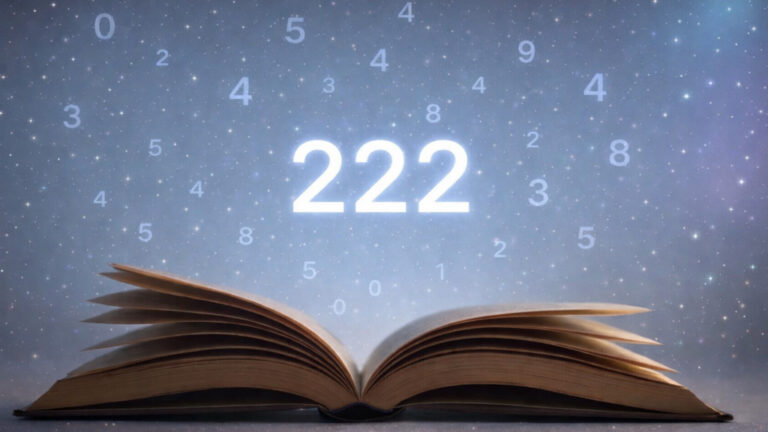
Have you ever looked at the clock and always seen 2:22? Or found this number on receipts, license plates, or signs at key moments? Far from being a coincidence, 222 is a code the universe uses to send you a clear message: you are moving in the right direction, but you need to pause, observe calmly, and trust that everything is falling into place, even if you still cannot see it clearly. In this article, we explore what 222 means, what its deeper spiritual message is, and how to interpret it in your daily life.
Table of Contents
- What Does It Mean to See the Number 222 Repeatedly?
- The Spiritual Meaning of Angel Number 222
- 222 and Inner Balance: A Message from the Universe
- What Does 222 Mean in Love and Relationships?
- What to Do When the Number 222 Appears in Your Life
- 222 and Other Number Sequences That Often Accompany It
What Does It Mean to See the Number 222 Repeatedly?
Seeing the number 222 repeatedly often coincides with moments of transition, important decisions, or inner uncertainty. This sequence appears to remind you that you are not alone, that there is a higher order guiding your process, and that the key now is to have faith in what is taking shape behind the visible.
It can also indicate that you are entering a stage where patience and serenity will be your best allies. 222 does not come to pressure you, but to encourage you to release control, remain calm, and let everything settle with time. It is confirmation that, even if you do not see immediate results, the universe is acting in your favor.
The Spiritual Meaning of Angel Number 222
222 is an angel number, which means it has a deep spiritual origin. Its frequent appearance is a sign that your guides are present, supporting you and gently accompanying your path. It is a call to strengthen your inner trust, listen to your intuition, and flow with greater surrender.
From a spiritual perspective, 222 speaks of balance, integration, and inner harmony. It reminds you that you do not need to have everything resolved to keep moving forward. Many times, real growth happens in the midst of uncertainty, when you choose to trust without seeing. This sequence can also mark key moments when relationships or decisions with a strong soul purpose are activated.
In the Numerology episode of The Other Side, numbers are explored as personal patterns that shape our decisions and inner processes. Rather than forecasting events, numerology encourages a deeper understanding of how you are experiencing the present. From this perspective, 222 reflects a quiet moment of trust and balance unfolding in your life.
222 and Inner Balance: A Message from the Universe
When 222 appears repeatedly in your life, it is an invitation to reconnect with your center. Many times, we are caught up in constant doing, seeking certainty outside ourselves, and this number arrives to remind you that true balance begins within. It is a subtle but firm message that urges you to pause, breathe, and trust that everything is settling in its right time.
222 also symbolizes the need to align what you feel with what you do. If there is a gap between your intentions and your actions, this sequence appears as guidance to adjust your energy. It is not about forcing results, but about cultivating coherence and allowing things to flow from a more authentic and conscious space.
This number often manifests during stages when you are going through changes, emotional challenges, or key moments in your growth. In every case, its message is the same: remain in your center, let go of expectations, and have faith in the balance that is forming, even if you cannot yet see it clearly.
What Does 222 Mean in Love and Relationships?
In the realm of love, 222 is a sign to trust in the process of relationships. It may appear when you are meeting someone with whom you feel a special connection, or when you need to reassess the harmony within an existing relationship. This sequence invites you to observe how you feel in the connection and to listen to what your intuition has been pointing out.
It can also remind you that before connecting with another person, you need to be well with yourself. If you are waiting for a relationship, 222 signals that something is being prepared, but it is important to trust in the perfect timing. And if you are in a partnership, this number encourages you to nurture mutual balance, communication, and shared growth.
In some cases, 222 is linked to reunions or relationships that activate deep lessons. It does not always point to immediate stability, but it does indicate a valuable moment to heal, understand, and choose consciously. In love, as in life, everything aligns when there is trust, patience, and inner balance.
What to Do When the Number 222 Appears in Your Life
The first thing you can do when 222 shows up repeatedly is to pause and observe: what are you feeling at that moment? what are you thinking about? what decision are you about to make? Many times, this sequence appears as a sign that you need to slow down, release control, and open yourself to a subtler form of guidance. It is an opportunity to step out of autopilot and reconnect with what your intuition has been trying to show you.
One valuable way to support this process is to keep a journal where you record the synchronicities you experience in your daily life. It could be a word that repeats, a dream, a sign, an unexpected conversation, or even an inner sensation that is hard to explain. By noting these moments, you begin to recognize a more subtle language through which the universe communicates with you. Over time, that record becomes a tool for deep connection, revealing patterns and messages that may have previously gone unnoticed.
You can also support this process with tools such as meditation, automatic writing, or rituals of conscious intention. These practices help you integrate the energy of 222 and make decisions from a more aligned place. Remember, this number does not come to tell you what to do, but to remind you that clarity arrives when you are calm, centered, and open to the universe’s guidance.
222 and Other Number Sequences That Often Accompany It
When 222 appears frequently, it is common for other number sequences to begin showing up to expand its message. Each one offers a different perspective that can help you better understand the phase of balance and trust you are experiencing.
- 111: Conscious New Beginning: Signals that you are entering a stage where your thoughts hold strong creative power. It is an invitation to focus on what you want to build from this point forward.
- 333: Active Spiritual Support: Indicates that your guides are near, supporting your decisions and strengthening your inner confidence. It encourages you to express yourself authentically.
- 444: Stability and Protection: Reinforces the idea that you are being supported while you organize your inner world. It is a sign of solid foundations and spiritual backing.
- 555: Necessary Change: Marks an important shift that may require courage. It pushes you to embrace transformations that will support your growth.
- 666: Priority Realignment: Appears when you need to refocus your energy and restore balance between the material and the spiritual. It is a call to return to your center.
- 777: Spiritual Confirmation: Signals that you are aligned with your inner evolution. It validates that trusting the process is bringing results.
- 888: Flow of Abundance: Indicates that a phase of expansion and reward is beginning to activate. It reminds you that receiving is also part of balance.
- 999: Completion and Release: Announces the closing of a cycle that has fulfilled its purpose. It is time to let go with calmness so you can move forward more lightly.
- 1234: Structured Progress: Represents step-by-step movement toward a clear goal. It confirms that everything is falling into place in an organized way.
- 11:11: Awakening and Alignment: Acts as a portal that strengthens your connection to your soul’s purpose. It invites you to act with full awareness.
- 22:22: Conscious Construction: Amplifies the energy of 222 and highlights the importance of creating with balance, patience, and inner coherence.
About the Author

The Law of One: The Ra Material and the Idea That All Is One

The idea that nothing is truly separate appears, in various forms, in many spiritual traditions. In the Law of One, that vision takes a more concrete form by maintaining that everything that exists is part of a single consciousness, and life can be understood as a learning process for recognizing that unity.
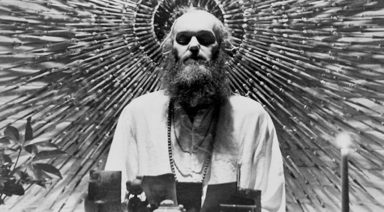
This teaching comes from the Ra Material, a set of channeled texts that for decades has fueled conversations about consciousness, channeling, and the purpose of life.
In this article, we explore what the Law of One is, where it comes from, what the Ra Material teaches, and why it continues to spark so much interest today.
Table of Contents
- What Is the Law of One
- Where the Law of One Comes From: The Contact With Ra
- What the Ra Material Teaches
- Free Will as a Fundamental Law
- The Books of the Law of One
- Why the Law of One Remains Relevant Today
What Is the Law of One
To understand the Law of One, it is best to begin with its central statement, as simple to express as it is difficult to assimilate: everything that exists is, at its core, one single thing. The stars, people, animals, even the thoughts now crossing your mind would be expressions of the same infinite consciousness. The separation we perceive—you on one side, me on the other—would be real only on the surface.
From this perspective, what you call “I” is not separate from the rest: you would be a part of that broader whole, one of the many ways in which that consciousness expresses itself. The idea is not new: different spiritual traditions, from East and West, have intuited that underlying unity for centuries. What the Law of One contributes is its own language and an orderly framework for thinking about it.
Where the Law of One Comes From: The Contact With Ra
The Ra Material did not emerge as a book written by an author, but from a series of channeling sessions carried out in the United States in the early 1980s. Behind them was a small research group dedicated to studying this type of phenomenon, and it was that group that made the contact possible.
Three people formed that group. Carla Rueckert was the channel: the person through whom, in a trance state, what identified itself as Ra expressed itself. Don Elkins asked the questions, and Jim McCarty recorded every word; between 1981 and 1984, they carried out 106 sessions.
Ra did not present itself as an individual, but as a sixth-density social memory complex: something similar to a collective consciousness that would have evolved far beyond physical form.
Throughout the 106 channeling sessions, spiritual, philosophical, and cosmological questions were addressed: from reincarnation and the evolution of consciousness to the nature of time, ancient civilizations, and the existence of non-human intelligences. Over the years, that exchange gave shape to a system of ideas now known as the Law of One.
The Ra Material—with its channeled origin, its protagonists, and its teachings—is one of the examples that appear in Channeling: A Bridge to the Beyond, available on Gaia. In the episode Free Will & Off-World Allies, it is presented alongside other experiences of contact and channeling linked to intelligences from other worlds.
What the Ra Material Teaches
Beyond its central statement—that all is one—the Ra Material develops an entire vision of how reality works and how consciousness evolves. It is not possible to summarize it entirely in a few lines, but there are three ideas that return again and again and support much of the rest. Knowing them helps explain why this material sparks so much interest.
-
The Densities of Consciousness
Consciousness, according to this material, would not evolve all at once, but little by little, like someone climbing a staircase step by step. Each step is a different level—what Ra calls a density—and it is not a physical place, but a broader and subtler state of consciousness than the previous one. In total, seven densities are described.
In the first would be minerals and the elements; in the second, plants and animals, which already move and grow toward a certain consciousness. The third is ours: that of human beings, marked by self-awareness and the capacity to choose. Higher up would come the fourth density, linked to love and compassion; the fifth, to wisdom; and the sixth, where love and wisdom would unite, and from which Ra said it spoke; the seventh would be the return to the single consciousness from which everything began.
-
Service to Others and Service to Self
If the third density is that of choice, what exactly is being chosen? In the Ra Material, that choice does not refer to an isolated decision, but to the deep orientation from which a consciousness lives, acts, and relates to others.
That orientation can move toward service to others or toward service to self. The first path begins with cooperation, compassion, and the recognition that others are also part of oneself. The second is based on separation, control, and the pursuit of personal power above the whole.
The difference is not only in what a person does, but in the intention that supports their actions. For the Ra Material, every everyday choice reinforces an internal direction: opening to unity or shutting oneself away in separation. That is why this theme is so important within the Law of One: it defines how a consciousness uses its freedom.
-
The Evolution of the Soul Through Many Lives
In the Ra Material, a single life is not enough to travel that entire path. The soul would return again and again, through many existences, to gradually learn what it needs at each stage.
Each experience, especially the difficult ones, would function as a kind of learning material: situations that your soul would use to grow and define where it wants to move forward. From this perspective, reincarnation is neither a punishment nor a reward, but a patient process of maturation. And once the lessons of a density have been learned, consciousness would be ready to make the leap to the next one.

Free Will as a Fundamental Law
If one had to choose a principle that runs through the entire Ra Material, it would be free will. In this vision, the freedom of each being is the most valuable thing that exists: each consciousness needs to choose, experience, understand, and move forward from its own process. It is not only about being able to decide, but about learning through what those decisions reveal.
From there, it becomes clear why Ra answered only the questions it was asked: imposing a truth, however certain it might be, would have been a way of overriding that freedom. The same would apply to any more advanced intelligence. According to the Ra Material, a guide can point to a possibility or open a question, but should not intervene without invitation or reveal what a consciousness is not yet ready to integrate.
Free will also connects with another idea that may seem like its opposite: destiny. In this vision, both coexist. Your soul would have chosen certain themes to explore before being born, but the way of traveling that path would still depend on you. Destiny would be the hallway; free will, the way you decide to walk through it.
The Books of the Law of One
Those 106 sessions were transcribed almost word for word and published in book form, gathered in five volumes that preserve the original question-and-answer format.
One particular feature of these texts is that their transcriptions can be found free of charge on the internet: the group that received them wanted them to be freely available to anyone.
That said, they are not books to read all at once. They are demanding texts, closer to study material than to light reading. To enter into them, it is best to do so with patience: stopping, going back, and accepting that some answers may feel abstract at first.
Why the Law of One Remains Relevant Today
Few channeled texts have left such a visible mark on contemporary spirituality. Concepts such as the “densities,” the transition from third to fourth density, or the difference between “service to others” and “service to self” were born in the Ra Material and today circulate far beyond its books.
But its influence is not explained only by its terms. The Law of One offers a broad spiritual map, capable of organizing questions that many of today’s spiritual searches still leave open: why we are here, how consciousness evolves, what meaning difficult experiences have, what role our decisions play, and how far that thing we call “I” extends.
There is also something very current in its way of approaching spiritual knowledge. The Ra Material does not demand obedience or ask you to accept everything without questioning it; it proposes taking what resonates and leaving the rest. For an era in which many people distrust closed truths, but continue searching for meaning, that freedom is an important part of its appeal.
Deep down, its relevance has to do with the question it has sustained from the beginning: what changes when you start looking at life as part of a single consciousness? From there, every bond, every choice, and every experience takes on another meaning. Rather than closing the mystery, the Law of One invites us to look at it more deeply.