March Equinox: Conversation between the I and AM by Matías De Stefano

ME: So, the March Equinox is the first portal of the year.
I AM: No.
ME: What do you mean no?
I AM: As always, we ask ourselves again: from whose perspective?
ME: Oh, sure…
I AM: We consider the March Equinox a strategic point to begin, according to the Northern Hemisphere, since spring begins on this specific day, while for the Southern Hemisphere it’s autumn. And spring is a good time to begin, since plants begin to sprout again, which means the time for sowing is near.
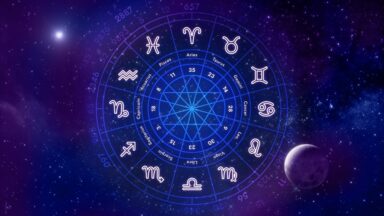
ME: Ah, that’s why the horoscope also starts on this day. Aries.
I AM: The moment of beginning, the baby who begins to grow, the goat that in ancient times was given as an offering to the Earth, returning wealth, winter nourishment to Mother Earth, so that she may give us life again. A Middle Eastern tradition that went from the field to the sky.
ME: So if everything is a cycle of constant transformation, it’s impossible to say when the beginning is.
I AM: Remember that the Year is an idea generated by cultures to record that a complete revolution around the sun has already been completed. But a revolution can be counted from any instant; that is, every second can be considered a new year. However, the seasonal points of movement or equinoxes of movement (Solstices and Equinoxes) are key to determining the ends and beginnings of something. Therefore, we have four moments in the year that can be considered a beginning and an end.
ME: Why do we use December 31st as the end of the year? And not some other date.
I AM: Because the December Solstice, around the 21st, represents the darkest day of the year, the longest night, and then, over the next three days, the return to longer days begins. Wouldn’t you consider this fundamental to a grand ending and a grand beginning?
ME: Totally.
SOY: The problem is that this also happens in June, but in the southern hemisphere.
ME: So that new year, below the equator, would begin on June 21st.
I AM: Exactly.
ME: And why isn’t it celebrated?
I AM: Because the only traditions that lived this reality were native peoples with culture, traditions, spiritual and artistic wealth, but without civilizations with expansive organizations. The Ona, Mapuche, Selknam, Anangu, Koori, Maori, Zulu, Xhosa, to mention just 5% of the southern inhabitants, and so many others, all of them were easily dominated by European traditions. The only important civilization in the southern world was the Quechua-Aymara empire, the famous Incas, who opened the doors to the conquerors. Thus, all traditions of time, of the way of understanding the world and its movement, came to be solely in the hands of the vision of the Semitic cultures of the Middle East. However, for other traditions, the important moments are not the solstices, but the equinoxes. In ancient Persia, for example, or Hindu and Indonesian traditions, they use the beginning of spring as the beginning of the year. However, other traditions celebrate it at different times. In turn, some are not even based on the cycle of the Solar Cross, but on the moons, like the Chinese calendar.
ME: And why are we going to start the task with the March Equinox and not with others?
I AM: Simply because it is the first portal moment after the Portal day of February 22nd, the moment of the Network activation, which exactly 2 years ago activated this planetary task that began 4 years ago in the same month, on February 2nd. The anniversary of the Network reconnection mission is the month of February, and therefore, for us, the planetary reconnection tasks will generally begin in March.
ME: Ah, I understand.
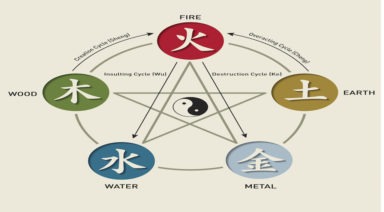
I AM: In Atlantean times, this day was called Hol-Phyr, which means Time, Cycle, or Stage of Fire. This was the name given to the period between the March equinox and the June solstice, as it was the time when we reconnected with our inner power, the divine spark that ignites our potential. The seed is synonymous with the spark, and therefore, fire was found in that tiny aspect that provided food, which gave us strength, life, and energy.
ME: Is that the intention of these following months?
I AM: This is the intention that we will all put together in this Cycle of Fire.
ME: How?
I AM: Let’s remember the mission and how to prepare for it, before stepping on the first of the 5 Nodes that we will activate on March 20th.
This article was published on Matías De Stefano’s blog, where he shares his reflections and teachings on planetary transformation processes and spiritual consciousness.
We now share the special meditation to accompany this March Equinox portal. This meditation is conducted in both Spanish and English simultaneously. We invite you to take a few minutes to connect with this experience and deepen into its energy.
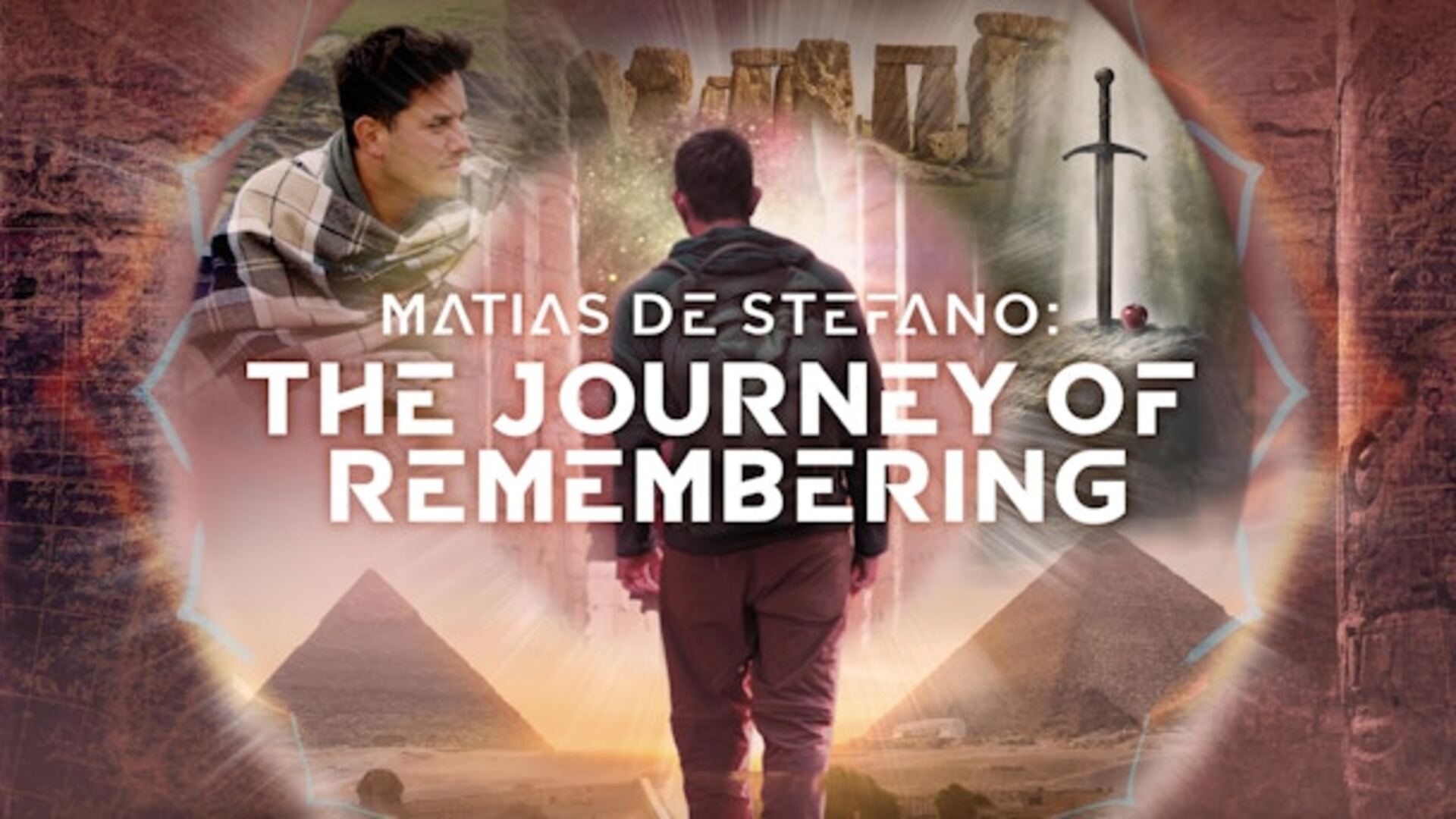
In the series The Journey of Remembering, available on Gaia, Matías De Stefano shares his personal and spiritual journey since childhood, revealing memories of past lives and the deeper purpose of his mission on Earth. Through each episode, he guides the viewer on a journey of connection with the soul’s history, the planet’s energetic movements, and the awakening of collective consciousness.
About the Author
The Law of One: The Ra Material and the Idea That All Is One

The idea that nothing is truly separate appears, in various forms, in many spiritual traditions. In the Law of One, that vision takes a more concrete form by maintaining that everything that exists is part of a single consciousness, and life can be understood as a learning process for recognizing that unity.
This teaching comes from the Ra Material, a set of channeled texts that for decades has fueled conversations about consciousness, channeling, and the purpose of life.
In this article, we explore what the Law of One is, where it comes from, what the Ra Material teaches, and why it continues to spark so much interest today.
Table of Contents
- What Is the Law of One
- Where the Law of One Comes From: The Contact With Ra
- What the Ra Material Teaches
- Free Will as a Fundamental Law
- The Books of the Law of One
- Why the Law of One Remains Relevant Today
What Is the Law of One
To understand the Law of One, it is best to begin with its central statement, as simple to express as it is difficult to assimilate: everything that exists is, at its core, one single thing. The stars, people, animals, even the thoughts now crossing your mind would be expressions of the same infinite consciousness. The separation we perceive—you on one side, me on the other—would be real only on the surface.
From this perspective, what you call “I” is not separate from the rest: you would be a part of that broader whole, one of the many ways in which that consciousness expresses itself. The idea is not new: different spiritual traditions, from East and West, have intuited that underlying unity for centuries. What the Law of One contributes is its own language and an orderly framework for thinking about it.
Where the Law of One Comes From: The Contact With Ra
The Ra Material did not emerge as a book written by an author, but from a series of channeling sessions carried out in the United States in the early 1980s. Behind them was a small research group dedicated to studying this type of phenomenon, and it was that group that made the contact possible.
Three people formed that group. Carla Rueckert was the channel: the person through whom, in a trance state, what identified itself as Ra expressed itself. Don Elkins asked the questions, and Jim McCarty recorded every word; between 1981 and 1984, they carried out 106 sessions.
Ra did not present itself as an individual, but as a sixth-density social memory complex: something similar to a collective consciousness that would have evolved far beyond physical form.
Throughout the 106 channeling sessions, spiritual, philosophical, and cosmological questions were addressed: from reincarnation and the evolution of consciousness to the nature of time, ancient civilizations, and the existence of non-human intelligences. Over the years, that exchange gave shape to a system of ideas now known as the Law of One.
The Ra Material—with its channeled origin, its protagonists, and its teachings—is one of the examples that appear in Channeling: A Bridge to the Beyond, available on Gaia. In the episode Free Will & Off-World Allies, it is presented alongside other experiences of contact and channeling linked to intelligences from other worlds.
What the Ra Material Teaches
Beyond its central statement—that all is one—the Ra Material develops an entire vision of how reality works and how consciousness evolves. It is not possible to summarize it entirely in a few lines, but there are three ideas that return again and again and support much of the rest. Knowing them helps explain why this material sparks so much interest.
-
The Densities of Consciousness
Consciousness, according to this material, would not evolve all at once, but little by little, like someone climbing a staircase step by step. Each step is a different level—what Ra calls a density—and it is not a physical place, but a broader and subtler state of consciousness than the previous one. In total, seven densities are described.
In the first would be minerals and the elements; in the second, plants and animals, which already move and grow toward a certain consciousness. The third is ours: that of human beings, marked by self-awareness and the capacity to choose. Higher up would come the fourth density, linked to love and compassion; the fifth, to wisdom; and the sixth, where love and wisdom would unite, and from which Ra said it spoke; the seventh would be the return to the single consciousness from which everything began.
-
Service to Others and Service to Self
If the third density is that of choice, what exactly is being chosen? In the Ra Material, that choice does not refer to an isolated decision, but to the deep orientation from which a consciousness lives, acts, and relates to others.
That orientation can move toward service to others or toward service to self. The first path begins with cooperation, compassion, and the recognition that others are also part of oneself. The second is based on separation, control, and the pursuit of personal power above the whole.
The difference is not only in what a person does, but in the intention that supports their actions. For the Ra Material, every everyday choice reinforces an internal direction: opening to unity or shutting oneself away in separation. That is why this theme is so important within the Law of One: it defines how a consciousness uses its freedom.
-
The Evolution of the Soul Through Many Lives
In the Ra Material, a single life is not enough to travel that entire path. The soul would return again and again, through many existences, to gradually learn what it needs at each stage.
Each experience, especially the difficult ones, would function as a kind of learning material: situations that your soul would use to grow and define where it wants to move forward. From this perspective, reincarnation is neither a punishment nor a reward, but a patient process of maturation. And once the lessons of a density have been learned, consciousness would be ready to make the leap to the next one.

Free Will as a Fundamental Law
If one had to choose a principle that runs through the entire Ra Material, it would be free will. In this vision, the freedom of each being is the most valuable thing that exists: each consciousness needs to choose, experience, understand, and move forward from its own process. It is not only about being able to decide, but about learning through what those decisions reveal.
From there, it becomes clear why Ra answered only the questions it was asked: imposing a truth, however certain it might be, would have been a way of overriding that freedom. The same would apply to any more advanced intelligence. According to the Ra Material, a guide can point to a possibility or open a question, but should not intervene without invitation or reveal what a consciousness is not yet ready to integrate.
Free will also connects with another idea that may seem like its opposite: destiny. In this vision, both coexist. Your soul would have chosen certain themes to explore before being born, but the way of traveling that path would still depend on you. Destiny would be the hallway; free will, the way you decide to walk through it.
The Books of the Law of One
Those 106 sessions were transcribed almost word for word and published in book form, gathered in five volumes that preserve the original question-and-answer format.
One particular feature of these texts is that their transcriptions can be found free of charge on the internet: the group that received them wanted them to be freely available to anyone.
That said, they are not books to read all at once. They are demanding texts, closer to study material than to light reading. To enter into them, it is best to do so with patience: stopping, going back, and accepting that some answers may feel abstract at first.
Why the Law of One Remains Relevant Today
Few channeled texts have left such a visible mark on contemporary spirituality. Concepts such as the “densities,” the transition from third to fourth density, or the difference between “service to others” and “service to self” were born in the Ra Material and today circulate far beyond its books.
But its influence is not explained only by its terms. The Law of One offers a broad spiritual map, capable of organizing questions that many of today’s spiritual searches still leave open: why we are here, how consciousness evolves, what meaning difficult experiences have, what role our decisions play, and how far that thing we call “I” extends.
There is also something very current in its way of approaching spiritual knowledge. The Ra Material does not demand obedience or ask you to accept everything without questioning it; it proposes taking what resonates and leaving the rest. For an era in which many people distrust closed truths, but continue searching for meaning, that freedom is an important part of its appeal.
Deep down, its relevance has to do with the question it has sustained from the beginning: what changes when you start looking at life as part of a single consciousness? From there, every bond, every choice, and every experience takes on another meaning. Rather than closing the mystery, the Law of One invites us to look at it more deeply.