Dimensions of the Universe: What They Are and How Many Exist
The dimensions of the Universe offer a fascinating view of the structure and nature of reality. Through them, we can expand our perception and better understand our place in the cosmos. In this article, we explore the different dimensions of the Universe and their deeper meaning.
Table of Contents
- What are the dimensions of the Universe, and how many exist?
- One by One: All the Dimensions of the Universe
- Dimensions of the Universe and Their Perception
- The Role of Dimensions in Creation
- Dimensions and Sacred Geometry
- Dimensions and Dimensional Planes
- Dimensions and Spiritual Awakening
What are the dimensions of the Universe, and how many exist?
The dimensions of the Universe are different levels of existence that allow us to perceive and experience reality in different ways. Each dimension adds a layer of complexity and offers us a new perspective on how the cosmos functions. As we explore each one, we discover that dimensions are not merely abstract concepts but directly influence our experience of the world.
The Universe has nine dimensions, each with its own function and characteristics. These dimensions intertwine, allowing us to experience different aspects of existence. Each dimension offers a new level of understanding and invites us to expand our consciousness into deeper and more meaningful realities. In this article, we explore the dimensions from the perspective of Matías De Stefano, as explained in the series Initiation, available on Gaia.

One by One: The 9 Dimensions of the Universe
Each dimension of the Universe offers a unique way to experience and understand reality. From unity to totality, the dimensions describe different aspects of existence, each with its own characteristics and functions. Below, we explore each dimension individually to better understand its meaning and importance.
-
First Dimension: Unity
The first dimension, also called the “zero dimension,” is the dimension of unity. At this level, everything is one, and there is no separation or distinction between things. It is a perspective of totality and completeness, where everything is interconnected. In this dimension, there is no duality or diversity, only pure existence that encompasses all.
This dimension represents the fundamental principle that everything in the Universe is interconnected and is part of a single reality. Unity is the foundation of all other dimensions and the starting point from which the different levels of existence develop.
-
Second Dimension: Duality
In the second dimension, reality is divided into two opposite and complementary aspects, such as positive and negative, day and night, or masculine and feminine. In this dimension, existence is experienced through polarity, allowing for the creation of contrast and diversity.
This dimension teaches us that duality is a fundamental part of the human experience and that, although things may seem opposite, they are actually two sides of the same coin. Duality helps us understand the nature of change and balance in the Universe and is essential for the development of consciousness and spiritual evolution.
-
Third Dimension: Trinity
The third dimension introduces the idea of trinity, where the dual aspects of the second dimension integrate to form a three-dimensional reality. At this level, we experience life through height, width, and depth, allowing us to interact with the physical world in a more complex way. The third dimension is where consciousness manifests in material form, enabling us to see, touch, and feel the world around us.
In this dimension, we also experience the trinity of body, mind, and spirit. This integration of different aspects of our existence allows us to have a more complete and balanced experience of reality. The third dimension offers us the opportunity to explore and understand the physical world and is a crucial stage in the development of consciousness.
-
Fourth Dimension: Time
The fourth dimension is the dimension of time. At this level, reality is experienced as a continuous flow of events and moments, allowing us to perceive change and movement. Time is a crucial dimension that enables us to experience life in sequences, with a past, present, and future. Through this dimension, we can observe how things evolve and change over time.
Time gives us the opportunity to learn, grow, and evolve. It allows us to experience life as a series of lessons and challenges and gives us the ability to reflect on the past, enjoy the present, and plan for the future. The fourth dimension is fundamental to our understanding of the world and helps us connect our experiences and learnings into a coherent narrative.
-
Fifth Dimension: Consciousness
The fifth dimension is the dimension of consciousness. At this level, we begin to understand the nature of reality. It is the dimension of perception and knowledge, where we can observe and analyze our experiences from a higher perspective. In the fifth dimension, we can see the connections between events and understand how our actions and decisions affect our lives.
In this dimension, we begin to explore our inner consciousness and connect with our true essence. It is a level of self-awareness and reflection, where we can understand our thoughts, emotions, and motivations. The fifth dimension offers us the opportunity to awaken to our true nature and expand our consciousness beyond the physical world.
-
Sixth Dimension: Transformation
The sixth dimension is the dimension of transformation. It is a space where we can explore and shape reality from a higher consciousness. In this dimension, we can perceive the interconnection of all things and transform our experiences to align them with a higher perspective. Here, reality is fluid and in constant change, reflecting the flow and potential of the Universe.
At this level, we understand that we are part of a higher consciousness. The sixth dimension invites us to recognize our role as co-creators in the great tapestry of existence, using our awareness to evolve and adapt. It is a space of unlimited potential, where we can explore and manifest different aspects of reality.
-
Seventh Dimension: Divinity
The seventh dimension is the dimension of divinity. At this level, we experience a sense of unity and connection with the Universe and understand that time is an illusion and that everything happens in the now. It is the dimension of enlightenment, where we awaken to our true nature as divine beings and feel a deep sense of peace and understanding.
In this dimension, we realize that everything is one. The seventh dimension is a space of unconditional love and compassion, where we experience the beauty and perfection of all creation. It invites us to awaken to our divine nature and to live from a place of love and unity.
-
Eighth Dimension: Eternity
The eighth dimension is known as the dimension of eternity. At this level, reality is experienced from a timeless perspective, where all events and moments are seen as part of a continuous flow. We realize that we are part of something much greater and that our existence extends beyond the limitations of linear time.
In this dimension, we experience an infinite sense of possibility and can choose any path. The eighth dimension invites us to transcend time and see life from a broader and more expansive perspective, where past, present, and future intertwine into a single flow of existence.
-
Ninth Dimension: Totality
The ninth dimension is the dimension of totality. At this level, we realize that everything is one, and we are connected to everything that exists. It is a dimension of pure consciousness and understanding, where we experience the Universe as a living and conscious being.
In this dimension, we experience a profound sense of peace and unity. We understand that everything in the Universe is interconnected and is part of a single reality. The ninth dimension invites us to awaken to our true nature and experience reality from a state of complete clarity and wholeness.
Dimensions of the Universe and Their Perception
The dimensions of the Universe provide different ways to perceive reality, allowing us to understand the cosmos from multiple angles and perspectives. Each dimension offers a unique viewpoint and helps us comprehend the different levels of existence.
-
Dimensions as Different Points of View
The dimensions are different ways of seeing reality. They are different perspectives that allow us to perceive and understand the Universe from varied angles. Rather than being separate spaces or parallel worlds, dimensions are facets of a single reality that intertwine and overlap.
Each dimension represents a level of perception, and as we explore them, our consciousness expands, allowing us to understand more aspects of the cosmos. Dimensions are like different windows through which we observe the same reality, each offering a unique and complementary view of the Universe.
-
Multidimensionality and Consciousness
Multidimensionality refers to the ability of consciousness to exist and operate in multiple dimensions simultaneously. This means that even though we focus on a particular dimension, such as the third dimension, our consciousness is also present and active in other dimensions.
Through multidimensionality, we can experience and explore different levels of existence, expanding our perception and understanding of the Universe. Consciousness is the guiding thread that allows us to move through dimensions and explore the vast and complex reality around us. Multidimensionality invites us to awaken to our expansive nature and explore the Universe from a broader and deeper perspective.
The Role of Dimensions in Creation
Dimensions play a fundamental role in the creation and functioning of the Universe. Each dimension represents a level of reality that contributes a unique perspective on existence. According to Matías De Stefano’s perspective, dimensions are not steps through which we ascend but rather different ways of observing and understanding reality. From the first dimension, which represents unity, to the ninth dimension, which symbolizes totality, each contributes to the experience of being.
In the process of creation, dimensions act as different perspectives through which the Universe knows itself. Each dimension is like a mirror reflecting an aspect of totality. Through these dimensions, the Universe experiences itself in diverse and complex ways, allowing the manifestation of reality in all its forms. Dimensions are not hierarchical levels but facets of a single reality that invite us to explore and understand the mystery of existence.
Dimensions and Sacred Geometry
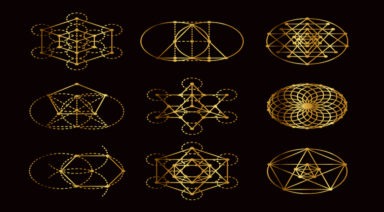
Sacred geometry is a universal language that helps us understand and work with the dimensions of the Universe. It is through geometric patterns that the structures of dimensions manifest, allowing us to connect with different levels of existence. Sacred geometry acts as a map guiding us through dimensions, showing the interconnection of all things.
-
The Cube of Metatron
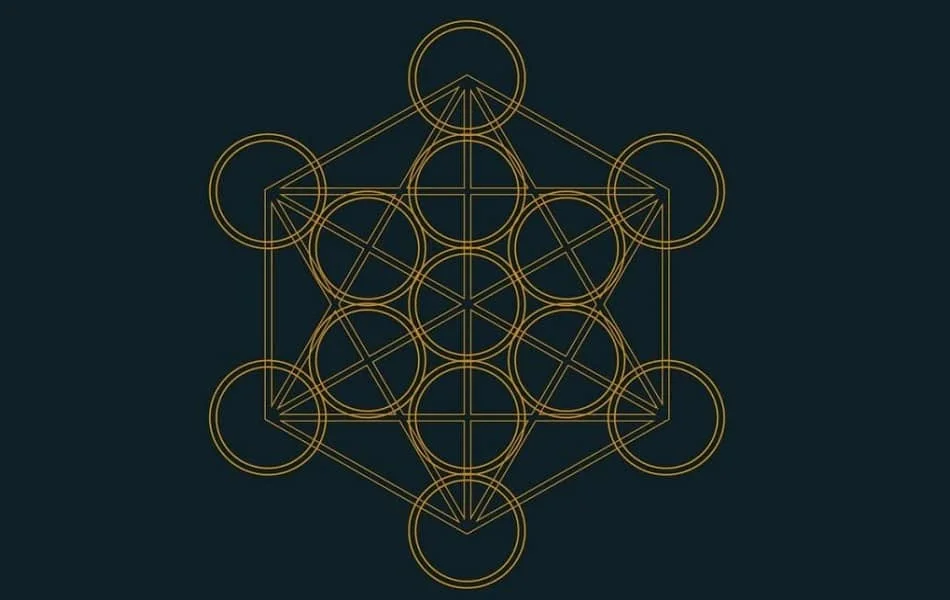
The Cube of Metatron is a sacred geometric figure that contains all geometric shapes, representing the structure of the Universe and its dimensions. It is a symbol of balance and harmony that reflects how dimensions relate to each other. The Cube of Metatron is considered a bridge between dimensions, allowing consciousness to move and explore the multiple realities of the cosmos.
-
The Merkaba

The Merkaba is another sacred geometry symbol that represents a light vehicle enabling travel through dimensions. It consists of two interlocked tetrahedrons, symbolizing the union of the masculine and feminine, the spiritual and the physical. The Merkaba is a powerful tool that helps us expand our consciousness and explore the different dimensions of the Universe.
Dimensions and Dimensional Planes
Dimensional planes are levels of density and vibration in which existence manifests. Dimensions and dimensional planes are related but distinct concepts that help us understand the structure of the Universe. Dimensions represent different ways of perceiving reality, while dimensional planes refer to levels of vibration and density that coexist within those dimensions.
Dimensional planes can be understood as different levels of consciousness and existence occupying the same space but vibrating at different frequencies. These planes may be inhabited by beings and entities existing in various states of density and energy. While dimensions allow us to perceive reality from different angles, dimensional planes show us how those angles and perspectives manifest and are experienced.
For example, within the third dimension, there are different dimensional planes, ranging from the densest and most material to the most subtle and ethereal, like different floors in a building.
Dimensions and Spiritual Awakening
Spiritual awakening is a process in which we become aware of our true nature and connect with higher levels of being. Through dimensions, we can experience different levels of consciousness and awaken to the reality of our multidimensional existence. Dimensions allow us to see beyond the superficial appearance of reality and connect with the deeper essence of life.
As we explore dimensions, we can experience a spiritual awakening that leads us to understand our true nature and connect with the Universe in a deeper way. Dimensions offer us different perspectives and levels of consciousness that help us expand our understanding and awaken to the totality of our existence.
About the Author

What Is the Astral Plane and How to Explore It Consciously

The astral plane is a subtle dimension that coexists with our physical reality and allows consciousness to act beyond the body. Many spiritual traditions teach that it is possible to access this dimension consciously through specific practices. In this article, we explore what the astral plane is, how it differs from other planes, and how it can be experienced directly.
Table of Contents
- What Is the Astral Plane and How Does It Differ From Other Planes?
- The Astral World in Different Spiritual Traditions
- The Connection Between the Astral Plane and Dreams
- Astral Travel: How to Access the Astral Plane Consciously
- Is It Safe to Explore the Astral Plane?
- How to Integrate Astral Experiences Into Daily Life
What Is the Astral Plane and How Does It Differ From Other Planes?
The astral plane is a non-physical dimension in which consciousness continues operating outside the material body. It is characterized by being a subtle environment, where emotions and thoughts directly influence perceived reality. In this space, physical laws as we know them do not exist, which allows for experiences of instantaneous movement, encounters with subtle entities, and access to expanded levels of perception.
This plane is often described as an intermediate reality between the physical world and the higher dimensions of consciousness. There, emotions, deep desires, symbolic thoughts, and archetypal images manifest. It is a dimension where experiences have a more subjective character, but are no less real for that reason. Many consider it a bridge between the inner self and higher levels of being.
Consciously accessing the astral plane allows one to expand the perception of oneself and of reality. For this reason, it has been explored for centuries by spiritual seekers looking for answers beyond the material world. Through certain practices—such as deep meditation, lucid dreaming, or astral travel—it is possible to experience this dimension directly and use it as a tool for self-knowledge and inner evolution.
The Astral World in Different Spiritual Traditions
Many spiritual traditions have recognized the existence of the astral plane, although under different names and approaches. In Hinduism, it is associated with the lokas, subtle worlds where different forms of consciousness reside, and which can be accessed both after death and in states of deep meditation. These non-physical planes are part of the structure of the universe and reflect different levels of vibration and spiritual evolution.
In Tibetan Buddhism, the astral plane is related to the bardo, an intermediate state that occurs between death and rebirth, but which can also be explored during life through practices of deep meditation and training in conscious dreaming. This intermediate space allows consciousness to free itself from the restrictions of the physical body and experience non-ordinary realities. For advanced practitioners, mastery of the bardo is key on the path toward enlightenment.
Shamanism, present in many ancestral cultures, also recognizes the existence of non-physical realities accessible in altered states of consciousness. Through trance or the use of sacred plants, shamans travel to these worlds to receive guidance, heal, or retrieve information. These experiences often coincide with descriptions of the astral plane: shifting environments, symbolic beings, and a direct interaction between the inner and outer worlds.

The Connection Between the Astral Plane and Dreams
During sleep, consciousness partially disengages from the physical body and external stimuli. In that state, a spontaneous access to the astral plane may occur, without the person intentionally provoking it. These experiences are often distinguished by their intensity, by a sense of expanded reality, or by the appearance of scenarios and situations that do not seem to be generated by the personal mind. Although not all dreams take place in the astral plane, there is a direct connection between the dream world and this subtle dimension, especially when certain states of expanded consciousness are reached.
One of the clearest forms of that connection is lucid dreaming, which occurs when the person becomes aware that they are dreaming while the dream continues. At that moment, the dreamer can observe, decide, and act within the dream in a deliberate way. When that lucidity is sustained, it is possible for the dream to stop being merely a mental projection and become a real experience in the astral plane. For this reason, the development of lucid dreams is considered a direct path to begin consciously exploring this non-physical dimension.
Astral Travel: How to Access the Astral Plane Consciously
Unlike dreams, in which access to the astral plane can occur involuntarily and without conscious control, astral travel is an intentional experience. It involves leaving the physical body while keeping consciousness awake, with the purpose of exploring the astral plane directly. It is a natural process that can be activated through specific practices and proper training of consciousness.
There are different techniques that help induce astral travel consciously. Some of the most commonly used include guided visualization, breathing exercises, and meditation practices that allow the mind to remain alert while the body enters a state of total rest. The point of transition usually occurs when the body is completely relaxed, but consciousness remains awake, focused, and free of distractions.
In the series Mystery Teachings, available on Gaia, this process is explained step by step. The episode How to Astral Travel offers a clear guide for those seeking to experience the astral plane safely and consciously. Through practical examples and accessible explanations, the keys to beginning this practice and recognizing when the experience is starting are presented.
Is It Safe to Explore the Astral Plane?
One of the most common fears among those who begin astral travel is safety. The idea of leaving the body can generate uncertainty, but the astral plane does not represent a danger if the experience is carried out with calm and clarity. Consciousness always remains connected to the physical body, so it is not possible to “get lost” or become trapped outside of it.
However, as with any process of inner exploration, it is essential to take care of one’s emotional state before beginning the experience. The practice should be carried out in a calm environment, with a clear intention and free of anxiety. Unstable emotional states or fear can distort the experience and generate confusing perceptions, since the astral plane responds directly to the practitioner’s internal state.
For this reason, it is recommended to move forward with respect, without forcing results, and to maintain an observant attitude. Keeping a record of experiences, resting well, and not becoming obsessed with outcomes are key to sustaining a healthy practice. Over time, astral exploration can become a valuable tool for self-knowledge, without risks when it is carried out with balance and awareness.
How to Integrate Astral Experiences Into Daily Life
Exploring the astral plane is not an end in itself, but an opportunity to expand personal understanding. The experiences lived there can reveal blockages, pending lessons, or internal capacities that are not always available in ordinary consciousness. What matters is being able to translate those experiences into concrete actions or meaningful reflections.
One way to integrate what has been experienced is to keep a journal in which sensations, symbols, or messages received during travels are recorded. This makes it possible to identify patterns, follow personal processes, and recognize the subtle changes that occur over time. It also helps develop a clearer perspective on what is being experienced, without falling into fanciful interpretations.
Giving space to what has been learned in daily life by practicing greater presence, making more conscious decisions, and cultivating deeper emotional understanding gives true meaning to the astral experience. It is not just about leaving the body, but about using that capacity to live with greater awareness and coherence on the physical plane.