Life Path Number: A Full Numerology Report
Numerology has been used for thousands of years to help determine meaning in the greater cosmic plan. Each letter in your name has a numeric value and each number can be reduced to a single vibration. The numeric values found in your name interact with the numbers in your birthdate to reflect certain aptitudes and character tendencies. In your numerology report, your Life Path Number is perhaps the most important in determining your most fulfilling life direction. Derived from your date of birth, your life path number identifies your skills and abilities, the negative traits that you must balance, and even the motivation and purpose of your life.
Calculate your Life Path Number
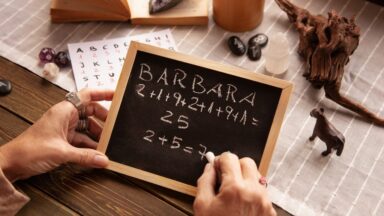
Finding your Life Path Number is easy and requires only a little simple addition. Start by writing down your birthday.
In your numerology report, every meaningful number is reduced down to the vibration of a single digit. For example, 20 is reduced to 2 (2+0=2) and 31 is reduced to 4 (3+1=4). The exception to this rule is for “Master Numbers” 11 and 22. These numbers have special meaning and are never reduced when calculating your life path.
Convert the day, month and year of your birthday down to single digit form.
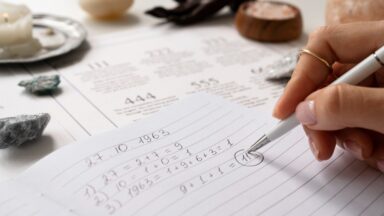
Example 1: If your birthday is July 20, 1953, then write:
- Day: 20 = 2+0 = 2
- Month: July is the 7th month = 7
- Year: 1953 = 1+9+5+3 = 18 = 1+8 = 9
Example 2: If your birthday is July 22, 1953 however, because the day is a master number, instead you would write:
- Day: 22
- Month: July is the 7th month = 7
- Year: 1953 = 1+9+5+3 = 18 = 1+8 = 9
Now, add the remaining numbers and again reduce them down to a single digit.
Example 1:
- 2+7+9 = 18 = 1+8 = 9
- Life Path Number = 9
Example 2:
- 22+7+9 = 38 = 3+8 = 11 (Because 11 is also a master number, it should not be reduced.)
- Life Path Number = 11
A person can have any one of the following Life Path Numbers: 1, 2, 3, 4, 5, 6, 7, 8, 9, 11 or 22. Calculate yours and find out what it says about you below.
Ones: The Father
The number one is a spiritual and primal force. It is the root that all numbers stem from. This is perhaps why Ones tend to be doers. If you are a One then you are aggressive and energetic. You look to produce results and you will not be limited by anyone or anything. Your innate urge to be a protector and your dedication and passion to achieving your goals make you a natural born leader and show why this number is related to a fatherly role. Even the shape of the number 1 is a strong reflection of its meaning. The 1 is a spearhead, always at the lead and often forceful. It stands upright, unwavering in its pride and purpose. You are courageous and willing to try anything new if you see promise, even at great danger.
However, Ones are also very individualistic, which can lead to loneliness. Your primal urge to be a leader often makes you resent those with more power and your inflated view of self makes you less likely to heed advice. Ones also generally have issues with trust. You believe if you want something done right, then you must do it yourself.
Ones feel entitled to respect and can become demanding and domineering when it’s not given. When this happens, Ones turn into warriors and will attempt to force their values and opinions and will not listen to anyone else. You are a pragmatist and can often have a hard time relating to other’s emotions. You see through charm easily and you will not stand for hypocrisy. However, if Ones can harness their natural instinct to protect into compassion and understanding, they will earn unlimited loyalty from followers.
Twos: The Mother
The number two is thought to be a feminine number, with its power and strength consistently underestimated. Twos tend to be artists of sorts, always gentle, understanding, and diplomatic. If you are a two, you are a natural born peacekeeper, whose innate urge is to diffuse situations rather than fight. However, as we said, Twos are often underestimated.
Twos are the ultimate survivors. You are extremely resilient and often the backbone of a family. The shape of the 2 is thought to resemble a person with their head bowed and on bended knees, a natural sign of servitude. However, this position also represents strength. While Ones represent power and pride, unwilling to bend at any price, they will break and shatter when enough pressure is applied. In contrast, Twos are able to bend in order to carry crushing weights. This flexibility allows Twos to bounce back easily when the weight is removed. Twos are often the real power behind the throne, controlling the outcome of events through gentle force or persuasion without notice.
You are incredibly devoted, and you expect that same devotion in return. Beware when Twos are betrayed or mistreated. While your tactful manipulation is able to avert most disasters, you are still possessive and easily made jealous. If Twos feel under attack or crossed, they will unleash a side that is vengeful, cruel and unrelenting. You will do whatever necessary to destroy your opponent and you will not feel regret or remorse when the battle is over.
Threes: The Talented Child
Threes are natural born salesmen, with a natural gift for gab and overflow of charisma. If you’re a three, you’re the star of the party and liven up any room without even trying. You have a natural gift for creativity and you are well aware of your talent. However, Threes are also a bit like spoiled teenagers. They are disorganized, in need of constant guidance, and blissfully unaware or ungrateful for the efforts others go through to protect them.
Your powerful need to express yourself coupled with your extroverted personality will most likely lead you to a career in the arts or sales (a verbal art, if you will). Your charm, wit and sense of humor will get you everywhere and it often helps others to forgive or overlook your less desirable traits. You are a natural optimist and people are drawn to your positive energy.
However, for Threes, your greatest asset is also your greatest weakness. Because your charisma and natural talent come easily, you find it difficult to understand and relate to the struggles others. While you are always well liked and have a large group of friends, you may find it hard to form deeper relationships, especially with a romantic partner. Your need for expression and your natural creativity cause you to often lack focus and procrastinate. You find yourself involved in multiple projects at a time, abandoning the old for the new with no regard for others involved. By placing their attention on the sunny exterior and failing to form spiritual depth, Threes easily succumb to difficulties or challenges.
To become well rounded and happy, Threes must learn discipline and put constant effort into maintaining deeper relationships.
Fours: The Organizer
Fours are orderly and methodical and base their lives in logic. If you’re a Four, you are the epitome of stability. You use hard work and reason to establish a solid foundation and believe any problem can be overcome with a proper plan. Often thought to be a more masculine number, the 4’s shape says it all – hard linear edges with no room for flow or flexibility.
Fours are trustworthy and patient people. While always dependable, their constant obedience and commitment to discipline can also make them seem boring. However, Fours often possess an entertainingly witty and dry sense of humor. You find happiness in your proven accomplishments, favoring results over any sort of reward or recognition. You are humble and can be overlooked easily, even when you are the foundation to others successes. But you don’t mind. Fours dislike public attention and are quite happy to keep doing what they’re doing. However, your rigidity and stubbornness also make you a fierce soldier when defending your territory.
Due to an under-developed sense of imagination, Fours often have narrow-minded or conventional views. You have an aversion to the unexpected and see no reason to stray from something that already works. Because of your dislike for change, you hold rules as sacred. You feel safe and secure when things are predictable, and even small changes have the ability to throw your life into chaos. While Fours may not end up being the CEO of a company, their hard work, loyalty and dependability will certainly carry them far in their career.
Fives: The Free Spirit
Fives are a whirlwind of energy, constantly in need of change and stimulation. If you are a Five, your family and friends probably view you as independent and unpredictable. You’re always up for an adventure and aren’t averse to taking risks. While you are surprisingly loyal, you can also be selfish, thoughtless and irresponsible, leaving a wake of damage for others to clean up.
For Fives, change is a necessity. You have an uncompromising need for freedom and you will not be told what to do. This often makes careers a struggle. You may flit from job to job before finding your path, and even then there is no guarantee. You do best in environments that suit your need for change and independence such as consulting or owning your own business. However, once you put your mind to something, friends and family are impressed by your dedication and focus.
You are adaptable, smart and progressive and your respect for independence is reflected in your tolerant nature. However, this tolerance also makes you more likely to trust the wrong people. Fives are a poor judge of character and are often drawn to eccentric, unstable people. Your desire for instant gratification is usually your downfall, but with discipline and a stable family-like structure this can be avoided.
Sixes: The Caregiver
Nicknamed the motherhood number, the Six is a fixer. You are naturally caring and protective and you dedicate your life to fixing the problems of those around you. Sixes are the glue that holds families and communities together and they will protect their loved ones at any cost.
Sixes have a strong sense of moral justice and the role of counselor or advisor comes naturally. You have a down-to-earth wisdom that makes you genuinely well liked and respected. Considered the most harmonious of the numbers, Sixes are non-discriminative and open to forming relationships with all. You are well balanced and therefore well equipped to ground others in times of trial. However, this can also make you a bad judge of character, leading you to sacrifice yourself to the wrong people, even as those around you tell you to do otherwise. Sixes have a strong impulse to create an environment of peace and they dislike anyone who disrupts it.
This is where your dark side shows. While Sixes are the most stable of all the numbers, when plunged into discord they become the most volatile and destructive. Your loving openness makes you easy to take advantage of and your sacrificing nature will allow this to happen – however, you have your limits. Beware a wronged or angry Six, they are wolves in sheep’s clothing. Your practiced warmth makes it easy to keep a friendly smile as you destroy your enemy.
For Sixes, you must be careful in how you choose your partners. Do not let sentimentality cloud your judgment. You must learn to discriminate between those you can help and those who are made weaker by your love. There is a fine line between supporting and enabling.
Sevens: The Philosopher
Sevens are naturally curious and as a result find themselves devoted to investigating the unknown. However, you possess all of the skills to handle this challenge. You have a refined and analytical mind that is capable of great insight. Where others see only broken pieces, Sevens see a puzzle waiting to be solved. You are a strong mix of intellectual creativity and practical logic.
When your life is stable, you are the life of the party. You are charming, witty and able to present a unique spin on conversational topics. Your holistic perspective makes you an incredibly interesting dinner guest. Sevens have a natural ability to learn, analyze, and seek answers to life’s important questions, which will carry them far in life.
However, this same analytical and inquisitive mind can also lead to a life of solitude and loneliness. You need uninterrupted time to contemplate your ideas without other people’s thoughts clouding your judgment. Sevens prefer to work alone, valuing their space and privacy. However, when given too much space, Sevens can develop an egocentric, selfish and conceited streak.
Sevens have the potential for enormous growth and to go far in life. Invest time and effort into companionship and deeper relationships. Social interactions enhance your perspective on yourself and on life and should not be undervalued.
Eights: The Professional
Eights place emphasis on career, business, finances and authority. You are spiritual, but maintain a practicality and realism to your spirituality. You know the difference between make-believe and genuine realizations. However, you are also perfectly balanced and are a force that creates as easily as it destroys.
Eights focus on money, however, this is not as simple as it seems. You see money as a measure, not an end-result. You find happiness in luxury and believe your career success will lead to a more comfortable life. You are ambitious, efficient, organized and disciplined and willing to take on any task. You enjoy counseling others and sharing your wisdom and often find yourself in a “coach” type role.
However, Eights can only flourish when supported. While your ambition may make you a great leader and mentor, you are lost if you have no followers. Eights who become too independent or are not given the necessary support at a young age rebel against everything that they are. Often choosing a path that is limited and has no room for growth. This leads to frustration, anger, dissatisfaction, and hate.
You are a pack animal and you do best when part of a team. You are naturally balanced and must surround yourself with people who maintain this. You have great potential for success, however, with too much independence or ego, you have an equal potential for failure.
Nines: The Humanitarian
From a numerological perspective, Nines are by far the most interesting. When you multiply any number by 9, then add the resulting digits and reduce them to a single digit (as you did with calculating your Life Path Number), it result will always be a 9. For example,
- 9 x 5 = 45 = 4+5 = 9
In multiplication, this happens with every number, no matter how large. However, when looking at addition, the exact opposite happens. When you add 9 to any number, and reduce the result to a single digit, the outcome will always be the original number, as if nothing was added at all. For example,
- 5+9 = 14 = 1+4 = 5
The math behind the number Nine touches at the core of its symbolism. Nines have an unending flow of love to give and they offer it to the world at large. They understand the connection between all mankind and have global consciousness. Nines are humanitarians and when it comes to helping they see no difference between a close friend and person they’ve never met. However, you have a difficult time understanding why others do not share your views and will often preach your opinions. Nines are always tolerant and are the least judgmental and most conscious of the life path numbers. You never ask for credit and will stop at nothing to rectify an injustice.
In this we see the symbolism of the math behind the number 9. In multiplication, the 9 will convert other numbers into a 9. In life, Nines have a strong sense of morality and feel a need to convert others to their ways for their own good. In addition, it’s as if the 9 was never added at all. In life, Nines have a strong urge to help others, adding back what others have lost. However, they never ask for credit or recognition – as if they had done nothing at all.
As with any number, Nines also have a dark side. You are often disappointed with the realities of life and especially with those around you. You have difficulty in deep or romantic relationships, as you have trouble showing your true heart. A Nines focus and dedication to their goals often make those closest to them feel neglected and unappreciated. You see their complaints as selfish and unwarranted and you do not understand why their needs should come before something that you hold dear. This can make you withdraw and turn cold and apathetic quickly. When this dark side emerges, Nines can become condescending, egotistical, and cruel, feeling no emotion as they maliciously cut out or tear into loved ones.
You lack the perspective that would otherwise allow you to enjoy life more fully. You have trouble accepting humanities natural limitations and therefore keep pushing, often sacrificing your own happiness to do so. You have a gift for examining the world objectively. Apply this to your own life and be honest with yourself. While it’s easy to withdraw, you must openly face your own shortcomings to better understand and appreciate love.
Elevens: The Energetic Visionary
Elevens are the most intuitive of all Life Path Numbers and can sense a great deal about what’s going on behind the scenes. They have an innate understanding of others and are easily able to pick up on deeper cues. As a master number, Elevens have similar qualities to Twos, only amplified. You are dedicated and loyal and are likely to marry young. This amplified intuition is fueled by an unyielding energy, which makes it hard for others to sometimes keep up.
Because of your natural intuition and constant energy, you are likely to live a life of extremes. You form deep relationships easily, often at the bewilderment of others. However, this life of extremes is also driven by an inner restlessness. You are a visionary with energy to spare and when you become bored you plunge yourself into the next great idea. This gives you both power and emotional turmoil.
However, you possess more potential than you know. You have a natural ability to develop deep and accurate insights without ever going through a rational thought process. This is often misunderstood at a young age, leading many Elevens to be self-conscious and self-criticizing.
Your sensitivity and high-energy make you prone to anxiety and stress. While you are always tactful and diplomatic, your anxiety can make you quick to feel slighted or attacked. You often envision ways to fight back, however, your intuition will usually keep you from making any sudden movements. Take care to give yourself ample time to decompress when faced with stressful situations. You must find balance between the extremes to find your calm.
Twenty Twos: The Master Builder
If your Life Path Number is Twenty Two, you have the potential for extreme success and power. You are well disciplined, ambitious, confident and pragmatic, all of which make you naturally able to turn dreams into realities. As a master number, Twenty Twos share a lot of the same characteristics as Fours. You are hard working and rooted in logic, breaking down complex situations into step-by-step solutions. However, unlike Fours, Twenty Twos have a natural gift for intuition and independence, which allows them to overcome social anxieties.
As a Twenty Two, you are able to see the beauty of an idea as well as the logistics to make it a reality. However, your sound common sense also makes it easy for you to see the limitations of an idea. Your hard work and dedication to analysis help you understand complex scenarios, such as the intricacies of a large organization or global network. While others may not always see your vision, your intuition and realism make it easy for you to build trust. You are a dreamer and a pragmatist all in one.
Unfortunately, Twenty Twos are often the most unfulfilled in life. You are aware of your potential, however you are also your own harshest critic. You often set impractical and unrealistic standards for yourself, placing a constant self-imposed pressure to succeed. You have great difficulty accepting failure of any sort and usually blame yourself, even when it’s not deserved. When unchecked, your ego can also lead to distrust of others. You see yourself as superior and therefore lack faith in the ability of others.
Twenty Twos are dedicated and disciplined visionaries. However, you must learn to accept that ideas may change and transform as they come to fruition. Variations from your original vision are opportunities, not failures.
About the Author

Tarot Popularity Has Increased Significantly Over the Past Year
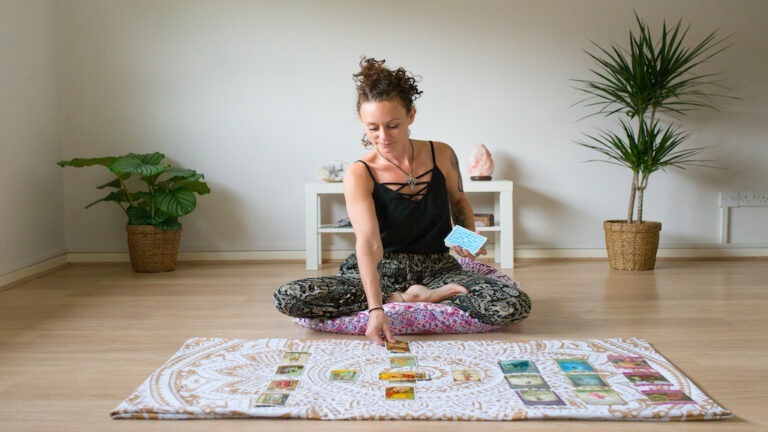
Could there be an increase in the use of tarot? If so, what is driving this surge of interest from truth-seekers?
Tarot cards, once believed by some people to be evil or dangerous can now be seen everywhere. Tarot has gone mainstream. Christian Dior offers designs for decor, dinnerware, and fashion, but tarot and oracle decks for divination are the bestsellers. U.S. Game Systems, a leading publisher of tarot cards, tells the Financial Times they’ve had to double their print runs in the past year because they sell out so fast.
It’s not just tarot, the New York Times reports data from Yelp showing searches for “supernatural readings” more than doubled in April. Why are so many people turning to these methods now?