What Is the Personal Year in Numerology and How to Calculate It
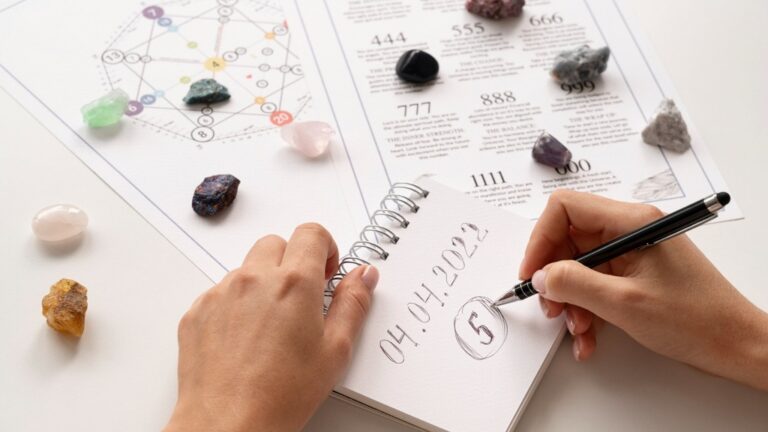
Numerology proposes that each person goes through nine-year cycles, where each year has a specific purpose and energy. These cycles, known as personal years, reflect different stages of personal evolution and help us understand what kind of experiences, challenges, and opportunities will be most present during certain periods.
In this article, we explore what the personal year means, how to calculate it correctly, and how to use it as a guide for personal and spiritual growth.
Table of Contents
- What Is the Personal Year in Numerology?
- How to Calculate Your Personal Year Step by Step
- Characteristics of Personal Years From 1 to 9
- The 9-Year Cycle and Its Influence on Your Life Path
- How to Use Your Personal Year to Grow Spiritually
What Is the Personal Year in Numerology?
The personal year in numerology is a number that indicates which energy predominates between one birthday and the next. Each personal year is associated with specific themes such as beginnings, growth, changes, or closures. Through this tool, it’s possible to understand what kind of experiences will be most present and how to respond to them more consciously.
These years are organized into a cycle of nine stages numbered from 1 to 9. Each number reflects a different phase of personal evolution, and knowing your personal year allows you to identify where you are in the cycle and what types of decisions are most favorable. Some years encourage you to start new projects, others to strengthen relationships, and others to let go of what has already served its purpose.
It is important to know that the personal year does not begin on January 1st, but on the day of each person’s birthday. From that moment, a new energy is activated that accompanies you during the following twelve months, setting the tone for the experiences that will unfold during that period.
In the episode dedicated to numerology in the series The Other Side, available on Gaia, there is an in-depth exploration of how numbers, and particularly the date of birth, can offer insights into who we are and how we navigate each stage of life. This perspective allows for a deeper understanding of the meaning of numerological cycles and their impact on our personal journey.
How to Calculate Your Personal Year Step by Step
The calculation of the personal year is based on adding the day and month of birth with the year you want to analyze. Unlike the life path number, which considers the complete date of birth, here you only use the day, the month, and the current year. Everything is added together and then reduced to a single digit between 1 and 9.
Let’s look at an example:
If you were born on June 7 and want to know your personal year for 2026:
7 (day) + 6 (month) + 2 + 0 + 2 + 6 (year) = 23
2 + 3 = 5
Your personal year would be 5.
Another example:
Date of birth: November 15
You want to know your personal year for 2026:
1 + 5 + 1 + 1 + 2 + 0 + 2 + 6 = 18
1 + 8 = 9
Your personal year would be 9.
Remember that this number begins to influence you from your birthday, and not from January first. So if you were born in November, you will remain in your previous personal year until your birthday.
Characteristics of Personal Years From 1 to 9
Each personal year is part of a nine-year cycle that reflects different phases of personal evolution. Each number represents a specific energy that sets the tone of the year, indicating what kind of experiences, challenges, and opportunities will be most present. Knowing this information allows you to make more conscious decisions and live more in tune with the moment you are going through.
-
Personal Year 1
It is a year of beginnings, independence, and renewal. It encourages you to make firm decisions, start new projects, and leave behind what no longer fits in this new stage. The energy is focused on the self: who you are, what you want, and where you want to go. It’s a time to act with determination and plant the seeds that will bear fruit in the coming years.
-
Personal Year 2
This year requires sensitivity, patience, and openness to dialogue. It’s a stage for strengthening bonds, cooperating with others, and resolving conflicts harmoniously. It’s not about moving forward quickly, but about observing, listening, and building from emotional connection. Intuition and empathy will be great allies during this period.
-
Personal Year 3
It is a year to express yourself, communicate, and enjoy life with lightness. The energy supports creativity, art, social relationships, and anything that allows you to share what you carry inside. It’s a time to release accumulated tension and recover your enthusiasm. It’s also a good stage for developing new talents.
-
Personal Year 4
The energy of this year is focused on consistent work, organization, and building solid foundations. It’s a time to set priorities, take on responsibilities, and give concrete form to your plans. Although it may feel slower or more demanding, what you do now will be key for your future stability. The effort will yield lasting results.
-
Personal Year 5
It is a stage of changes, surprises, and expansion. This year brings movement, new opportunities, and the chance to break away from routines that no longer make sense. The key is to stay open to change without losing focus. Travel, unexpected learning experiences, and important decisions may arise suddenly.
-
Personal Year 6
This year invites you to care for your immediate environment, your loved ones, and your emotional responsibilities. It may involve important commitments at home, with family, or in close relationships. It’s a time to cultivate balance between giving and receiving. It may also be a stage of healing, whether personal or relational.
-
Personal Year 7
The energy of 7 is introspective, reflective, and spiritual. It’s not a time for impulsive action, but for pausing, questioning, and seeking deeper answers. You may feel the need for solitude, silence, or inner connection. Studying, meditating, or reviewing your purpose may be especially valuable during this period.
-
Personal Year 8
This year focuses on the material, the professional, and the exercise of personal power. It’s a stage of results, achievements, and important decisions that may impact your financial stability or long-term projection. The key is to act with responsibility and balance. If you use your energy wisely, this year can bring significant progress.
-
Personal Year 9
The 9 represents the closing of a cycle. It’s a time to let go, forgive, and release what has already fulfilled its purpose. This energy supports introspection, gratitude, and preparation for what’s to come. You may feel emotions more intensely, but also gain greater clarity about what you no longer wish to carry forward.
The 9-Year Cycle and Its Influence on Your Life Path
Numerology teaches that life unfolds in nine-year cycles, each with a specific purpose. Throughout this journey, we go through stages of beginning, development, transformation, and closure. Understanding where you are within this cycle helps you align your decisions with the moment you are currently experiencing.
These cycles do not repeat in exactly the same way, but they do share an energetic structure that sets certain rhythms. For example, a year 1 is ideal for planting seeds, while a year 9 invites you to let go. Recognizing these patterns doesn’t mean predicting the future, but rather understanding the ground on which your experiences will unfold.
The nine-year cycle is not separate from your life path. On the contrary, the two complement and enhance each other. Your life path number reflects your essence, and the personal year indicates how that essence expresses itself in a particular stage. Observing both numbers gives you a more complete view of your growth process.
How to Use Your Personal Year to Grow Spiritually
The personal year is not only useful for making practical decisions; it can also be a tool for your spiritual evolution. Each number proposes a kind of learning that invites you to grow inwardly, release repetitive patterns, and connect with your life’s purpose. When you align with that energy, spiritual development flows more easily.
For example, in a year 7 you might dedicate more time to meditation or reflection; in a year 6, to working on self-love and service; in a year 1, to cultivating the confidence to move forward without fear. Each stage is an opportunity to look within and discover which part of yourself needs to be strengthened or transformed.
The key is to live each year with awareness. Instead of resisting what happens, you can observe what the energy of the personal year is showing you and use it as a guide. In this way, your spiritual path becomes more coherent, and each experience, no matter how simple it may seem, can become a step toward greater clarity and inner connection.
About the Author

Name Numerology: What Your Name Says About You
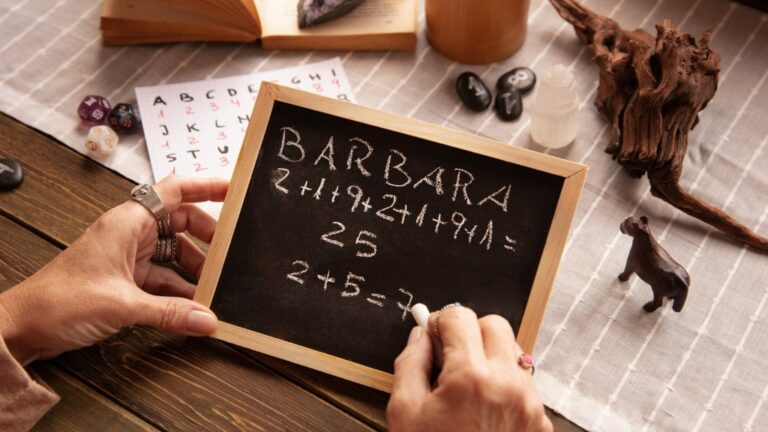
Your name has been with you from the beginning: you hear it, sign it, respond to it, and carry it through every stage of your life. Rarely, however, do you stop to look at it closely. Numerology proposes exactly that: observing it not only as a form of identification, but as a key that can reveal aspects of your deeper identity.
In this article, we explore what your name reveals about you, which main numbers arise from it, and how to calculate them step by step.
Table of Contents
- Numerology and Its Relationship With Names
- The Three Main Numbers of Your Name
- How to Calculate the Numbers of Your Name Step by Step
- What Name Numerology Is For
Numerology and Its Relationship With Names
Numerology begins with a very ancient idea: that numbers are not only used to measure or count, but also hold a meaning of their own. Each digit, from 1 to 9, is associated with a set of specific qualities. The name is one of the elements this discipline uses as the basis for its interpretation, because it turns something as everyday as your letters into a symbolic key to who you are.
To arrive at that meaning, it starts from a simple principle: each letter corresponds to a number. In this way, your full name stops being only a set of sounds and becomes a sequence of digits that can be added together and interpreted. That sequence, once deciphered, begins to speak about your way of being.
There is something particular about working with the name: you did not choose it yourself, it was given to you at birth and, over time, became inseparable from who you are. Numerology uses it as a starting point to talk about you. What it offers, ultimately, is one more language for knowing yourself.
In the episode Numerology from the series The Other Side, available on Gaia, numbers are explored as a symbolic language for better understanding personal experience. There, numerology is presented not as a form of divination, but as a tool for observing who you are, how you show up in the world, and what patterns appear on your path.
The Three Main Numbers of Your Name
When working with the full name, there are three numbers that are considered especially important: the Destiny or Expression Number, the Soul Urge Number, and the Personality Number. Each one is calculated using a different part of the name and reveals a specific dimension of your way of being.
It may help to think of them as three levels of interpretation. One speaks of your visible potential, another of your inner motivation, and another of the image you project. They do not compete with each other: they complement one another.
-
The Destiny or Expression Number
The Destiny Number, also called the Expression Number, is calculated by adding all the letters of the full name. It is one of the broadest numbers in the analysis because it takes the entirety of the name into account, not just one part.
It is related to your talents, abilities, and personal resources. It speaks of the way you tend to act, create, solve, build, or communicate when you express your potential with greater clarity.
It does not indicate a fixed destiny or a series of inevitable events. Rather, it points to the tools you have available to move forward on your path and the way you can develop what is already within you.
-
The Soul Urge Number
The Soul Urge Number is calculated only with the vowels of the full name. In numerology, vowels are associated with a person’s innermost dimension: what they desire, value, and need in order to feel aligned.
This number can help you recognize what truly moves you, even when you do not express it in an obvious way. Sometimes it appears in quiet decisions: a choice that may seem illogical from the outside, but feels necessary within.
It can also reveal tensions between what you deeply want and what you do out of habit, obligation, or external expectation. That is why it is often a very useful number for reviewing motivations, relationships, and important decisions.
-
The Personality Number
The Personality Number is obtained from the consonants of the full name. Unlike the Soul Urge Number, it does not focus on what you feel inside, but on the way you show yourself to the outside world.
This number describes the first impression you can create, the type of energy you communicate, and certain traits that others often perceive easily. Depending on the result, it can speak of a more reserved, firm, sensitive, creative, practical, or expansive image.
Knowing it does not mean adjusting your behavior to be more pleasing to others. It helps you observe whether the way you are perceived matches what you feel you are, or whether there is something in the way you express yourself that you could refine in order to relate with greater authenticity.
How to Calculate the Numbers of Your Name Step by Step
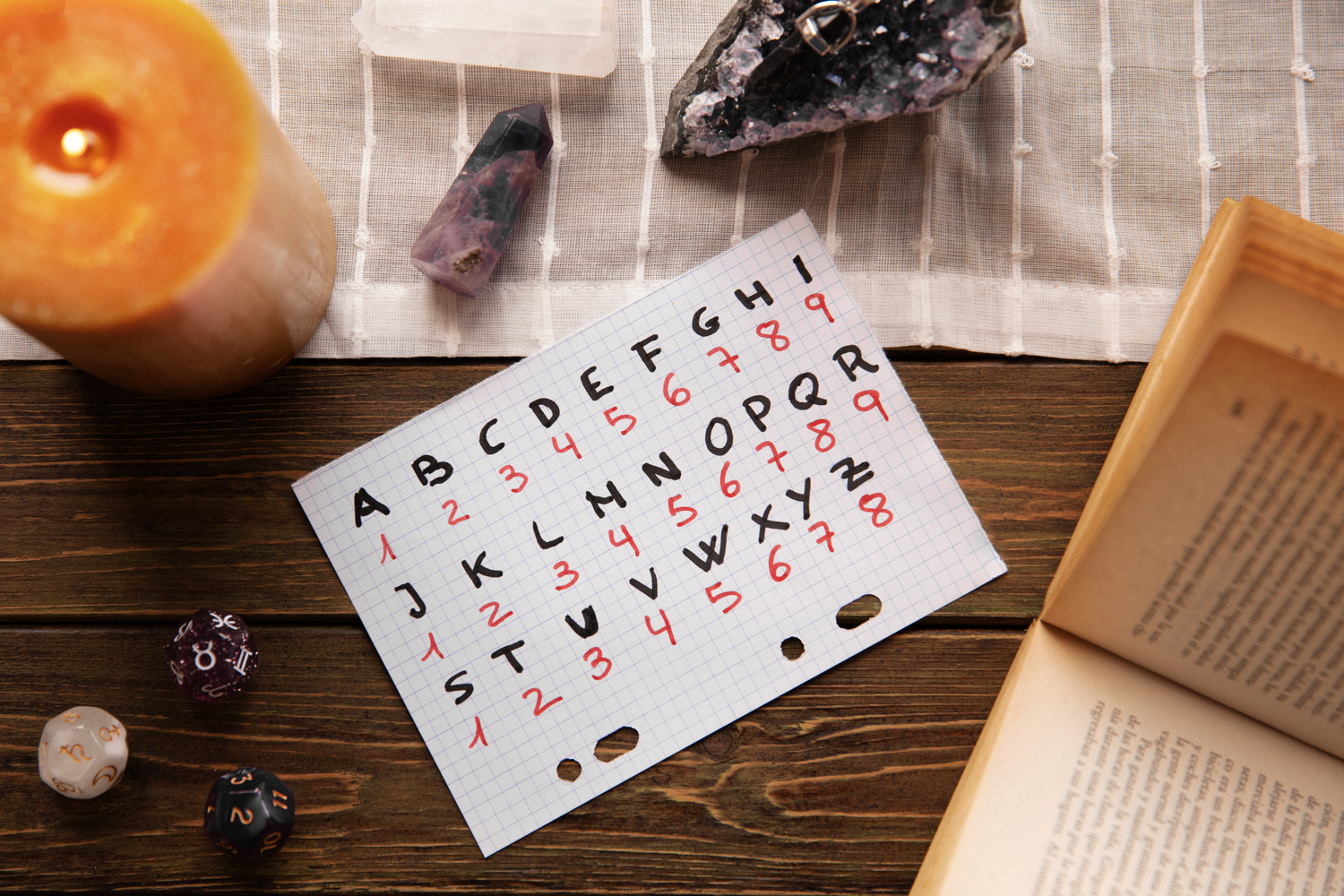
To calculate these numbers, you first need to convert each letter into its corresponding value according to the Pythagorean table. Then you make different sums depending on the number you want to obtain: all the letters for the Destiny or Expression Number, only the vowels for the Soul Urge Number, and only the consonants for the Personality Number.
The process is simple, but it is best to do it calmly. Write your full name, separate vowels and consonants, and check each letter before adding. In names with accents or special characters, the base letter is usually used for numerological calculations.
-
The Pythagorean Table Letter by Letter
The Pythagorean table assigns a number from 1 to 9 to each letter of the alphabet. The full correspondence is as follows:
- 1: A, J, S
- 2: B, K, T
- 3: C, L, U
- 4: D, M, V
- 5: E, N, W
- 6: F, O, X
- 7: G, P, Y
- 8: H, Q, Z
- 9: I, R
With this table, you can convert any name into a numerical sequence. Then, you only have to add and reduce the result until you obtain a number from 1 to 9, unless a master number appears: 11, 22, or 33.
-
Practical Example With a Full Name
Let’s take the name Olivia Carter as an example. First, each letter is replaced by its numerical value:
O (6) + L (3) + I (9) + V (4) + I (9) + A (1) + C (3) + A (1) + R (9) + T (2) + E (5) + R (9)
The total sum is:
6 + 3 + 9 + 4 + 9 + 1 + 3 + 1 + 9 + 2 + 5 + 9 = 61
6 + 1 = 7
In this case, the Destiny or Expression Number is 7.
To calculate the Soul Urge Number, only the vowels are taken:
O (6) + I (9) + I (9) + A (1) + A (1) + E (5) = 31
3 + 1 = 4
The Soul Urge Number is 4.
To calculate the Personality Number, only the consonants are taken:
L (3) + V (4) + C (3) + R (9) + T (2) + R (9) = 30
3 + 0 = 3
The Personality Number is 3. In this way, the same name offers three different readings: one about the potential for expression, another about inner motivation, and another about the image projected toward others.
-
What to Do With Master Numbers (11, 22, and 33)
Master numbers in numerology are 11, 22, and 33. When a sum reaches one of these results, it is not reduced further. That is, if by adding the letters you obtain 11, you do not turn it into 2; if you obtain 22, you do not turn it into 4; and if you obtain 33, you do not turn it into 6.
These numbers are interpreted as vibrations of greater symbolic intensity. This means they may indicate a broader potential, but also more demanding challenges when it comes to integrating that energy into everyday life. They do not indicate that a person is “better” or “more advanced”; they simply require a more careful reading.
It is also useful to remember that each master number contains the base of its reduction: 11 is linked to 2, 22 to 4, and 33 to 6. That is why, when interpreting them, both their elevated qualities and their simpler, everyday expressions are observed.
What Name Numerology Is For
Knowing the numbers that arise from your full name can be a form of self-knowledge. This does not mean that every description will match you exactly, or that you should adjust yourself to a fixed interpretation. It works more like a mirror: it shows you certain tendencies so you can observe them, question them, and understand yourself better.
This reading can help you distinguish between what moves you inside, what you express through your actions, and what others perceive in you. Perhaps you discover that your Soul Urge Number points to a need for stability, while your Personality Number projects a much more changeable or restless image. That difference can give you clues as to why others sometimes expect an energy from you that does not always match what you truly need.
It can also be useful when making decisions. You can ask yourself: Does this respond to what truly moves me? Does it allow me to use my abilities? Does the way I am presenting myself reflect what I want to communicate? The answers do not depend only on a number, but the calculation can give you a concrete reference point from which to look more honestly.
As with the birth chart, numerology does not replace your discernment or fully define who you are. It offers a symbolic language for looking at your experience from another angle. Used with discernment, it can help you recognize patterns, organize inner questions, and make decisions that are more aligned with who you are, not only with what others expect to see in you.