What Is a Spiritual Quantum Leap and How It Manifests

A spiritual quantum leap is a profound shift in the way we perceive and understand our reality. It doesn’t happen outside of us, but within, when we expand our consciousness and access a broader vision of who we are and why we experience what we experience.
In this article we explore what a spiritual quantum leap is, how it relates to the fifth dimension, and what signs indicate we are going through one.
Table of Contents
- What Is a Quantum Leap on the Spiritual Path?
- The Quantum Leap as a Shift in Consciousness and Perception
- What Is the Relationship Between the Quantum Leap and the Fifth Dimension?
- How to Know if You Are Going Through a Quantum Leap?
- Can a Quantum Leap Be Triggered Consciously?
- Examples of Quantum Leaps in Everyday Life
- The Quantum Leap as the Beginning of a New Stage
What Is a Quantum Leap on the Spiritual Path?
On the spiritual path, a quantum leap does not refer to physically moving from one place to another, but to an internal shift that allows us to see life from a different perspective. It is as if something settles within us and, suddenly, the pieces begin to make sense. That transformation does not depend on what happens outside, but on how we understand it from a new level of consciousness.
This type of shift occurs when we begin to integrate different aspects of our existence. The third dimension is the one we perceive with the physical body, related to space. The fourth dimension is time: our history, our memories, everything that changes. And the fifth dimension appears when we manage to see that entire process together, as if we were standing before a mirror that reflects not only the present, but also the meaning of what has been lived and what is yet to come.
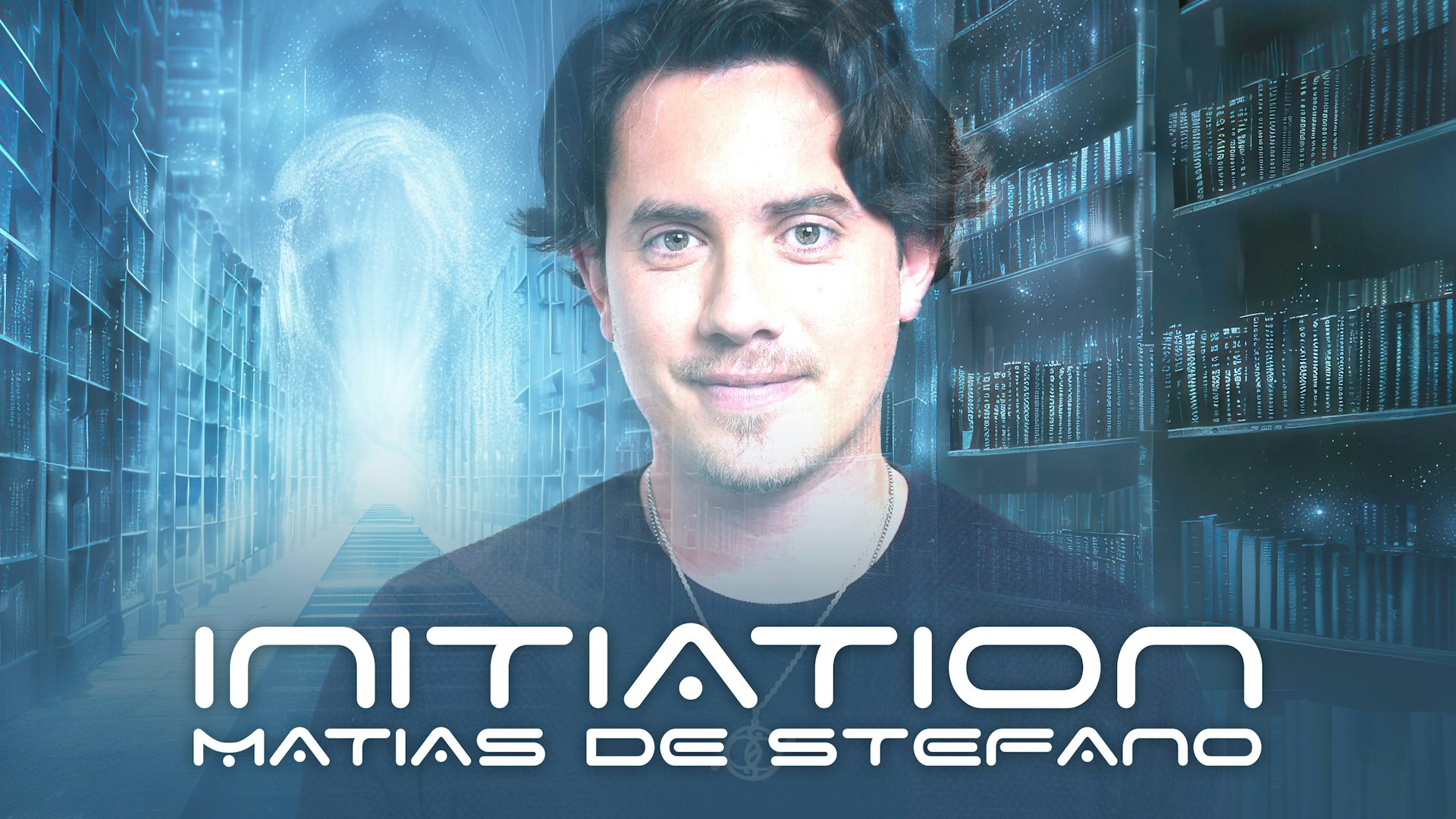
In the series Initiation, available on Gaia, Matías De Stefano shows how this type of transformation is part of the natural process of the soul. Through his connection with the Akashic Records, he reveals how the different dimensions relate to one another and how shifts in consciousness help us remember who we are beyond time and space.
The Quantum Leap as a Shift in Consciousness and Perception
When a person goes through a quantum leap, they stop seeing their life as a succession of separate events. They begin to perceive that each experience has a purpose and that everything lived is part of a greater process. This new consciousness allows one to let go of the idea that things “just happen,” and in its place a deeper understanding of the why and the what-for of what we experience emerges.
This type of perception is not theoretical. It is experienced directly: sometimes as an inner sense of certainty, other times as a deep connection with a wiser version of oneself. In that experience, one may feel guided, not by something external, but by a more conscious aspect of one’s own being. It is a clarity that does not come from the mind, but from the integration of all the dimensions we inhabit.
In this state, time no longer feels like a line running from past to future. Instead, everything is perceived simultaneously: what I was, what I am, and what I will be. That expansion allows us to live with less fear, with more direction, and with a more loving understanding of our own path. The quantum leap, then, is also a way of remembering that we are not lost, but in full process of integration.
What Is the Relationship Between the Quantum Leap and the Fifth Dimension?
The fifth dimension is not a place one travels to, but a level of consciousness from which we can see the complete process of our existence. While in the third dimension we live the physical and in the fourth we experience time, the fifth integrates both: space and time unify. From there, we can observe ourselves as if standing before a mirror that reflects not only who we are now, but also who we have been and who we can become.
A quantum leap occurs when we manage to access that perspective. That is, when we stop identifying only with what happens to us and begin to understand the purpose behind our experiences. In that moment, we project ourselves toward a more expanded version of ourselves. We no longer live only from experience, but also from the observation and awareness of the entire process.
According to Matías De Stefano, the fifth dimension is the dimension of clarity. In that state, we understand that everything we live has a meaning and that we can guide ourselves from a wiser place. That is why quantum leaps are directly related to the activation of this consciousness: they are not random movements, but expansions that connect us with our own inner guidance, that part of us that already knows where we are headed.
How to Know if You Are Going Through a Quantum Leap?
Going through a quantum leap is not always obvious at first. It can feel confusing, challenging, or even destabilizing. However, there are certain signs that indicate something profound is shifting within you:
- Shift in perspective: You begin to see your experiences from a different place. What once seemed like a problem you now understand as an opportunity to grow.
- Greater inner clarity: Even without having all the answers, you feel that something is aligning. A sense of purpose appears that was not there before.
- Emotional detachment: Old wounds or conflicts lose their grip. You can remember what hurt you without getting trapped in that emotion.
- More active intuition: You begin to receive messages, ideas, or sensations that seem to come “from somewhere else.” They are not logical thoughts, but you know they make sense to you.
- Sense of connection: You feel more united with everything around you. A perception of unity arises that goes beyond the mental or emotional.

Can a Quantum Leap Be Triggered Consciously?
A quantum leap can occur spontaneously, but it is also possible to facilitate it consciously. This happens when a person begins to look at their life with a clear intention to understand it, rather than simply reacting to what occurs. It is not about forcing a change, but about opening up to a new way of seeing and feeling what is already present.
Self-awareness is the key to initiating this process. By attentively observing one’s own thoughts, emotions, and patterns, an inner space is created where a deeper understanding can emerge. In that space, it becomes possible to release old structures that no longer make sense and give way to a more coherent version of oneself.
Although there is no single technique, there are practices that can help: meditation, silence, contact with nature, reflective writing, or spiritual study. What matters is not what is done, but from where it is done. When actions arise from a genuine desire to evolve and remember who we are beyond the everyday persona, the quantum leap becomes a real possibility.
Examples of Quantum Leaps in Everyday Life
Quantum leaps are not always accompanied by mystical or extraordinary experiences. Many times they manifest in simple yet profoundly transformative ways:
- Choosing to release control: Instead of insisting that everything go as expected, trust appears. That surrender brings a peace that was previously unknown.
- Seeing a conflict from a different place: What once generated anger or pain begins to be seen with understanding. The way of reacting changes and a repetitive pattern is broken.
- Reconnecting with a purpose: After years of routine, a clarity emerges about what one truly wants to do. That decision marks a before and an after.
- Accepting a loss with love: Instead of remaining trapped in sadness, the value of what was lived is understood. Pain transforms into wisdom.
- Listening to the inner voice: Something within guides an action without logical explanation. Later, that decision proves to have been the right one, even though it made no sense at the time.
The Quantum Leap as the Beginning of a New Stage
Going through a quantum leap does not mean having reached a final destination, but opening the door to a new way of living. Although the process can feel intense or disorderly at first, over time it becomes evident that something has changed in an irreversible way. What once seemed chaotic now has a different order.
In this new stage, decisions are made from a more conscious place. There is greater coherence between what is thought, felt, and done. This does not mean that challenges disappear, but that they are faced from a different perspective, with more clarity and less reactivity.
It is also common that, after a quantum leap, relationships, priorities, and one’s relationship with the surrounding environment shift. Many times a need to simplify, to be more authentic, or to follow paths that once seemed distant is experienced. It is as if something internal begins to align everything else.
This transformation does not happen overnight, but once begun, it makes a profound difference. The quantum leap is not just an event — it is a turning point. And most importantly: it reminds us that we can always change direction, expand our consciousness, and choose to live in a way that is more connected with who we truly are.
About the Author

What Dharma Is And How It Differs From Karma

Dharma and karma are essential concepts in the spiritual traditions of India that help us understand our purpose in life and the law of cause and effect. While karma explains how our actions generate consequences, dharma reveals our true nature and mission in the world.
In this article, we will explore these concepts from the perspective of Simon Chokoisky, who has studied Vedic wisdom in depth to help us find our true mission.
Table of Contents
- What Is Dharma And What Is Its Essential Purpose?
- What Is The Difference Between Dharma And Karma?
- The Five Types Of Dharma: Keys To Discovering Your Mission
- How To Identify Your Type Of Dharma
- Living In Harmony With Your Dharma In Daily Life
What Is Dharma And What Is Its Essential Purpose?
Dharma is a concept of Sanskrit origin that means “that which sustains.” It refers to the unique purpose each person has in life, that which makes us feel fulfilled and gives meaning to our existence. Following dharma means living according to who we are and our abilities. It is not something imposed from outside, but an inner guide.
The essential purpose of dharma is to achieve balance between our needs and those of our environment. When we discover our dharma, we begin making more conscious decisions that are connected with our essence. This not only improves our personal life but also contributes something valuable to others. Living our dharma means living with coherence and purpose.
Unlike goals we pursue out of habit, dharma arises from the deepest part of ourselves. It is a force that drives us to express the best within us. This force is present in every aspect of our lives, from work to relationships. Recognizing our dharma is key to living authentically.
During an interview on Open Minds, available on Gaia, Simon Chokoisky explores these concepts in depth. He explains how dharma offers a clear path to living more authentically and aligned with our true nature. His practical and direct approach helps us understand how to integrate these principles into everyday life to find greater purpose and balance.
What Is The Difference Between Dharma And Karma?
Dharma and karma are different concepts, although they are related. Karma is based on the law of cause and effect: every action we take has a consequence. These consequences may be immediate or may manifest later. For this reason, karma teaches us how our choices affect our lives.
Dharma, on the other hand, does not refer to the consequences of our actions, but to the purpose we have. It is the inner guide that tells us which actions are in harmony with our nature. If karma is the result of what we do, dharma is the path we choose to walk. This distinction helps us act with greater awareness.
When we act according to our dharma, the karma we generate tends to be positive. Although this does not eliminate challenges, it allows us to face them with greater clarity and determination. In this way, dharma and karma work together: one shows us the consequences, while the other helps us choose the best path. Living with purpose transforms every action into growth and learning.
The Five Types Of Dharma: Keys To Discovering Your Mission
According to the perspective of Simon Chokoisky, each person has a main type of dharma that defines how they can contribute to the world and grow authentically. Below, we explore these five types of dharma, which function as a practical map for understanding our talents and strengths. These archetypes help us see how our actions contribute to collective well-being and personal meaning. Identifying your type of dharma is the first step toward living with coherence and purpose.
-
Warrior: The Protector And Natural Leader
The warrior is the one who feels a strong calling to protect others and lead with courage. Their strength lies not only in their physical presence but also in their ability to act decisively when others cannot. Warriors possess a deep sense of justice and responsibility, which makes them agents of change in any environment. They are people who seek just causes to which they can dedicate their energy.
However, this type of dharma also faces the challenge of balancing intensity with compassion. When warriors learn to use their power wisely, they can inspire others to do the same. Their path involves learning to listen and act with integrity so that their strength becomes a tool for transformation rather than imposition. In this way, they lead with a higher purpose.
-
Educator: The Guide Who Inspires And Teaches
The educator finds their purpose in sharing knowledge and awakening the curiosity of others. Their dharma is to guide, teach, and help others discover their own potential. Educators enjoy learning and exploring ideas, and they have the ability to make complex topics clear and accessible. Their passion for knowledge is reflected in every aspect of their lives.
However, the educator’s challenge is avoiding remaining only in theory. To fully fulfill their mission, they must balance reflection with action. When they are able to put into practice what they teach, they become true role models. Their dharma is to spark the flame of learning and to be a living example of what they teach.
-
Merchant: The Creator Of Value And Happiness
The merchant has the natural ability to generate well-being around them. Their dharma is to create value and share it with others, whether through business, art, or activities that inspire joy. These individuals know how to recognize opportunities and turn them into something positive for everyone. Their enthusiasm and optimism are contagious and bring lightness to any situation.
Although they may be motivated by success and results, their true strength emerges when they use these gifts to benefit the community. The merchant must remember that their purpose is not only to win, but to generate happiness and abundance. When they balance the pursuit of success with generosity, they become powerful agents of change. In this way, their mission becomes as enriching for others as it is for themselves.
-
Industrious: The Builder Of Community And Family
The industrious one finds meaning in caring for others and building strong relationships. Their dharma is linked to consistent work and dedication to keeping family or community united. These individuals are the heart of any group, as their presence brings stability and trust. They are always willing to collaborate and provide support when it is most needed.
However, the challenge for the industrious person is remembering that they also deserve care and attention. At times they may lose themselves in responsibilities and forget their own well-being. Their path involves balancing giving and receiving while recognizing their unique value. In this way, they can continue strengthening the community without neglecting their own inner peace.
-
Outsider: The Rebel Who Transforms The World
The outsider is the nonconformist who breaks patterns and proposes new ways of seeing life. Their dharma lies in questioning what is established and bringing freshness to every space they touch. This type of person sees beyond social norms and dares to open new paths. Their renewed perspective can inspire others to step outside their comfort zones.
The outsider’s challenge is maintaining balance between freedom and commitment. Although their strength lies in innovation, they need to find stability so their ideas can materialize. When they manage to combine creativity with consistency, the outsider becomes a true engine of change. In this way, they fulfill their mission of transforming the world through authenticity and courage.
How To Identify Your Type Of Dharma
Recognizing your type of dharma involves observing how you act, what motivates you, and what brings you joy when serving others. Here are some key points to help you identify it and begin living more authentically:
- Observe your inclinations: Ask yourself in which activities you feel most comfortable and fulfilled. Your natural talents and passions are signs of your dharma.
- Notice your challenges: Pay attention to the obstacles that appear most frequently in your life. They are often related to your main mission.
- Review your behavioral patterns: Think about how you respond in different situations. Your instinctive reactions can give you clues about your type of dharma.
- Examine your relationships: The way you interact with others reveals aspects of your dharma. Observe how you contribute to your environment and what types of connections enrich you.
- Take time to reflect: Meditation and self-observation help you see internal patterns. Sometimes the answer is closer than you think—you simply need to quiet the mind.
Living In Harmony With Your Dharma In Daily Life
Living in harmony with your dharma is not something reserved for special moments; it is reflected in every daily decision. This means acting in alignment with your nature and recognizing that every small gesture is part of your greater purpose. When you become aware of this, each day becomes an opportunity to grow and share the best of yourself.
Practicing inner listening is essential to remain connected with your dharma. When doubt or confusion arises, take a moment to pause and breathe. By focusing on your intuition, you find the strength to make decisions that bring you closer to your true path.
Finally, remember that your dharma is not static. It evolves with you and manifests in different ways throughout your life. Stay open to change and willing to learn, and in doing so you ensure that you live with authenticity while contributing to the well-being of others.