Top 10 Transformational Videos On Gaia

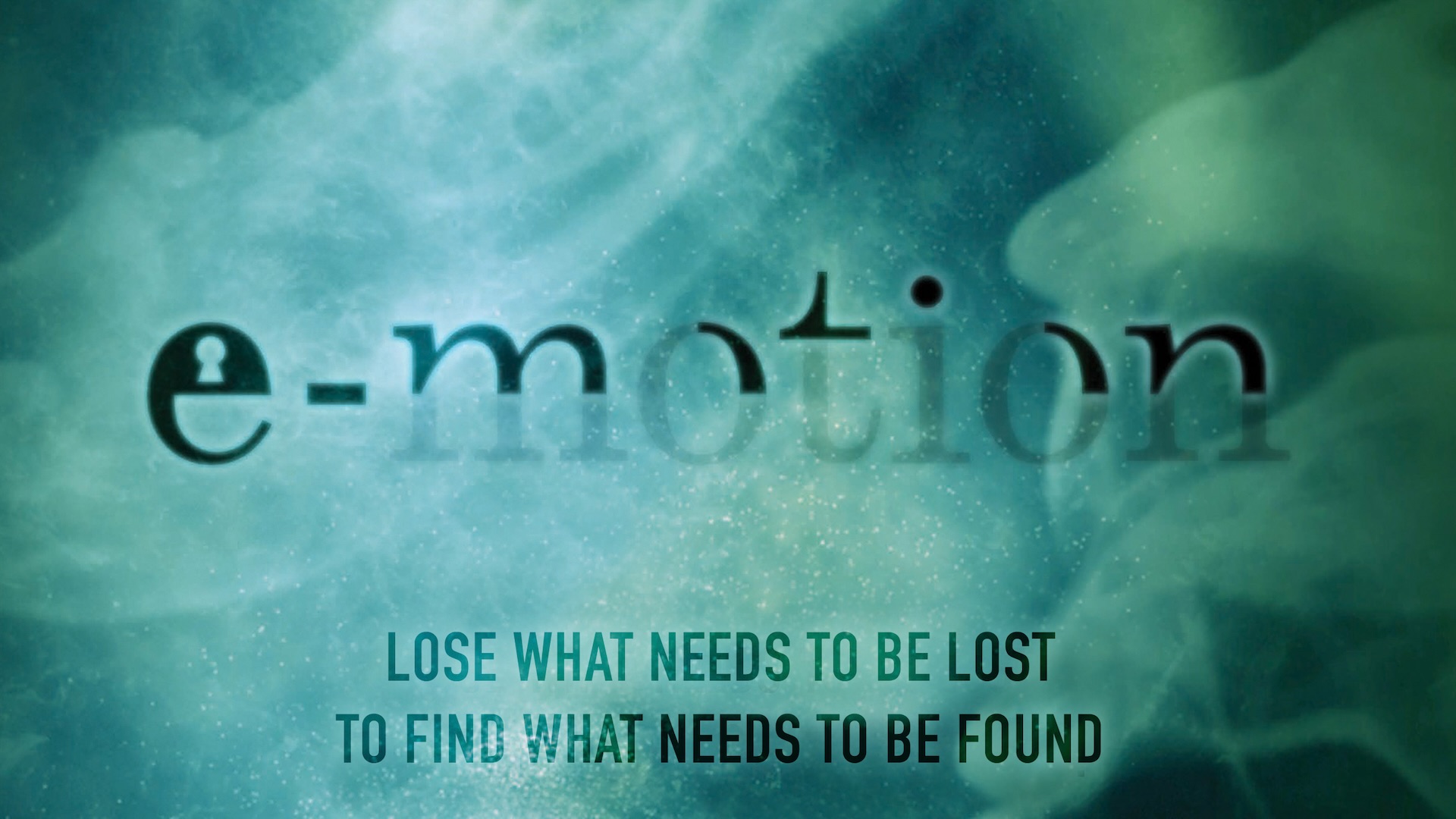
1. E-Motion
Our western mentality of coping with this is to prescribe drugs and external modalities when we might be missing a solution that’s right in front of us, or rather inside of us. E-motion takes us through the proven methods of doctors and psychologists pioneering practices and tools we can implement to allow our bodies to heal themselves.
Through meditation, intention, and reprogramming, E-motion documents the proven mechanisms from New York Times best-selling authors and spiritual leaders, Dr Joe Dispenza, Nassim Haramein, Neale Donald Walsch, and Sonia Choquette. Their techniques will allow you to clear negative emotions and truly achieve your divine purpose.
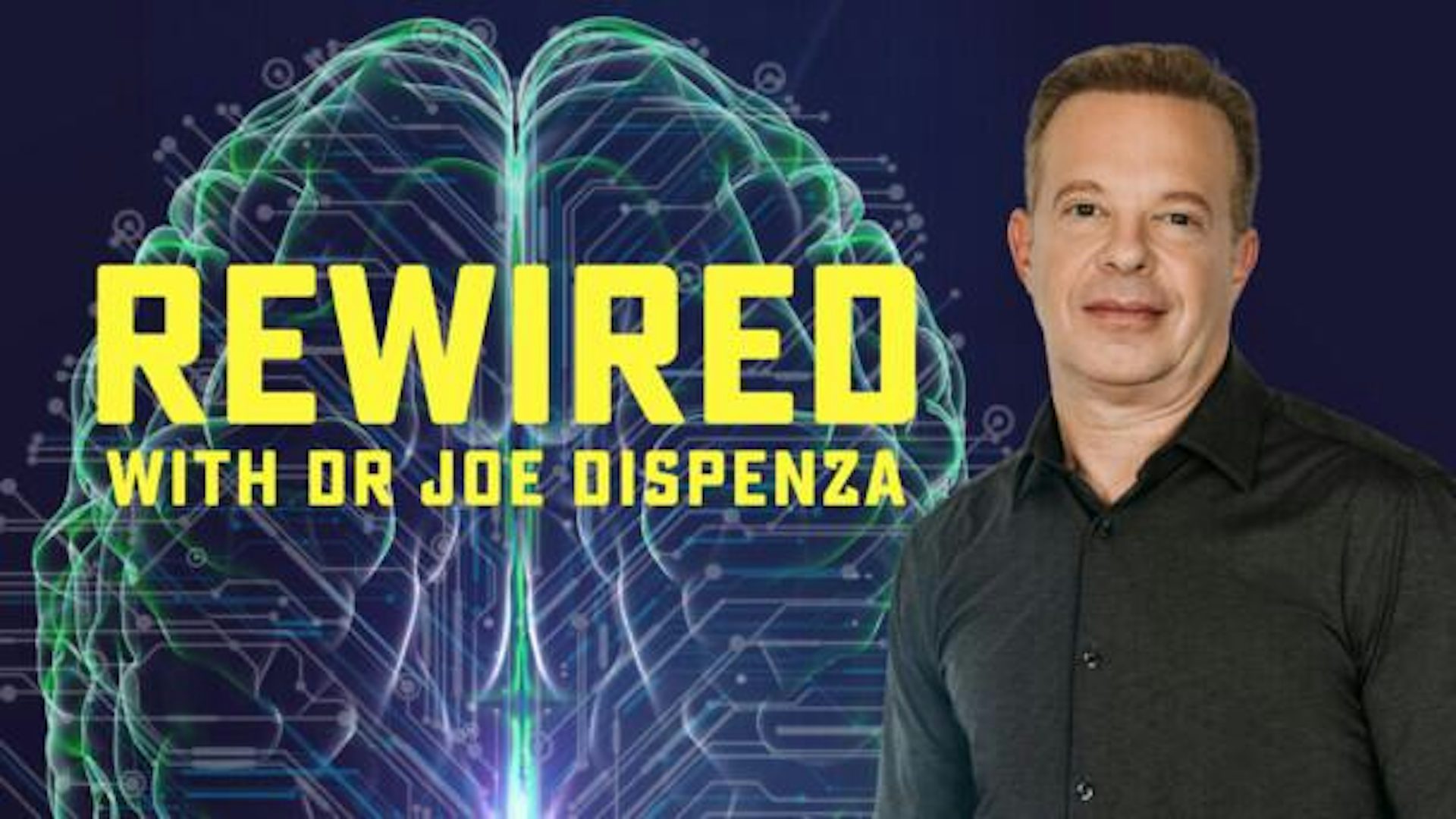
2. Rewired with Dr Joe Dispenza
You have the capability of becoming supernatural, which means being able to change your body and your world by thought alone. Dr. Joe Dispenza reveals the formula for rewiring your brain and changing your life. He explains that we are not hardwired to be a certain way for the entirety of our lives. Before you can understand how this works, you need an introduction to your brain and its parts, to learn how they affect what you think, do, and experience. Armed with this knowledge, you have the power to create coherence within.
3. Divine Science: The Secrets of Consciousness
Embark on a journey that connects science and spirituality with the enigmatic elements shaping our worldview to reveal a cosmic web of consciousness.
Deepen your understanding of how your thoughts affect the physical world, plants interact consciously with humanity, and sound can offer healing or higher consciousness. Learn how a naturally occurring substance in your brain can open a portal to other realities, why experts believe we never really die, and how sacred geometry shapes our world.
4. The Creative Play of Consciousness
How does consciousness shape our reality, and could it unlock the mysteries of existence and the creative force inherent in all life forms?
The Creative Play of Consciousness is a four-part docuseries that delves into life’s profound questions through the insights of cutting-edge science, philosophical inquiry, and ancient wisdom. Join renowned scientists, philosophers, and thought leaders as they explore the complexities of creation, the origins of consciousness, and the boundless creativity intrinsic to life itself.
5. The Power of the Heart
What is the heart’s highest potential? From the director of The Secret comes this life-changing documentary about the incredible power and intelligence of your heart.
Based on the book by Baptist de Pape, this film features some of the most inspiring thinkers and influential icons of our time including Paulo Coelho, Maya Angelou, Deepak Chopra, Isabel Allende, and Eckhart Tolle. This film (which ties into a book of the same name) presents fascinating evidence that your heart is much more than a physical organ — and that it can actually transform your views of money, health, relationships, and success.
The Power of the Heart is an experience that will lead you to uncover the true purpose of your heart.
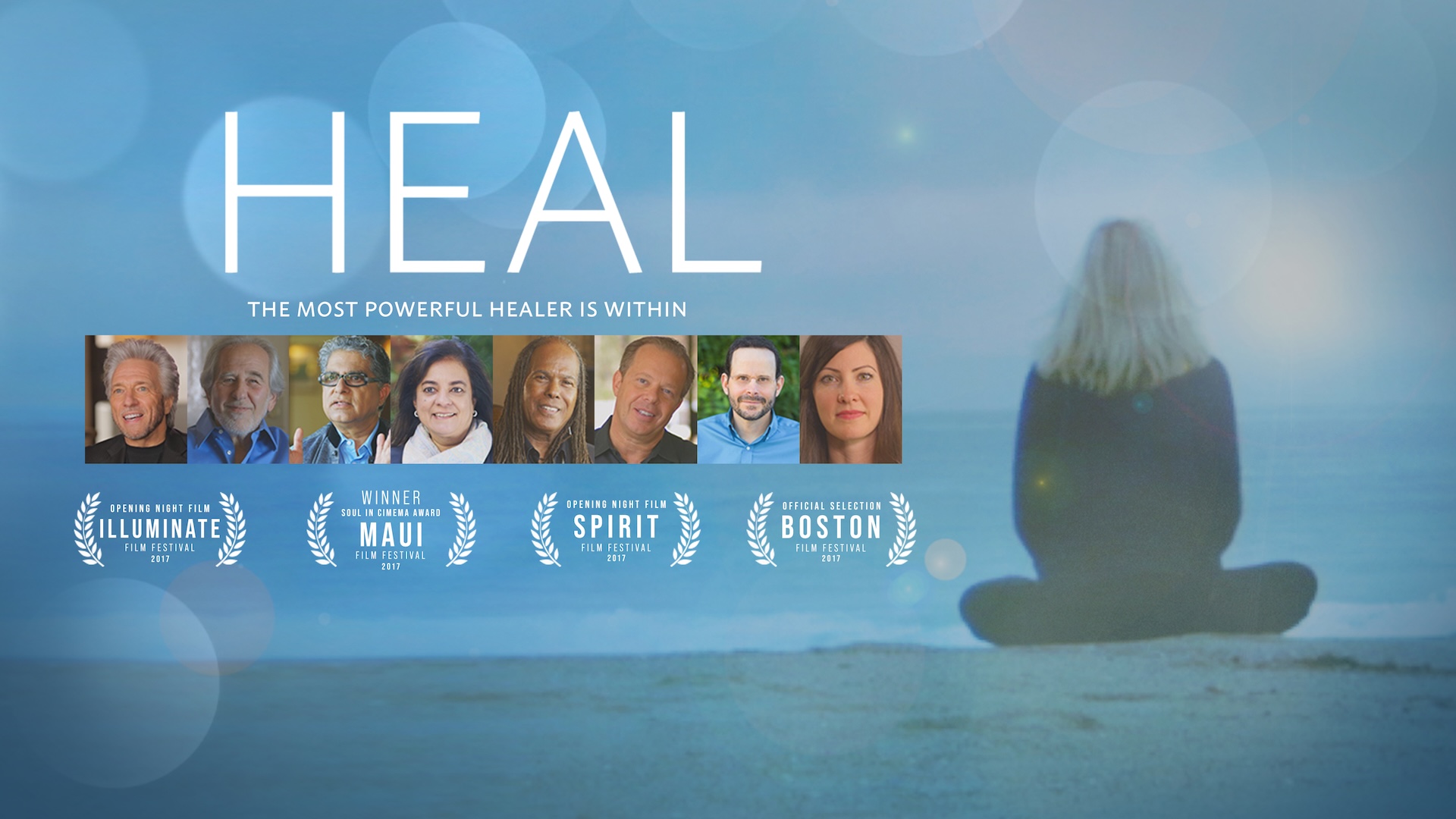
6. Heal
Take a scientific and spiritual journey to discover that our thoughts, beliefs, and emotions have a huge impact on our health, wellness, and ability to heal. The latest science reveals that we are not victims of unchangeable genes, nor should we buy into a scary prognosis. The fact is we have more control over our health and life than we have been taught to believe in western medicine.
Healing can be extremely complex and deeply personal, but it can also happen spontaneously in a moment. Through these inspiring and emotional stories, we find out what works, what doesn’t, and why. Enter this experience with an open mind, and be prepared for it to change your life.
7. The Portal
We stand on the brink of a new era, facing the imminent collapse of outdated systems. Can mindfulness pave the way forward?
The Portal stands as a beacon of hope during a major global awakening, exploring whether mindfulness-based practices can steer us through a world on the brink of collapse and renewal. Explore the lives of six individuals who have faced intense anxiety and trauma, illustrating how the roots of our collective challenges shape our future and how embracing mindfulness could be the key to a new, healed world.
8. Missing Links with Gregg Braden
Explore the deep truths of our origin, history, destiny and fate, with celebrated author and luminary Gregg Braden.
Season 1 – Connect science and spirituality to reveal a new understanding of humanity’s history, the origins of civilization and the power of our heart’s intelligence.
Season 2 – Are we living in a virtual reality? Discover the societal and spiritual implications that arise when we recognize our world as an artificially constructed computer simulation.
Season 3 – Discover the Divine Matrix, how it influences you, and how you can influence it. This could dramatically improve your life, your wellbeing, and the lives of all of those around you.
9. Transcendence
What if you could have everything you ever imagined? What if the life of your dreams was already available?
Come on a journey to discover the secrets to living a happy and purposeful life. Learn from the world’s best on how you can achieve everything you’ve ever wanted, using what you already have. Transcendence explores the tools to transcend the biggest challenges of our time, unlock your superpower, and achieve elevated states of consciousness to manifest the life you truly desire.
10. Becoming Nobody
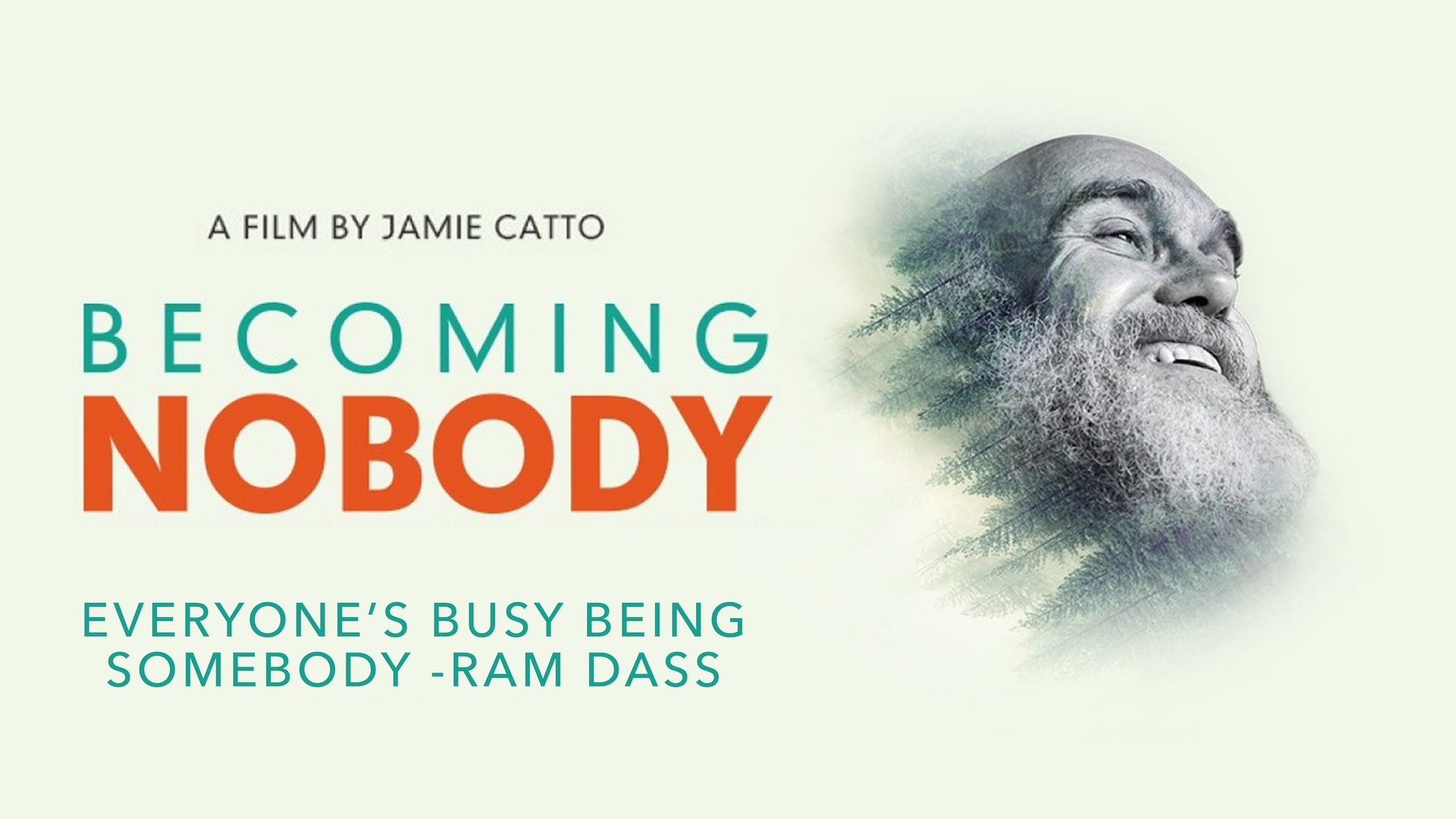
Becoming Nobody is the quintessential portal to Ram Dass’ life and teachings. His ability to entertain and his sense of humor are abundantly evident in a conversation that brings us around to address the vast question of ultimate freedom.
The film represents the life and core teachings of Ram Dass. He served as a bridge between Eastern and Western philosophies and defined a generation of inner explorers and seekers of truth and wisdom. Through his turns as the scion of an eminent Jewish family from Boston, rock-star Harvard psychologist, counter-culture psychedelic adventurer, spiritual teacher, stroke survivor, and compassionate caregiver, Ram Dass has worn many hats on his journey, the narrative of which is revealed in the inspiring documentary.
In Becoming Nobody, archival footage balances an engaging conversation with director Jamie Catto. We come to understand how our old roles and disguises become increasingly burdensome. The film captures a loving man full of joy, wit, honesty, and wisdom, at ease in conversation while sharing considerable pains and pleasures. The life experiences that have freed him from the attachments of his “somebody-ness” have transformed him into the radiant soul who now inspires a new generation.
About the Author

7 Self-Knowledge Exercises To Truly Discover Who You Are

Self-knowledge is a process of inner exploration that helps us understand how we think, what we feel, and why we act the way we do. It involves looking inward with honesty, acknowledging both our strengths and limitations.
In this article, we explore why it’s important to know ourselves, how to begin that journey, and which practical exercises can help us discover who we really are.
Table of Contents
- The Importance Of Discovering Who We Are
- How To Begin Our Path Toward Self-Knowledge
- Self-Knowledge Activities To Deepen Our Understanding Of Ourselves
- Writing A Personal Journal
- Answering Deep Self-Knowledge Questions
- Taking A Personality Test
- Exploring The Birth Chart
- link text=”Using Cards As A Tool For Symbolic Introspection” url=”#using-cards-as-a-tool-for-symbolic-introspection” target=”_self” /]
- Exploring Our Personality With The Enneagram
- Analyzing Our Wheel Of Life To Detect Imbalances
- Explore More Self-Knowledge Tools On Gaia
- Integrating Self-Knowledge Into Everyday Life
The Importance Of Discovering Who We Are
Many times we go through life following routines, expectations, or obligations without asking ourselves if what we do is actually connected to who we are deep down. We may reach certain goals or meet what’s expected of us, but if we do it from a place of disconnection, it’s common to feel exhausted, empty, or find it hard to see real meaning in what we do. Living without an inner compass can lead us to make decisions that don’t represent us and to maintain relationships or lifestyles that pull us away from our essence.
On the other hand, when we begin to understand what moves us, what we value, and what we need, decisions stop being automatic. A sense of internal order arises, which is reflected in how we live, how we relate, and how we respond to daily challenges. Living from our truth, even if it brings discomfort or uncertainty at first, brings a deeper sense of calm—less dependent on what’s outside.
This process of knowing ourselves isn’t a goal we reach once and for all—it’s a constant practice cultivated in everyday life. It is a way of being in relationship with ourselves: observing ourselves honestly, questioning our beliefs, reviewing what we choose and what we avoid. And in that movement of self-exploration and reconstruction, we gain clarity, depth, and meaning.
How To Begin Our Path Toward Self-Knowledge
Self-knowledge begins with an internal decision: to look at ourselves with more attention. Sometimes, it’s enough to pause for a moment, take a deep breath, and notice what’s happening inside us. That small pause can be the starting point for establishing a more conscious relationship with our inner world.
Over time, that space of observation becomes clearer and more natural. We begin to notice recurring thoughts, emotions that are hard to express, or decisions we make without questioning them. It’s not about correcting everything at once, but about recognizing what’s there so we can act with greater clarity and meaning.
Self-Knowledge Activities To Deepen Our Understanding Of Ourselves
If we feel the urge to know ourselves better but don’t know where to begin, we can rely on certain practices that offer us valuable guidance. Writing in a journal, answering reflective questions, or taking a personality test can help us see more clearly what we think, feel, and do.
These tools don’t offer definitive answers, but they do open inner doors that are worth exploring. What’s essential is to maintain an honest attitude and openness to the process.
-
Writing A Personal Journal
Keeping a journal is a simple yet powerful practice for exploring what we think and feel. By recording our daily experiences, we can detect emotional patterns, recurring reactions, or themes that need attention. You can also practice automatic writing, with no filters or corrections, to connect with deeper parts of your inner world.
-
Answering Deep Self-Knowledge Questions
Asking ourselves deep questions can open up spaces that usually remain hidden. Questions like “What gives us meaning?”, “What are we avoiding?”, or “What do we need to let go of?” activate reflection and allow us to explore motivations, fears, and desires we may not have previously considered. It doesn’t matter if no immediate answer comes—the very act of asking already sets the process in motion.
-
Taking A Personality Test
Taking a personality test can help us put into words certain traits or tendencies that are part of who we are. Tools like MBTI, DISC or the Big Five offer frameworks for understanding how we think, how we relate to others, and what kind of environment supports our development. It’s not about labeling ourselves, but about gaining clarity on how we function internally.
-
Exploring The Birth Chart
The birth chart reflects the configuration of the sky at the moment of our birth. Through its symbols and archetypes, we can identify emotional patterns, relationship styles, talents, and personal challenges. It is a symbolic guide that does not define who we are, but it does allow us to understand ourselves from a broader and deeper perspective.
-
Using Cards As A Tool For Symbolic Introspection
Tarot, oracle, or archetype cards can serve as gateways to our inner world, through images, symbols, and intuitive associations. By asking a question and observing the card that emerges, a dialogue with the unconscious opens. It’s not about predicting the future, but about giving shape and language to what we may not yet be able to see clearly.
-
Exploring Our Personality With The Enneagram
The Enneagram is a system of nine personality types that describes how we perceive the world, how we react to our environment, and what we seek on an emotional level. Recognizing our type allows us to more consciously observe our automatic behaviors, fears, and deep motivations. From there, we can work on our growth with more clarity and direction.
-
Analyzing Our Wheel Of Life To Detect Imbalances
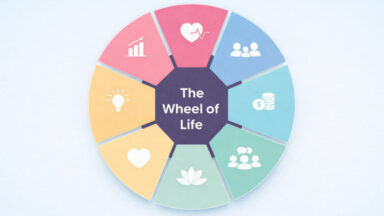
The Wheel of Life is a visual exercise that helps us assess how we feel in different areas: health, relationships, purpose, work, finances, among others. By completing it, we can identify which areas are balanced and which need attention. It is a practical tool to focus our energy more consciously and in alignment.
Explore More Self-Knowledge Tools On Gaia
On Gaia you’ll find a wide variety of content designed to support you in your self-knowledge process. There are series, documentaries, courses, and guided practices that cover all the topics we’ve discussed in this article: astrology, enneagram, meditation, tarot, personal development, and more. These resources are designed to help you go deeper into your inner world with clear, accessible, and high-quality information.
An excellent place to start is with the series Transcendence, which offers a comprehensive view of how mind, body, and consciousness are connected. It’s an introductory program that combines science, spirituality, and practical tools to help you begin to know yourself from a broader and more transformative perspective.
Integrating Self-Knowledge Into Everyday Life
Knowing ourselves doesn’t mean much if we leave it at the level of reflection. True value arises when we begin to bring that understanding into daily life: into how we make decisions, how we set boundaries, and how we respond when something makes us uncomfortable. Self-knowledge becomes alive when it influences our actions—not just our thoughts.
Integrating what we discover takes practice and patience. Sometimes it means making small adjustments, other times holding onto decisions that may not be comfortable. It’s not about getting it perfect, but about staying aware of when we stray from what we know is true for us—and choosing to return.
Over time, this internal work translates into a more honest relationship with ourselves. We learn to listen before reacting, to recognize when we need to pause, and to choose from a more conscious place. That is one possible closure for this journey: not arriving at a final answer, but continuing to inhabit the process with greater clarity and presence.