What is Gobekli Tepe? Facts, History, and Speculation

There are many wonders of the ancient world which boggle our minds and inspire awe in our hearts. But what happens when a site of such precision and magnitude proves beyond a scientific doubt the existence of man to be older than anything known before? Such is the case of Gobekli Tepe which puts human history as we know it into question.
First uncovered in 1994 by a local shepherd in Turkey, Gobekli Tepe contains megaliths weighing 7 to 10tons and stands 18 feet high.
Carbon dating firmly establishes its age at 12,000 years old – 7,000 years older than Stonehenge.
Biblical history is commonly accepted and dates humanity at a mere 4,000 years old. Linda Moulton Howe proclaims that this discovery literally doubles the age of human history.
What is Gobekli Tepe?
In the time of cavemen, just before the Ice Age, without the wheel, tools or agriculture, Gobekli Tepe appears with advanced technologies, detailed architecture and astronomically aligned with the cardinal directions. Lying in the very heart of the cradle of civilization, this exquisite preservation is a gift of epic proportions.
Buried for 10,000 years, the sacred site was discovered quite by accident in 1994. German archaeologist Klaus Schmidt was called in for his expertise and what he unearthed created a quandary of our understanding of humanity. The level of technique and detail is what first stands out. Richly carved in limestone, animals of the world are captured in both intricate carvings and sculptures. The impressive scope of wildlife depicts foxes, birds, boars and snakes.
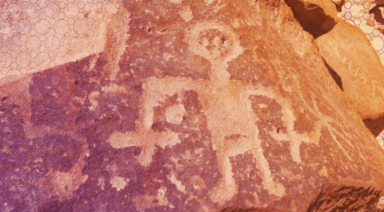
The T-shaped megaliths soaring some 18 feet tall stand boldly in place. The carvings on these are carefully crafted with hands, arms and clothing. These towering beings all face each other in a near perfect circle.
Klaus Schmidt’s belief was that Gobekli Tepe was a sanctuary site, dubbed the World’s First Temple. No bones, no cooking utensils nor tools lie among the ruins. It appears that this was not a place where people lived. Only pristinely preserved structures standing in glorious contrast to the desert they now inhabit.
Who Built Gobekli Tepe?
Gobekil Tepe appears out of the primitive beginnings of civilization when brutish humans gathered berries and hunted as nomads. From these crude origins, a site that questions all accepted history appears out of nowhere. Did these neolithic men stumble into sophisticated craftsmanship? Or was there are a spark that inspired their skill?
Graham Hancock suggests there must be an outside influence that taught advanced masonry to humans. He calls this a Transfer of Technology. Whether descended from the stars or a lost civilization which the world has forgotten, it is these lines of inquisition that inspire the greatest possibilities for the creation of Gobekli Tepe.
Credence to Mythology
We must re-examine those stories and myths believed to be mere allegory to understand the implications of Gobekli Tepe . Atlantis, the Niphilim, the Annunaki and the Garden of Eden all are often connected to theories of what Gobekli Tepe could have been.
What was once believed to be mythology now becomes a valid line of inquiry. All doors of pseudo-science are now open to explore as a plausible hypotheses as we seek to recalibrate what we know of human origins.
If, as Hancock suggests, the achievements of Gobekli Tepe were a gift from an advanced civilization, we must explore the possibilities of Ancient Alien visitations which kick started humanity.
The Watchers and Garden of Eden
Resting in the fertile crescent, at exactly the birth of humanity, Andrew Collins reminds us of the Watchers (a race of Angels documented in the Book of Enoch) who guarded the Garden of Eden. Urfa (just miles from Gobekli Tepe) is said to be the legendary Garden of Eden, a terrestrial paradise rich with flora and fauna.
Though the Book of Enoch was omitted from the Bible, several versions found throughout the world legitimize it’s apocryphal legacy.
These Angels came from the heavens and laid with the wives of man to create the Nephilim. Known as the Annunaki to the Babylonians, Collins suggests the terms may be interchangeable documenting the simultaneous arrival of reptilian giants on the planet. These advanced races came to assist humanity with arts and knowledge. Gobekli Tepe appears in this same moment and marks a huge leap in knowledge and skill that didn’t exist on the planet before.
The Flood and The Fall of Atlantis
While on the Earth, the Watchers created an offspring race, known as the Nephilim. These hybrid children of the Watchers and humans descended into disarray and violence. Their presence destructive to the planet and human race, they had to be wiped out by God.
The flood could be the cataclysmic blow of the Nephilim which also destroyed Atlantis. The flood is a documented geological event known by geologists as Meltwater Pulse 1B dated at 11,300 years ago.
Graham Hancock notes that the purported fall of Atlantis happens at the exact time of the creation of Gobekli Tepe. Was this site a preservation of a time before? Perhaps a monument built to remember what had occurred before the civilization was lost forever?
Noah’s Ark
Given the broad range of animals depicted, Andrew Collins suggests this monument could have been a literal recording of the flood. Gobelki Tepe lies only 350 miles from Mount Ararat where Noah’s Ark is said to rest. The careful depiction of animals could be a catalog of the animals included on the Ark. The temple, in its nature, is a reminder of the past and a legacy to future generations of what existed on the planet at this time in history.
Gobekli Tepe’s Burial and Re-Discovery
The intentional burial of Gobekli Tepe spawns even more questions. The carbon dating locks in its creation at 9000 BCE though it was only discovered in 1994. The hill was a pastoral landscape known as “potbelly hill” and for eons no one knew what lied beneath.
If we expand the Nephilim possibility, the burial of Gobekli Tepe could have been the literal cover up of this misstep of human history.
Note Gobekli Tepe was not destroyed outright but rather cautiously buried under 20 feet of sand. A further testimony of its significance and a clue that it’s secrets are waiting for us.
Atlantis
The legend of Atlantis lingers in human history since Plato’s first revelation of this lost land. Long sought but never discovered, it is believed that Atlantis was destroyed during a cataclysmic event in Earth’s history.
Graham Hancock suggests that Gobekli Tepe was created by the remaining Atlanteans as a way to re-start their society. The beginning of our civilization, when man first begins to gather and live in settlements, is actually, according to Hancock, the re-starting of society.
After the Flood
The remaining peoples of the Earth dispersed [from Atlantis] after the cataclysm and brought their knowledge far and wide to restart humanity. From Egypt to Europe, from Mexico to Sumer, ancient races all document wise beings appearing from the waters with advanced knowledge which furthered human progress.
The shared iconography of these beings (what Hancock calls the Magicians of the Gods) taught the gifts of civilization and thus, were believed to be gods or magicians. Skills like mathematics, astronomy, agriculture and masonry were shared to help humanity along. The being’s ability to emerge from the waters of the flood is illustrated with fish-like features in monuments throughout the world.
Can we Trust History?
Even if we do not go as far as supporting an alien intervention or the fall of Atlantis, the facts of Gobekli Tepe are a testament that challenges every assumption about the origins of humanity. Were there ancient civilizations here before us? Is this history of our planet much older than anything we have imagined?
The possibilities that the age of Gobekli Tepe opens up are vast. Long have archaeologists questioned the age of the Sphinx, the veracity of the history as we know it and challenged the facts as purported by mainstream scientists and archaeologists.
What we must bear in mind is that such scientific discoveries are funded by those who do have an agenda in place. This is an extension of the Church and the Cabal who are cautious to create their version of history. The Smithsonian and others have their interests to protect and therefore any explorers who challenge their views will not be funded or will be outright discredited. The funding afforded to Howard Carter in his discovery of Tut’s Tomb in the early 20th century was of a different era and few true explorers have the financial backing outside of the establishment to pursue freely their theories. Rouges like Carmen Bolter and Zecharia Sitchin are limited in their funding and questioned in their credibility. Yet the ideas they share are creating new avenues of possibility among the conscious minded which resonate as plausible and worth exploring.
Other Sites that Challenge Known History
Gobekli Tepe has so far received the most attention for its facts are too hard to refute. But other sites are equally profound and will offer further challenges to history as we know it.
- Gunung Padang– pyramid in Indonesia, 12000 years older than Gobekli Tepe
- Rtanj – Serbian pyramid also known as “navel of the world” similar to belly terminology of Gobekli Tepe, unexplained anomalies of technology mirror those of Gunung Padang
- Lepenski Vir – a permanent settlement of explicit architectural significance in Serbia dating back to the same time as Gobekli Tepe, sculptures of fish beings like Hancock’s lost Gods of Atlantis
The questions raised are among the most interesting discoveries yet. We are only in the beginning phases of knowing how this will affect our understanding of the world as we know it. What we can conclude is that the existence of Gobekli Tepe suggests there were highly advanced civilizations on the Earth before us. And for those of us passionate about past lives and restoring ancient wisdom, Gobekli Tepe opens the pandora’s box on all possibilities. Dream away, my darlings, for permission has now been granted to re-examine history!
About the Author

Did The Druids Share a Common Ancestry With Other Ancient Civilizations?
There are few groups in history more enigmatic than those known as the druids. Today there are two neo-druidic sects, whose philosophy centers around a reverence for nature, diversity, and love. These are the often-cloaked people known to perform ceremonies in nature and at megalithic sites such as Stonehenge.
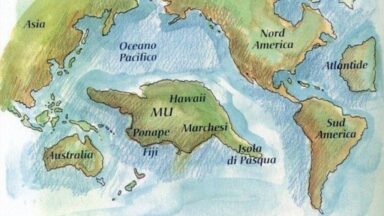
The Druids of antiquity are steeped in legend and folklore, having no written record of who they truly were or where they originally came from. The general consensus holds that they were a highly revered group, with a divine connection to nature and authoritative wisdom that trumped even the highest nobility. They are widely known to be of Celtic origin, but some alternative theories see them as having a common ancestry with ancient Eastern cultures or even one possibly originating in Atlantis.
Ancient Druids
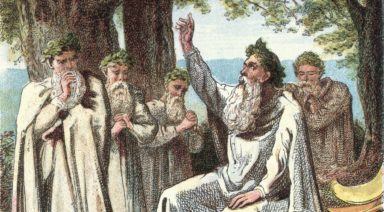
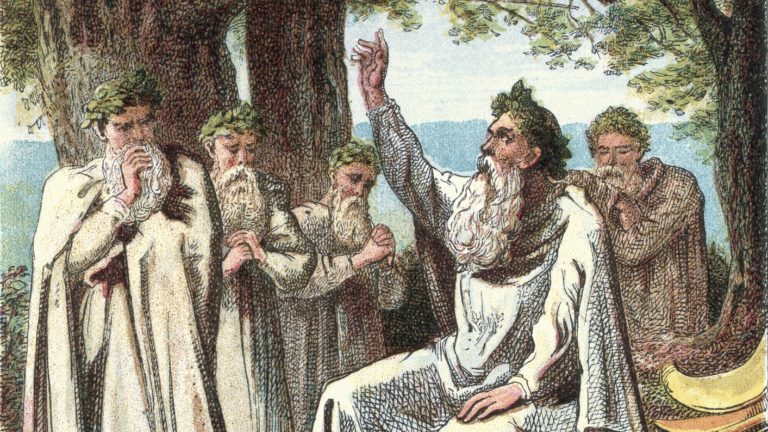
In ancient times, Druids were known as wise elders who would congregate around oak trees. In fact, the word Druid or Druwid in Celtic translates to oak-knower or “knowing the oak tree,” though little is known what exactly this erudite group was really like. The recorded history of the ancient Druids typically falls into two categories; those that are based on ancient Roman writings, and those based on interpretations of writings seen as distorted Roman propaganda.
The Celtic Druids inhabited the area of Europe once known as Gaul, where they were eventually conquered by the Romans. One of the best-written accounts of the ancient Druids comes from Julius Caesar who described them as civilized, wise, and noble people, with the exception of their alleged ritual human sacrifice. Caesar and Tacitus led the conquering of Gaul and the subsequent persecution of the Druids, viewing them as overly superstitious and having dictatorial control over society.
The Druid religion was said to have sacrificed criminals in a massive wooden effigy, known as a wicker man, which was filled with people and set on fire. Caesar claimed that the Gauls were so consumed by the superstitions of Druidic rituals that they were quick to sacrifice, and would even offer up innocent people if they lacked sufficient criminals. Many contest this image of the Druids as inaccurate and an attempt by Caesar to depict them as a society worth integrating into Roman culture, albeit one that needed civilizing.