Sin-Eater: The Shift of the Modern-Day Light Worker

When the term first began circulating, there was something empowering about being a lightworker. My mantra, “I work in the Light and I serve the Light” has always been a powerful focus before healing sessions.
As time passed, the light-working community has grown diluted with positive affirmations and “just shine bright and ignore the bad stuff” philosophies. The teachings of Abraham and the message of The Secret are no less valid, it’s simply that our namaste-blanket-blessing lacks sincerity and dynamic alignment.
When the sacred becomes a t-shirt, we know we’ve moved into the mainstream and away from the potency of the truly divine.
I used to embrace the term lightworker, but have largely shied away from it in recent years. When once the blessing of light was enough, it has now become cliché, and drastically less effective as a tool for healing.
I now understand my role as a healer in service to the beings of this planet, not simply as bathing them in light, but rather as alleviating them of their density* so they may hold their own light better.
I see our bodies as light. The faster our cells vibrate, the more in-tune with Source we are. I use the words “heavy” and “dense” rather than the more charged “bad” and “negative.” There is nothing inherently bad in the universe. So to use this term is deceptive and only propagates feelings of being bad or lesser evolved. Psha!
We all carry vibrations: both light and dark, good and bad, dense, and luminescent. The path to enlightenment is one of unburdening the soul from feeling out of synch with—feeling separate from—God. We choose to vibrate higher, to radiate the light, and purify the frequencies around us. It’s a choice after all, and one we can be mindful of in each passing moment.
A Modern Take on an Ancient Role
The term “sin eater” has arisen lately from my Guides and feels strangely more apropos in the way healing is conducted. I was shown the vision of myself as a deep well, connected to the center of the earth. Into this well, clients can discard that which no longer serves them ‒ those secrets and stories which bring them shame, pain, and grief.
Rather than staying within my body, the debris falls into the earth to be transmuted. It’s not my job to heal them; rather, I act as a vortex through which the density can be shifted and their soul’s truest light restored. I stand in the light of love and offer them a safe place through which to heal themselves.
In traditional Celtic societies, a sin-eater would “eat” the sins of the deceased person after death in order to absolve the family and its lineage of the misdeeds of the departed. Eating the sins was sometimes done by placing food around the body which would be consumed by the sin eater. This was performed not only to serve the family but to ensure the deceased left this plane and did not linger in astral form. Far from a glamorous role, the sin eater was a societal outcast, though one who was relied upon for this sacred ritual.
I can’t say my modern-day role is much different. I help people release their burdens through the use of ritual, shamanic journey, sound, and sometimes just talking. The major difference is that I eat the sins of the living to make life better, rather than waiting ’til death to offer salvation.
Clients routinely report feeling lighter, having freed themselves of the burdens they silently carry. In the absence of the church and the waning appeal of psychotherapy, psychics and energy healers may invariably become the modern confessional. We can see through the masks people wear and help absolve them from isolation, shame, and judgment. In relieving them from the facade, we can bring them closer to their own light, truth, and God.
Purging to Heal Others
The shamans of Mexico will purge frequently as they do their healings. Shamanic belching and vomiting are the norm and protect the healer from absorbing the density removed from the patient. In medieval times, physicians often engaged in bloodletting to release the spirits or sins from the body. Acupuncture in ancient practice did the same. These forms of healing are trusted and effective; however, in this era of elevated frequency, I try to do my purging with vibration alone. Sound, chills, toning, drumming, and singing bowls are my modern-day equivalent. Plus, let’s admit, throwing up while in session is never a fun reality!
New Paradigms in Healing
I respect and appreciate the traditions of the shamans before me, but also see myself as galactic, a child of the cosmos. Practices are changing and the tools of healing are shifting.
Matt Kahn is an illuminated teacher sharing radical concepts of this modern ascension process. He explains it’s the role of the enlightened to transmute the negativity on this planet; to radiate so brilliantly, nothing of a lower vibration can be sustained.
In the old paradigm, we would protect ourselves or set boundaries when we experienced something of a lower vibration. In doing so, we transmute nothing, but keep the light for ourselves. This can be an exhausting endeavor to constantly clear ourselves or put up layers of energetic protection just to live within the public.
These behaviors are the opposite of what is truly being asked of us. Peace will reign once we radiate our light, once we offer blinding love and acceptance to even those darkest energies, regardless of how much pain they may be inflicting. When we can all participate in this response to the frustrations and anger we encounter, only then can we shift the consciousness of this planet. Radical, indeed!
Thus, the role of the healer isn’t to remove the negative, but to release these densities from the client so they may illuminate from within their own light.
In doing so, we are also serving in an ecclesiastic role by simultaneously purging it from the collective soul of the planet.
The Weight of Being a Lightworker
In this age of the Fifth Dimensional reality, to describe oneself as a lightworker is nondescript. We’re living in extraordinary times and the truth is, all beings are lightworkers! It’s not simply a moniker of the enlightened, but rather a phrase that encapsulates this era of humanity.
There’s nothing that makes us special, nothing that grants us a favor, but for some, it’s become a burden to bear. I’ve heard within our community that being a lightworker means we have to work extra hard to alleviate ourselves from the people around us. Or that being different—gifted, even—means we must endure the unevolved. As healers, we must be sensitive of this perceived burden and do our part to eradicate the elitism it sometimes carries.
We are seeing our ways of healing transform radically as paradigms shift and old beliefs collapse. Modern healers must be sin eaters to truly be of service and change the planet now. It’s the love we share and brilliance we radiate that holds the power to bring peace to those who seek us. We serve not by “fixing” people, but by reminding them of their innate radiance.
It’s the unconditional love we offer, even to their darkest places, which illuminates a path back to God. We heal without judgment, without limits, so they may reclaim their light again.
When we healers can embrace this space of love and act as a portal for healing, rather than creating separation in our role as beings of light, we can be of greater service to our planet. I’ll take “sin eater” over “lightworker” any day!
About the Author

Bach Flower Therapy: A Guide To Start Using It

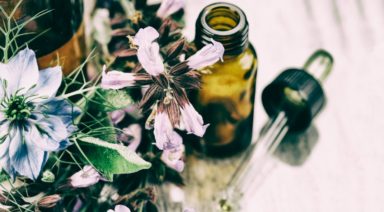
Bach flower therapy is a natural system of emotional harmonization created from floral essences. It is used to treat imbalances such as fear, sadness, anxiety, or lack of confidence, without side effects. In this article, we explore what Bach flowers are, how they work on the emotional level, and how to start integrating them into your daily life.
Table of Contents
- What Are Bach Flowers And How Do They Work?
- What Are Bach Flowers Used For?
- The Origin Of The Flower System: Who Was Edward Bach
- The 38 Bach Flowers: A System To Balance Emotions
- How To Start Using Bach Flowers Consciously
- What’s The Difference Between Bach Flowers And Other Flower Essences?
- Can Bach Flowers Be Combined With Other Therapies?
What Are Bach Flowers And How Do They Work?
Bach flowers are natural essences extracted from wildflowers that work on an energetic level to balance emotional states. This system was created in the 1930s by British physician and homeopath Edward Bach, who sought a more holistic and accessible healing method for everyone. His approach is based on the idea that many physical illnesses have an emotional origin, and that by treating the internal cause, the healing of the body is encouraged.
Each flower essence acts as a subtle catalyst that helps dissolve blocked or overwhelming emotions, such as fear, anger, guilt, impatience, or hopelessness. Instead of suppressing these emotions, the flowers allow them to transform into positive qualities such as calmness, confidence, courage, or compassion. That is why it is said they do not fight the symptoms, but rather strengthen inner balance.
Floral therapy does not act on a biochemical level like conventional medicines, but instead operates in the energetic or vibrational field of the individual. For this reason, it is compatible with other treatments and can be used by people of all ages. By harmonizing emotional frequency, Bach flowers help reconnect with the body’s natural well-being.
What Are Bach Flowers Used For?
Bach flowers are used to support emotional processes, promote inner balance, and facilitate the transformation of limiting attitudes. Their application is very broad and can be adapted to different moments in life, both in people and animals.
- Stress management: They help reduce the impact of everyday emotional stress. They are useful in times of overload, pressure, or mental exhaustion.
- Anxiety relief: They help calm internal restlessness and repetitive thoughts. They are especially effective when there is nervousness or excessive anticipation.
- Grief processes: They support sadness and pain during significant losses. They promote a more loving and contained emotional adaptation.
- Improving self-esteem: They foster self-confidence and recognition of one’s own value. They can be helpful for people experiencing insecurity or excessive self-criticism.
- Major life changes: They provide support during transitions such as moving, breakups, motherhood, or new life stages. They offer clarity, stability, and emotional adjustment.
- Support for domestic animals: They are used to address behaviors related to fear, aggression, or hyperactivity. They are also useful when facing changes in home or absence of caregivers.
- Rescued or traumatized animals: They help release painful emotional memories and restore trust. They are a safe tool to support their emotional recovery.
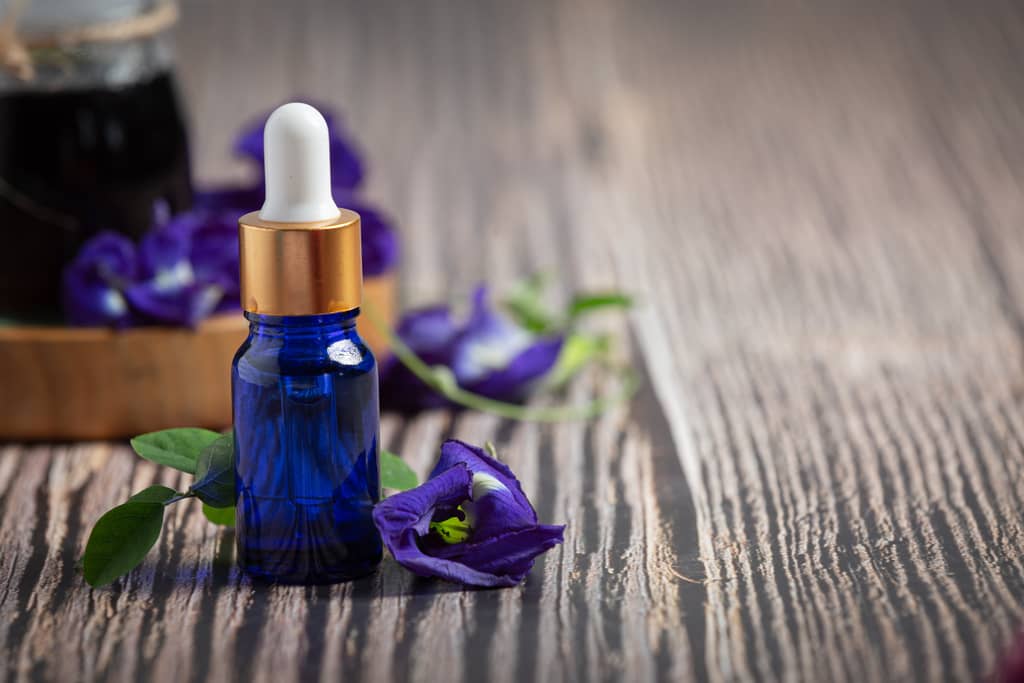
The Origin Of The Flower System: Who Was Edward Bach
Edward Bach was a British physician who, after training in conventional medicine, began to take an interest in a more holistic view of the human being. His experience in bacteriology and immunology led him to understand that the emotional state of patients played a central role in the progression of their illnesses. This approach prompted him to research new forms of treatment that not only alleviated physical symptoms but also restored internal balance.
Through observing nature and his patients, Bach developed a system based on the idea that behind every ailment there is an emotion in imbalance. In his search, he identified 38 wildflowers with specific energetic properties for each emotional state, from fear and sadness to discouragement or indecision. His method consisted of working on the deep emotional cause to promote lasting healing.
The Bach flower system was conceived as a simple, safe, and accessible tool for everyone. He believed that each person could actively participate in their own healing process, without relying solely on medical treatments. His legacy remains alive today, and his essences are used worldwide as a way to reconnect with emotional harmony and inner wisdom.
The 38 Bach Flowers: A System To Balance Emotions
The Bach flower system is made up of 38 essences, each one associated with a specific emotional state. These emotions can range from fear, insecurity, or guilt, to impatience, sadness, or disconnection. By acting on the person’s energetic vibration, the flowers do not suppress what is felt, but rather encourage a more harmonious shift in perception.
The essences are organized into seven emotional groups: fear, uncertainty, lack of interest in the present, loneliness, hypersensitivity, discouragement, and excessive concern for others. This classification makes them easier to use and allows for a more intuitive selection depending on what someone is going through. Some of the most well-known flowers are Rescue Remedy (a blend of five essences for emergencies), Mimulus (for specific fears), and Larch (for lack of confidence).
Although they can be taken individually, it is common to combine several essences depending on the personal situation. The right selection allows subtle aspects of personality to be addressed and supports internal transformation processes. That’s why getting to know each flower and its function is an important step in making the most of the potential of the flower system.
How To Start Using Bach Flowers Consciously
Beginning a process with Bach flowers involves honestly observing what we are feeling. It is important to identify the main emotion we want to work on, as well as others that may be associated with it. Based on this self-observation, between one and seven flowers are selected, which can be combined in a personalized bottle.
The essences are taken in drop form, usually diluted in water, several times a day. They can also be applied to the skin or added to baths. Although they have no side effects and do not cause dependence, their emotional impact can be profound if used with consistency and awareness.
In case of doubt, a flower therapist can be consulted to help choose the most appropriate essences. However, the system was designed so that anyone can use it safely. Listening to what we feel and choosing with intention is the first step for the flowers to act as allies on our path toward emotional balance.
What’s The Difference Between Bach Flowers And Other Flower Essences?
Bach flowers were the first flower essence system developed with a clear methodological and philosophical foundation. Its approach is focused on treating the emotional states that generate imbalances in the body and mind, and each of the 38 essences was researched by Edward Bach based on his clinical experience. The simplicity and accessibility of the system make it a daily-use tool for people of all ages.
Today, there are many other flower essence systems—such as those from California, Australia, or the Amazon—that broaden the emotional or spiritual spectrum they can address. Although all of them work on the energetic field, they differ in their preparation methods, classifications, and goals. Bach flowers, however, remain one of the most widely used and studied vibrational therapies in the world.
Can Bach Flowers Be Combined With Other Therapies?
Yes, Bach flowers can be complemented with other therapies without causing interference. Since they do not contain active chemical ingredients, they do not interact with medications or conventional medical treatments. They also do not negatively affect therapies such as homeopathy, acupuncture, or psychological approaches.
This versatility makes it possible to integrate the flowers into broader therapeutic processes, adding an emotional dimension that is often left out of traditional clinical approaches. In addition, they can be an excellent support in times of crisis, personal transitions, or self-development. The key is to use them with clear intention and as part of a holistic view of well-being.