Understanding Zodiac Sign Elements
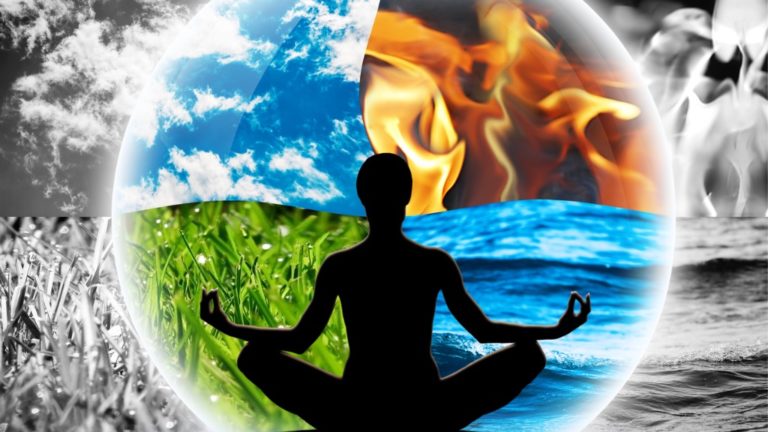
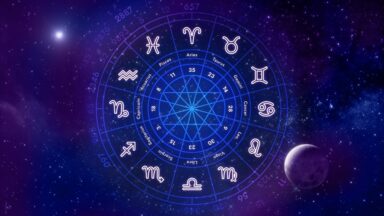
According to Western astrology, the universe is shaped by four primary elements: Earth, Air, Fire, and Water. Here’s a quick look at their core traits:
- Earth: grounded, practical, reliable, nurturing, loyal, logical
- Air: intellectual, communicative, curious, social
- Fire: passionate, energetic, enthusiastic, courageous
- Water: emotional, intuitive, empathetic, nurturing
These elements symbolize different modalities of existence and have a strong influence on each astrological sign. None of the elements is intrinsically good or bad; each has advantages and disadvantages.
Your personality is complex, making self-assessment difficult. Understanding your sun sign element can provide clarity, allowing you to identify your strengths, flaws, and how you interact with others. The signs of the zodiac are each ruled by one of these elements, which shape their essential characteristics and relationships.
Identifying your dominant aspect might help you gain a better sense of functionality in relationships, employment, and self-development. This knowledge promotes emotional depth and personal development.
The Origins of the Four Elements of Nature
The concept of the four elements originates from the Greek philosopher Empedocles, who believed that all matter was a combination of these fundamental forces. While modern science has identified many more elements, these four still correspond to the four states of matter: solid, liquid, gas, and plasma.
These components define compatibility, habits, and personality traits in astrology. Each component also affects a person’s emotions, interactions with their surroundings, and personal development.
How to Find Out What Element You Are
Each horoscope zodiac sign is associated with one of the four elements: Fire, Earth, Air, or Water. This elemental alignment influences personality, behavior, and relationships. Understanding your rising sign, along with your sun sign, can provide a more detailed picture of how you express these traits.
Elements also determine whether you’re a mutable, fixed, or cardinal sign, affecting how individuals handle change, leadership, and stability. By recognizing these influences, you can better navigate personal and professional challenges.
Read on to discover how each element influences the signs of the zodiac and learn what your element reveals about your personality, relationships, and approach to life.
Earth Signs
Taurus (April 20-May 20)Virgo (August 23-September 22)Capricorn (December 22-January 19)
Earth signs are stable, practical, and grounded. Ruled by Jupiter and Pluto, they are deeply connected to the material world and prefer structure over unpredictability. They thrive in functional, long-term goals and build strong foundations.
If you’re an Earth sign, you are an artist and love to create. Your home is welcoming and warm and always open to friends and family, which is fitting considering you’re a bit of a homebody. While you are always friendly, you do not let people into the inner circle easily. However, once you do, you are loyal to a fault. On the opposite side of this, you can sometimes be overprotective.
Earth element signs appreciate comfort, security, and loyalty. While nurturing and dependable, they can be stubborn and bull-headed and will often stick to their position for no other reason than it is their position. In relationships, they are empathetic and nurturing and don’t mind waiting out a few rough patches. But Earth signs should be careful as this also makes it easy for others to take advantage of them.
Personality Traits
Strengths:
- Stable – Reliable and steady in all areas of life.
- Hard-working – Committed and determined to achieve success.
- Loyal – Forms deep, long-lasting relationships.
- Nurturing – Protective and supportive of loved ones.
- Logical – Thinks methodically and values reason.
- Empathetic – Understands and supports others emotionally.
Weaknesses:
- Stubborn – Struggles to adapt to change.
- Overly cautious – Hesitant to take risks.
- Resistant to change – Prefers routine and predictability.
- Rigid – Finds spontaneity challenging.
- Overprotective – Can be overly involved in others’ lives.
Compatibility: Earth signs pair well with Water signs, as Water nurtures Earth’s stability while Earth provides grounding for Water’s emotions. This creates a secure, supportive bond where Earth offers reliability and Water adds emotional depth. Together, they build lasting, harmonious relationships, though Earth’s rigidity and Water’s emotional intensity may require balance.
Air Signs
Gemini (May 21-June 21)Libra (September 23-October 22)Aquarius (January 20-February 18)
Air signs are intellectual, curious, and communicative. Ruled by Uranus, the “water bearer” of knowledge, Aquarius represents the forward-thinking nature of the Air element. These signs value logic, ideas, and social connections.
Of the four elements, Air is the most concentrated on thought. The bearers of the Air element think through every decision thoroughly and often find clever solutions to difficult problems. They are studious and scholarly and often see “the big picture” when others cannot.
While they thrive in stimulating environments, Air signs can be unpredictable and struggle with emotional depth. Their fast-moving minds can make them restless or detached from deeper emotions. Some are outgoing, rational and clever, while others are scattered, eccentric, and cold which can make relationships very difficult.
Air signs go with what makes sense and don’t believe in doing something because “it’s how it has always been done.” While Fire may be the face of the uprising, you are the brains behind it.
Personality Traits
Strengths:
- Thoughtful – Analyzes situations from multiple angles.
- Witty – Quick with humor and clever observations.
- Charming – Naturally engaging and likable.
- Carefree – Adaptable and lighthearted.
- Independent – Values personal freedom and autonomy.
- Flexible – Open-minded and willing to explore new ideas.
Weaknesses:
- Inconsistent – Struggles with commitment and follow-through.
- Insensitive – Overlooks emotional nuances in others.
- Selfish – Prioritizes intellect over relationships.
- Flaky – Easily distracted or prone to overcommitting.
- Detached – Finds deep emotional connections challenging.
Compatibility: Air signs complement Fire signs, as Air fuels Fire’s energy and ambition, while Fire adds passion to Air’s ideas. This pairing is exciting and adventurous, though Fire’s intensity and Air’s unpredictability may require balance.
Fire Signs
Aries (March 21-April 19)Leo (July 23-August 22)Sagittarius (November 22-December 21)
Fire provides heat and light, but it cannot exist on its own. Fire signs are passionate, confident, and driven. Governed by Jupiter, they thrive on energy, ambition, and excitement. They are natural leaders and radiate charisma and intensity. Fire signs follow their gut instinct and become fully committed to what they believe. Of the four elements, Fire is the most entertaining, drawing, and dynamic. They have the power of transformation and can convert any negative situation into a positive one.
However, their passion can also lead to impulsivity and strong tempers. Fire signs need grounding influences to maintain balance and avoid burnout. Loved ones are what motivate them and keep them stable. Without loved ones, passion can turn to obsession, quickly exhausting a Fire sign.
Personality Traits
Strengths:
- Passionate – Enthusiastic and energetic in all endeavors.
- Bright – Naturally charismatic and engaging.
- Charismatic – Draws people in with confidence and charm.
- Focused – Highly goal-driven and determined.
- Decisive – Acts quickly and with confidence.
- Daring – Unafraid to take risks.
Weaknesses:
- Temperamental – Prone to emotional outbursts.
- Impulsive – Acts before thinking.
- Unfaithful – Easily distracted by new experiences.
- Jealous – Struggles with possessiveness.
- Restless – Needs constant excitement.
Compatibility: Fire signs thrive with Air signs, as Air fuels Fire’s passion and energy, creating an exciting and dynamic connection. Fire brings enthusiasm, while Air adds intellect and adaptability, though Fire’s intensity and Air’s inconsistency may need balancing.
Water Signs
Cancer (June 22-July 22)Scorpio (October 23-November 21)Pisces (February 19-March 20)
Water is constantly flowing, with much of its activity happening below the surface. Water signs are deeply emotional, intuitive, and compassionate. Ruled by Pluto, they are highly attuned to their emotional depth and often connect on a profound level, which can sometimes make them overly trusting.
When spread too thin, Water signs are ineffectual, but when collected and focused, they are a force to be reckoned with. They see life as a journey, and every movement they make is part of a definite path (though sometimes an unexpected one).
They excel at understanding others but can become overwhelmed by emotions. Their ability to connect so deeply also makes them prone to carrying other people’s burdens. Setting healthy emotional boundaries is key to their well-being.
Personality Traits
Strengths:
- Understanding – Highly empathetic and intuitive.
- Trusting – Forms deep and lasting relationships.
- Devoted – Loyal and dedicated to loved ones.
- Forgiving – Willing to move past conflicts.
- Flexible – Adapts easily to emotional changes.
Weaknesses:
- Unstable – Prone to mood swings.
- Overwhelmed – Absorbs too many emotions.
- Irrational – Can react emotionally instead of logically.
- Gullible – Easily manipulated by others.
- Lacks boundaries – Struggles to say no.
Compatibility: Water signs form deep bonds with Earth signs, who offer stability and grounding, while Water adds emotional depth and intuition. This pairing thrives on trust and support, though Earth’s practicality and Water’s sensitivity may require balance.

How to Balance Your Element
Maintaining elemental balance is essential for well-being. Too much of one element can lead to burnout, overindulgence, laziness, aloofness, or insecurity. By recognizing which elements dominate your personality, you can develop a more harmonious approach to life.
For example, Fire signs should practice patience and mindfulness to temper their impulsivity. Water signs benefit from setting emotional boundaries, while Earth signs should embrace flexibility. Air signs need to stay grounded to maintain emotional connections.
For those interested in Eastern astrology, the Chinese zodiac elements—Wood, Fire, Earth, Metal, and Water—offer another perspective on elemental balance and self-discovery. Exploring both systems can provide deeper insights into personal growth and relationships.
About the Author

What Is Astrology: Origins, Purpose, and What It Is Used For
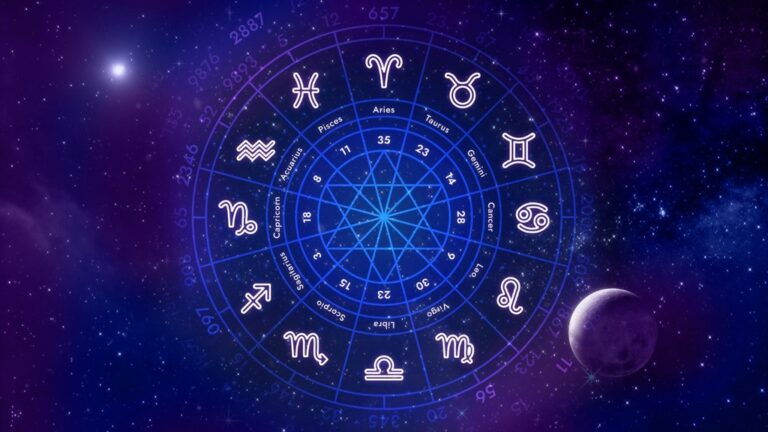
Astrology is one of the oldest disciplines humanity has developed to understand itself and the cycles and transformations that shape human experience. Through the observation of the sky, it built a symbolic language that is still used today as a tool for self-knowledge and personal guidance.
In this article, we explore what astrology really is, what the basic elements of a birth chart are, and why it continues to spark so much interest around the world.
Table of Contents
- What Is Astrology?
- The Foundations of Astrology: How It Really Works
- Basic Elements of a Birth Chart
- Difference Between Psychological Astrology and Predictive Astrology
- What Astrology Is Used for Today
- Why Astrology Continues to Resonate With Millions of People
- The Origins and Evolution of Astrology
What Is Astrology?
Astrology is the discipline that studies the correspondence between the movements of the sky and human experience. Its central premise is that the cycles of the Sun, the Moon, and the planets are connected to the internal, emotional, and life processes that people go through. It does not propose that celestial bodies cause what we experience, but rather that their movements can be read as a symbolic map of what is happening within us and in the world.
Throughout history, astrology was recognized as a respected field of knowledge by philosophers, astronomers, and physicians, and only in recent centuries was it pushed to the margins of official academic thought. However, it has always maintained a relevant place as a tool for self-knowledge and life guidance, especially in spiritual and philosophical contexts. Today, with the growing interest in inner development, its practice has once again gained strength throughout the world.
Understanding what astrology is requires stripping away the prejudices that surround it. It is not an exact science, but neither is it superstition. It is a structured symbolic language that, when properly interpreted, offers a valuable perspective for understanding who we are, how we relate to the world, and what processes we go through throughout life.
The Foundations of Astrology: How It Really Works
To understand how astrology works, one must first understand the central idea upon which this practice was developed: the existence of a symbolic relationship between the movements of the sky and human experience. Since ancient times, different cultures observed the cycles of the Sun, the Moon, and the planets and connected them with certain changes, stages, and processes present in human life. From those observations, astrology built a system of interpretation that seeks to understand what kinds of dynamics or transformations a person experiences at specific moments in life.
Astrology does not claim that celestial bodies control destiny or directly cause what happens. Its logic operates through symbolic correspondences: certain planetary movements are associated with particular emotional, psychological, or life processes. For this reason, astrology is used as a tool for interpreting periods of change, crisis, growth, or the closing of cycles, both in individual lives and in broader social processes.
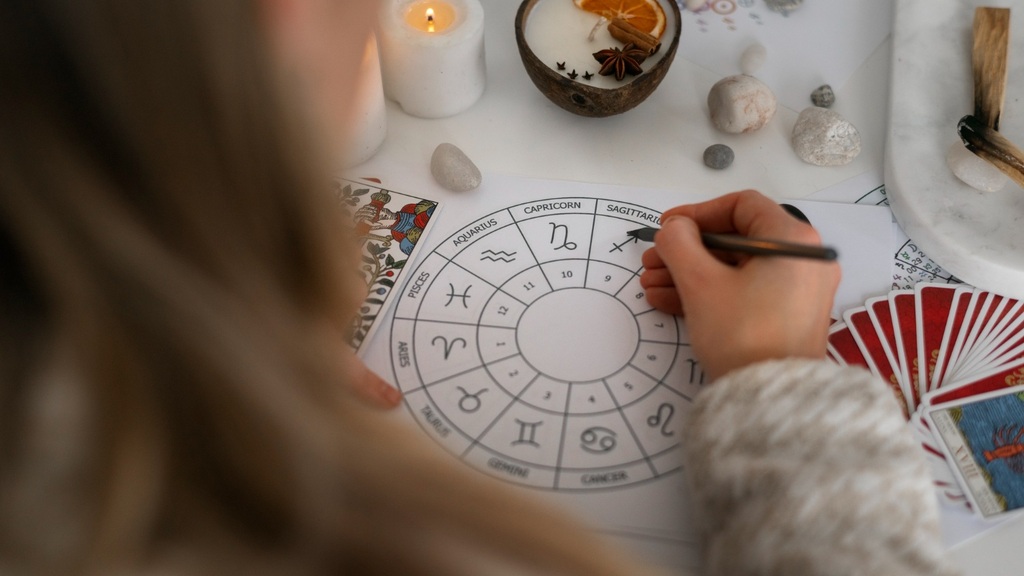
The main tool used for this interpretation is the birth chart, also called a natal chart. It is a map of the sky calculated from a person’s date, time, and place of birth. This configuration shows the position of the planets, the zodiac signs, the astrological houses, and the aspects at the exact moment of birth, and each of these elements provides information about different aspects of personality, relationships, and experiences that are part of each person’s life journey.
Basic Elements of a Birth Chart
A birth chart is composed of different elements that are interpreted together. Among them are the planets, the zodiac signs, the astrological houses, and the aspects, and each one provides information about different dimensions of personality and human experience. Understanding what each part represents is the foundation for beginning to read and interpret a natal chart.
The planets occupy a central place within astrology because each one symbolizes a different dimension of personality and human experience. The way these planets are arranged within a birth chart makes it possible to interpret different traits, dynamics, and personal processes.
Each planet is associated with specific themes. The Sun, for example, is linked to identity and self-expression; the Moon, to emotions and the inner world; Mercury, to communication and ways of thinking; Venus, to relationships and values; and Mars, to action and desire. In addition, Jupiter, Saturn, Uranus, Neptune, and Pluto are connected with processes of growth, structure, change, intuition, and transformation.
However, these planets do not act in the abstract, but rather manifest themselves through the zodiac signs. If the planets are the “what,” the signs are the “how.” The same planet can manifest in very different ways depending on the sign in which it is located. For example, Mars—associated with action and impulse—does not express itself in the same way in Aries, where it tends to act directly and impulsively, as it does in Capricorn, where it usually acts in a more strategic and disciplined way. The energy is the same, but the mode of expression changes completely.
Added to all of this are the astrological houses, which indicate the specific areas of life in which each combination manifests itself. They are twelve sectors that represent areas such as identity, close relationships, home, creativity, work, intimate relationships, or vocation. The same combination of planet and sign can be expressed very differently depending on the house in which it is located.
The planets also relate to one another within the chart through the aspects, which are the geometric angles they form when positioned at different points in the sky. These angles indicate how different energies interact with one another: some create flow and make things work effortlessly, while others create inner tension, which is often a driving force for growth. The aspects are what give depth to a reading because they show how all the elements connect with one another.
Finally, there is the ascendant, one of the most important elements of the birth chart. It is the sign that was rising in the sky at the exact moment of birth and is related to the way a person presents themselves to the world and moves through their experiences. This is why two people with the same Sun sign can have very different personalities and ways of living.
In the series Astrology 101, available on Gaia, renowned astrologer Rick Levine offers an accessible introduction to the basic concepts of astrology. Throughout the episodes, you can learn about the zodiac signs, the planets, the elements, and the houses, building a solid foundation for understanding the symbolic language of the stars.
Difference Between Psychological Astrology and Predictive Astrology
One of the most important distinctions for understanding contemporary astrology is the one that exists between the psychological approach and the predictive approach. Both perspectives work with the same elements—the birth chart, the planets, the movements of the sky—but they interpret them for different purposes.
- Predictive astrology seeks to anticipate events. It is the oldest approach and, for centuries, it was the dominant one. Its logic is to identify which planetary transits—that is, the current movements of the planets in relation to your birth chart—coincide with certain types of events in the life of a person or a society. Although it is still practiced, this branch now coexists with a more nuanced interpretation, because its literal application—predicting that something specific will happen on an exact date—often clashes with the real complexity of life and leaves very little room for personal freedom.
- Psychological astrology, on the other hand, developed strongly during the twentieth century, partly thanks to the influence of Carl Jung. This perspective does not ask, “What is going to happen?” but rather, “What internal processes are being activated, and how can I work with them?” Under this approach, the birth chart is read as a map of your inner world, and current planetary movements are interpreted as moments when certain personal dynamics become more visible or ask to be integrated.
The central difference has to do with the role of free will. In the strictest predictive approach, astrology describes what will happen; in the psychological approach, it describes the energetic terrain on which you will make your decisions. Most contemporary astrology works with a combination of both approaches, but with a much greater emphasis on the psychological and self-knowledge dimension. This explains why, today, many people turn to astrology not to know what will happen to them, but to better understand who they are.
What Astrology Is Used for Today
Precisely because of this shift toward the psychological perspective, contemporary astrology functions above all as a tool for self-knowledge and life guidance. It offers an inner map that helps you understand why you react the way you do, what you deeply seek, and what processes you go through at each stage of life.
On a personal level, astrology can help identify natural talents, areas of learning, emotional dynamics, and recurring patterns. It also makes it possible to understand the major cycles of life and recognize what kinds of processes tend to become activated at certain stages. One of the best known is the Saturn return, which occurs around the ages of twenty-nine or thirty and often coincides with periods of maturation, closure, and personal redefinition.
Another widely used tool is the solar return, a chart calculated for the exact moment when the Sun returns to the same position it occupied at birth and which is interpreted as a guide to the most important themes and lessons of each year. Understanding these cycles does not eliminate free will, but it does provide context for making decisions with greater awareness.
Astrology is also applied in the relational sphere. Comparing two birth charts (a practice called synastry) makes it possible to identify dynamics within a relationship: where there is natural affinity, where there is tension, and what challenges may arise. It does not function as a verdict, but rather as a map of the energies at play between two people.
Beyond the individual level, astrology is also applied to collective processes. Some astrologers analyze planetary movements in order to understand social, cultural, or historical moments, identifying the predominant energies of a particular era. This dimension allows personal experience to be placed within a broader context and helps explain how many individual processes respond to movements shared by an entire generation.
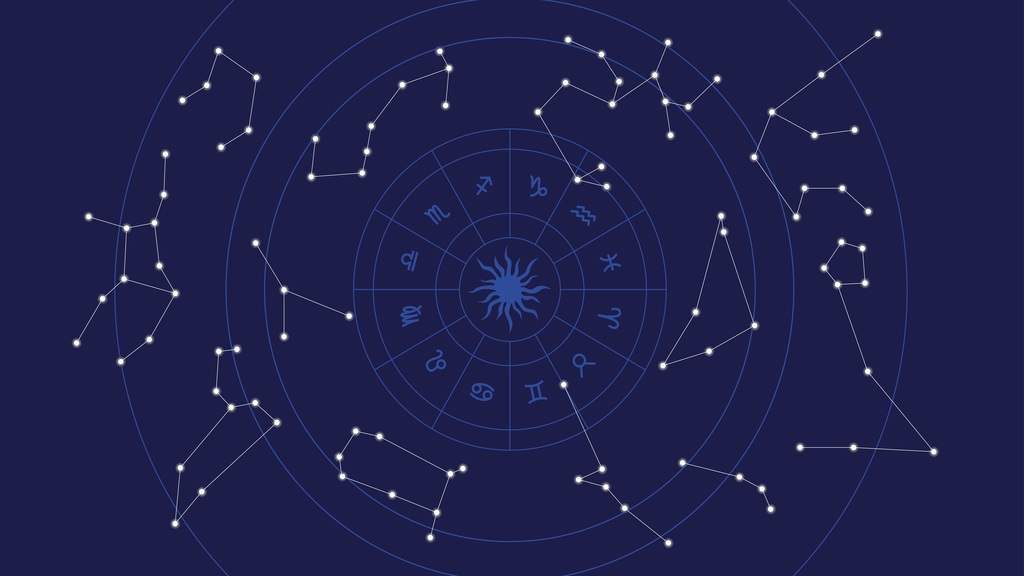
Why Astrology Continues to Resonate With Millions of People
Despite the centuries that have passed since its original systematization, astrology continues to attract millions of people around the world. What is remarkable is that its appeal does not diminish, but rather renews itself with each generation. The interesting question is not whether astrology “is true” in a scientific sense, but what people find in it that justifies such enduring relevance.
One possible answer lies in the feeling of recognition. Those who receive a serious astrological reading often experience a particular phenomenon: the feeling that something about their inner life is reflected with surprising precision. The birth chart functions like a mirror that reveals aspects of the self that are rarely put into words, and that recognition creates a deep connection with the practice.
Another reason has to do with the contemporary search for meaning. In a context where many traditional structures have lost influence—religious institutions, collective narratives, cultural mandates—people seek frameworks that help them interpret their experience from a broader perspective. Astrology offers precisely that: a language for placing yourself within processes larger than your individual life.
The broader cultural moment also plays a role. The rise of self-knowledge, psychology, secular spirituality, and contemplative practices created space for tools such as astrology. In fact, it has now become a common vocabulary for talking about oneself and relationships: many people use astrological terms to describe their personality, their partner, or the stage of life they are currently experiencing.
Finally, there is something even deeper at play. Astrology proposes that your life is not an accident or a series of isolated events, but rather part of a greater order that can be read, understood, and inhabited with greater awareness. That possibility alone—the idea of an underlying meaning—explains much of its enduring relevance in a world that often feels fragmented and lacking a unifying thread.
The Origins and Evolution of Astrology
Astrology has roots that date back at least four thousand years ago, in ancient Mesopotamia. The Babylonians were the first to systematize the observation of the stars and connect it with earthly events, laying the foundations for a body of knowledge that would later spread throughout the world. For those civilizations, the sky was not a neutral space: it was the place where the will of the gods could be read.
From Babylon, astrology spread to Greece, where figures such as Ptolemy developed treatises that still influence modern practice. His book Tetrabiblos, written in the second century, was for centuries the reference text for Western astrologers. At that time, astrology and astronomy were practically the same discipline, and they were taught together in European universities throughout the Middle Ages and the Renaissance.
The separation between astronomy and astrology began with the Scientific Revolution of the seventeenth century. While astronomy adopted mathematics and empirical observation as its foundation, astrology was relegated to the symbolic and spiritual realm. However, it never disappeared: it resurfaced strongly in the twentieth century through the work of psychologists such as Carl Jung, who incorporated it into their studies of the collective unconscious and archetypes.
In recent decades, astrology has experienced a new global expansion, fueled by growing interest in self-knowledge, spirituality, and contemplative practices. Today, it coexists with thousands of trained professionals, dedicated schools, and active communities around the world, and it has once again become part of contemporary cultural language. Its history shows that, far from being a relic of the past, astrology has continually reinvented itself in every era to respond to the questions each generation asks about itself.