Get 30 Days of Gaia for $1
CLAIM HERE

The Minor Arcana: How Numbers and Elements Give Tarot Meaning
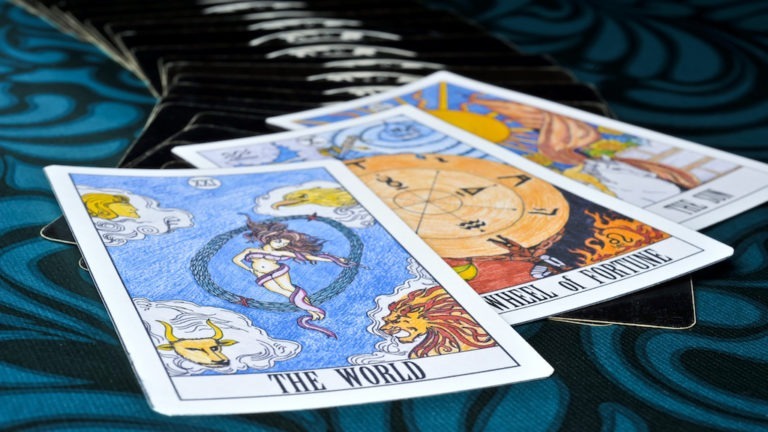
The Minor Arcana: How Numbers and Elements Give Tarot Meaning

Veiled in mystery and feared by some, the tarot is part card game, divination system, and tool for self exploration. While learning the meaning of each card can be a daunting task, it’s not as complicated as you may think. In fact, by breaking the tarot down by Arcana, numerological meaning and element, the evocative images of the cards quickly reveal their secrets.

The tarot consists of two sets of cards called the Major and Minor Arcana. While the Major Arcana deals with archetypes and larger karmic lessons, the Minor Arcana focuses on the mundane aspects of day to day life. As a part of this world, we are all focused on our physical well being, emotional needs, and relationships. This is the realm of the Minor Arcana.

From here, the Minor Arcana is further divided into four different suits, each with their own court cards and imbued with their own element. These suits are actually related to a deck of playing cards and numbered 1-10 with an additional Page. Each suit tells its own story, and each story is tied to the element of the suit in question.

The Elements and the Minor Arcana

Fire, air, water and earth surround us. They are the building blocks of life, and speak to us both metaphorically and physically. These elements appear in each suit of the Minor Arcana, shedding light on where we find ourselves on our current journey.

Within the Minor Arcana, the Cups represent emotions, feelings and the element of water. Wands on the other hand are fire, passion and drive. The Pentacles relate to earth, money and the physical world, while the suit of Swords represents communication, conflict and the element of air.

Learning Tarot by the Numbers: Numerology and the Minor Arcana

Once we add the numerological meaning to each suit, the cards begin to show us a pattern that is deeply affected by its element. Some numbers “get along better” with some elements, which create the richly divergent nature of the cards. For example, the element of air deals better with a situation that is slow and careful, as illustrated by the 4 of Swords in the Rider Waite deck. Water on the other hand, is flowing by nature and leads to stagnation when it is slowed down.

The following list of numerological meanings can help to shed light on the numbered cards of the Minor Arcana.

Ace

Aces are the first step on the journey, and represent beginnings and fresh perspectives. When an Ace appears in a reading, pay close attention to the suit to see what kind of rebirth is afoot.

Two

Two is the number of partnership, planning and meditation. It indicates that the new cycle is in its first stages, but more time is needed to realize your plans.

Three

When three appears in a reading, plans are executed and progress is indicated. Here the suits take on a very different tone depending on the element. Cups indicate celebration, but on the opposite end of the spectrum, the 3 of Swords indicates sorrow and misunderstanding.

Four

Four is a peaceful number, but it can also indicate stagnation. Often times with four, we see that a foundation has been laid and now a push of energy is needed to keep moving forward.

Five

Five brings change, instability and conflict, and each element tries in its own way to deal with the uncertainty. But times of disruption often lead to necessary evolution, and the chaos of five is only a temporary setback.

Six

With six comes a right of passage and the power of joining forces towards a common goal. Help has arrived, and difficulties are overcome through empathy and guidance. In each suit, the six carries a positive message, illustrating the human need for companionship and help on the journey of life.

Seven

Seven calls for faith and thoughtful conduct. This can be a message for patience, or a warning to examine where we put our faith. The seven can be a tricky number, indicating delusions or the necessity of waiting for the right time to act.

Eight

This is the number of action and momentum, and it can indicate taking an active role in the situation around you. Eight is a hopeful number. If projects or situations have been stagnant, having eight appear in a reading brings a return to growth.

Nine

Although 10 is technically the last number in numerology, 9 is actually considered the completion of the work that has been underway in each suit. Here we have the finishing touches and the joy of completion. We may have to take stock of what we’ve learned in order to move forward when the 9 appears, and this can either be a joyful or painful process.
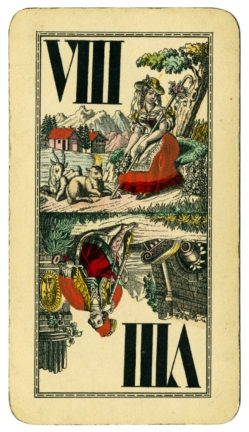
trump viii tarot austrian taroch playing card 1900

Ten

The number 10 indicates an ending, and thusly carries the message that a new cycle is beginning. Each suit carries a different message about endings. Some are joyful, such as the 10 of Cups, while others indicate the end of a long arduous battle, such as the 10 of Swords. Regardless, when the 10 appears it’s time to move forward into a new chapter.

The Court Cards

In the tarot, the court cards can be viewed as the various personalities we come across in our day to day lives. Once again, since each court card has its own associated suit, the character in question will be imbued with whatever element they represent. In addition, each court card has an additional elemental meaning that either supports or works against its suit.

If you’re familiar with astrology, this is akin to having different elements ruling the sun and moon in your chart (for example, a Pisces Sun and Capricorn moon). These two elements are either complementary or in conflict. Think of how fire thrives with air, but is extinguished by water. While the Rider Waite deck is very gender oriented, the person in question may not necessarily be the gender of the court card, but will most likely emphasize the masculine or feminine qualities of the elements that appear.

Each of the following illustrates a personality driven by material needs, emotion, communication, passion or a combination of these traits.

The King

As the ruler of the court, the King represents fire and leadership. This is the director, the researcher, and the business person. Fire must have fuel to burn, and if the King is holding a contrasting element, a contradictory nature might be indicated. The King may not be the one doing the work, but he is the one holding the power.

The Queen

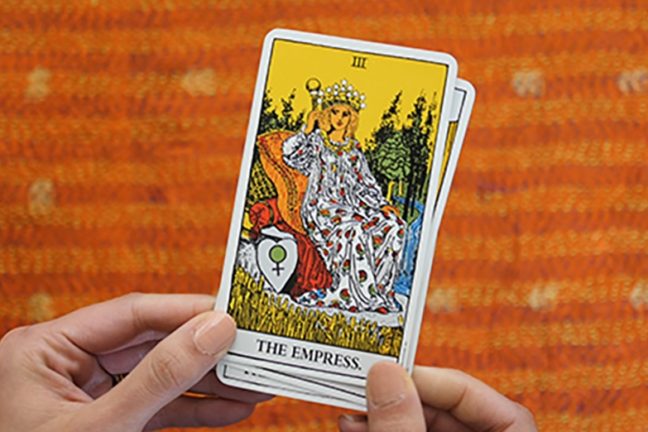
Emotion rules the realm of the Queen in the tarot. With her intuition guiding her, the other element she holds gives us a glimpse into how this insight is applied. Water flows by nature, but will be affected by the suit of the Queen. Note the environment that she resides within for more insight into her motivations.
tarot shareimage

The Knight

The Knight is ruled by the element of Air, so there is added emphasis on communication and movement. Take note of the horse that the Knight is riding: is it leaping or walking forward slowly? Some elements, such as air and fire move quickly, while earth moves slowly but deliberately.

The Page

All Pages are ruled by earth. Earth is the slowest of the elements, and in this case, the least experienced. With the Page, there is work to be done and much to learn. These are the characters who are new in their field, or innocent by nature. Pay attention to the element at play in the suit of the page in question: does the element of the suit coexist peacefully with Earth, or is it in conflict?



100 Tarot Questions: What You Should and Shouldn’t Ask

The Tarot offers a window into our inner world and a guide to facing challenges and making decisions. The key to getting useful answers lies in asking open and reflective questions. In this article, we explore the importance of questions, how to formulate them, how many to ask, and which ones to avoid in a Tarot reading.

Table of Contents

The Importance of Questions in a Tarot Reading

The questions we ask in a Tarot reading are crucial for the type of answers we receive. Well-formulated questions can provide clarity, direction, and understanding about various areas of our lives. On the other hand, vague or poorly phrased questions can result in confusing or unhelpful answers.

It’s essential to focus on questions that encourage reflection and self-awareness. Open-ended questions allow us to explore different aspects of a situation, offering a more complete and detailed perspective. This not only facilitates a better interpretation of the cards but also promotes a deeper and more meaningful internal dialogue, helping to uncover the true causes and possible solutions to the challenges we face.

In the series Mystery Teachings of the Tarot, available on Gaia, Dr. Theresa Bullard emphasizes the importance of asking questions that help us connect with our intuition and gain a clearer understanding of our circumstances. This series is an excellent guide for those who wish to deepen their Tarot readings and learn how to formulate effective questions to obtain useful and revealing answers.

How Many Questions Can I Ask?

There is no fixed number of questions to ask in a Tarot reading; it depends on individual needs and circumstances. A good number might be between three and five well-formulated questions, but this can vary depending on the depth of the answers you seek and the time available.

Limiting the number of questions helps avoid information overload. By focusing on a few questions, you can reflect properly on the answers received and apply the lessons learned to your daily life effectively. This allows you to explore each question in depth and maximize the value of the reading.

What Questions Should I Avoid in Tarot?

To get the best answers from the Tarot, it’s advisable to avoid questions that seek to predict specific events or depend on factors outside your control. Instead of asking, “When will I meet my soulmate?”, it’s more useful to ask, “What can I do to prepare my heart and life for a meaningful relationship?” This approach allows you to actively work on your personal development and be better prepared for future opportunities.

It’s also important to avoid questions that seek “yes” or “no” answers, as these don’t encourage deep dialogue or provide enough information for reflection. For example, instead of asking, “Should I change jobs?”, ask, “What should I consider when thinking about a career change?” This type of question opens the door to a more complete exploration of your options and circumstances, allowing for more detailed and enriching answers.

100 Examples of Tarot Questions

Below, we present 100 examples of questions in various areas of life that can help you make the most of your Tarot reading.

10 General Questions

  1. What is my life purpose at this moment?
  2. What do I need to know about my current situation?
  3. How can I overcome the obstacles I’m facing?
  4. What should I learn from my current challenges?
  5. How can I improve my overall well-being?
  6. What talents should I develop to achieve my goals?
  7. What is preventing me from moving forward in my life?
  8. How can I improve my personal relationships?
  9. What actions should I take to find inner peace?
  10. What should I know to make better decisions?

10 Questions About Love

  1. What can I do to attract a healthy romantic relationship?
  2. How can I improve my current relationship?
  3. What should I learn from my past romantic experiences?
  4. What qualities should I look for in a partner?
  5. How can I heal from a breakup?
  6. What is preventing me from finding true love?
  7. What do I need to know about my future love life?
  8. How can I communicate better with my partner?
  9. What aspects of my behavior are affecting my romantic relationships?
  10. How can I rekindle the passion in my relationship?

10 Questions About Work

  1. How can I advance in my professional career?
  2. What can I do to find a job I’m passionate about?
  3. What skills do I need to develop to succeed in my work?
  4. How can I improve my relationship with my coworkers?
  5. What should I consider when thinking about a career change?
  6. How can I better manage work-related stress?
  7. What is preventing me from achieving my professional goals?
  8. How can I find a better balance between my work and personal life?
  9. What opportunities for professional growth are available to me?
  10. What should I know about my current work environment?

10 Questions About Finances, Business, and Money

  1. How can I improve my financial situation?
  2. What should I know before making a major investment?
  3. What steps should I take to achieve financial stability?
  4. How can I better manage my personal finances?
  5. What should I consider when starting a business?
  6. How can I increase my income?
  7. What financial habits should I change?
  8. What financial opportunities are available to me?
  9. How can I free myself from debt?
  10. What is preventing me from achieving my financial goals?

10 Questions About Health and Well-being

  1. What can I do to improve my physical health?
  2. How can I better manage stress and anxiety?
  3. What habits should I adopt for a healthier life?
  4. How can I better balance my body and mind?
  5. What should I know about my emotional well-being?
  6. How can I strengthen my immune system?
  7. What is preventing me from achieving optimal well-being?
  8. How can I improve my mental health?
  9. What steps should I take to heal a specific ailment?
  10. What should I keep in mind to maintain a healthy lifestyle?

10 Questions About Important Decisions

  1. What should I consider when making this decision?
  2. What is the best path to follow in this situation?
  3. What consequences can I expect from this choice?
  4. How can I make a decision aligned with my values?
  5. What is preventing me from making a clear decision?
  6. What should I know before deciding?
  7. How can I find the courage to make this decision?
  8. What information am I missing to make this decision?
  9. How can I overcome the fear of making important decisions?
  10. What benefits will I gain from making this decision?

10 Questions About Family and Children

  1. How can I improve my relationship with my children?
  2. What should I know to better support my family?
  3. How can I foster a harmonious family environment?
  4. What family challenges do I need to address?
  5. How can I be a better parent?
  6. What can I do to improve communication in my family?
  7. What family patterns should I change?
  8. How can I better support my partner in parenting?
  9. What should I consider for my family’s emotional stability?
  10. How can I reconcile family differences?

10 Questions About Spirituality

  1. How can I deepen my spiritual practice?
  2. What should I know about my spiritual path?
  3. How can I better connect with my inner self?
  4. What spiritual lessons should I learn now?
  5. How can I balance my spiritual energy?
  6. What spiritual obstacles should I overcome?
  7. How can I find peace and spiritual balance?
  8. What spiritual practices should I incorporate into my life?
  9. How can I better align with my spiritual purpose?
  10. What should I know about my spiritual guides?

10 Questions About Past Lives

  1. What lessons from past lives are influencing my current life?
  2. How can I heal traumas from past lives?
  3. What should I know about my karmic connections?
  4. How have my past lives affected my current relationships?
  5. What talents from past lives can I use now?
  6. What repetitive patterns come from past lives?
  7. What vows or promises from past lives should I release?
  8. How can I better integrate the lessons from my past lives?
  9. What should I know about my experiences in other incarnations?
  10. How can I use the knowledge of my past lives for my personal growth?

10 Questions About Life Purpose

  1. What is my mission in this life?
  2. How can I discover my true purpose?
  3. What steps should I take to align with my life purpose?
  4. What is preventing me from fulfilling my purpose?
  5. How can I use my talents to fulfill my life mission?
  6. What should I learn to move forward on my life path?
  7. How can I better contribute to the well-being of others?
  8. What important lessons should I learn in this life?
  9. How can I live a more meaningful and fulfilling life?
  10. What should I know to fulfill my destiny?

lectura de tarot

Do Tarot Cards Reveal the Future?

The Tarot should not be seen as a tool that predicts the future in a fixed and immutable way. The cards reflect current energies and trends, suggesting possible paths and scenarios that could develop based on the querent’s decisions and actions. It’s essential to interpret Tarot answers with an open and contemplative mind, understanding that they offer guidance based on the present, not an absolute prediction of the future.

Rather than fixing destiny, the Tarot provides insight into the influences and opportunities present in the querent’s life. The cards can reveal behavioral patterns, blockages, and potentials that help in making informed decisions. The purpose of the Tarot is to empower the querent, providing the tools needed to navigate their circumstances with greater clarity and wisdom.

Querents should use the information obtained from the Tarot as a guide to reflect and make decisions based on their own judgment and inner wisdom. By doing so, they can make the most of the lessons and advice the cards offer, adapting their actions to better align with their personal goals and values. When used consciously, the Tarot becomes a powerful ally for self-awareness and personal growth.

What to Do with the Information from a Tarot Reading?

Once you’ve obtained the information from a Tarot reading, it’s important to take the time to reflect and process the answers. It’s recommended to jot down the ideas and feelings that arose during the reading to review them later. This practice not only helps you remember important details but also allows for continuous reflection on how to apply the advice received in daily life.

Applying the information obtained is the next important step. This involves taking concrete actions based on the Tarot’s suggestions, whether by adjusting behaviors, exploring new opportunities, or facing challenges in a different way. Integrating these changes into your daily routine can lead to significant growth and transformation, better aligning your actions with your personal goals and values.

Finally, it’s helpful to regularly review past readings to see the progress and changes that have been made. This not only reinforces the understanding of the Tarot’s messages but also allows you to adjust your course of action as needed. The process of continuous review and adjustment is key to maintaining an effective connection with the guidance provided by the Tarot, ensuring it remains relevant and useful over time.

Read Article

Our unique blend of yoga, meditation, personal transformation, and alternative healing content is designed for those seeking to not just enhance their physical, spiritual, and intellectual capabilities, but to fuse them in the knowledge that the whole is always greater than the sum of its parts.


Use the same account and membership for TV, desktop, and all mobile devices. Plus you can download videos to your device to watch offline later.

devices en image
Testing message will be here