Wake Up Your Vagus Nerve and Heal Your Body
Don’t Starve the Wanderer
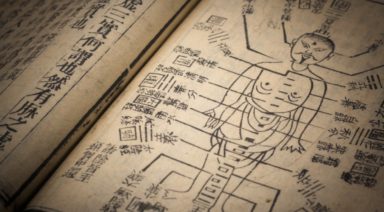
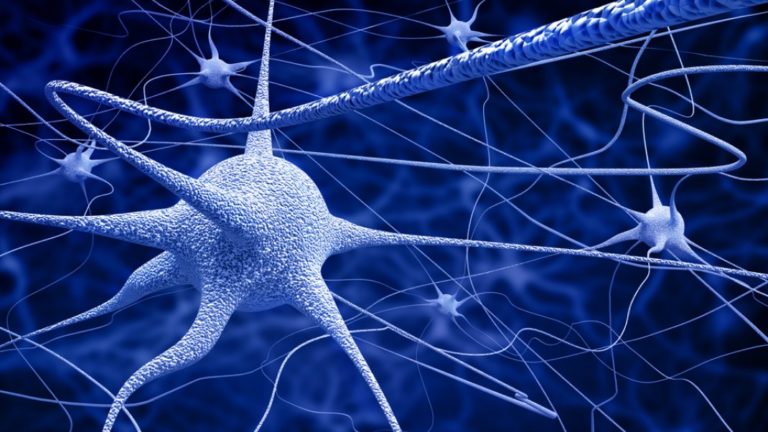
The vagus nerve…have you heard of it? It is an amazing nerve, also known as “The Wanderer,” that connects our brain to our body. The nerve starts in the medulla oblongata (the portion of the brainstem that controls automatic functions such as breathing, digestion and heart rate), branches up into the brain and goes through the jaw following the digestive tract, branching off at the lungs and heart and continuing down through to the esophagus, stomach, liver, kidneys and intestines.
“The Wanderer” loves food/energy and so it follows the entire digestive system while also receiving some of its nutrients from the different portions of the brain, the heart and the lungs in the form of what is called Prana (pure energy). The vagus nerve is associated with the parasympathetic nervous system, which controls our relaxation responses. This nerve can become underdeveloped/deactivated if the body’s in a constant state of fight-or-flight due to the stress and anxiety that comes with living in today’s society. This keeps the sympathetic nervous system in survival overdrive: your breathing becomes rapid and shallow, your heart rate increases and digestion becomes impaired.
In this particular case, “The Wanderer” is being starved of the essential nutrients it needs to help you survive. This can result in a whole host of chronic illnesses and impairments such as chronic fatigue, headaches, bruxism, breathing disorders (asthma), heartburn, I.B.S., chronic diarrhea or constipation; however, anyone can reactivate their vagus nerve with simple breathing techniques, meditation and yoga. These practices can signal your relaxation response and relieve stress in the area that is causing discomfort–resulting in a significant decrease in symptoms.
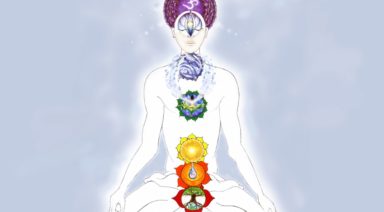
Another amazing fact about the vagus nerve is its connection to the seven chakras; these ganglions of nerves branch out to all of the seven centers of your body. It is my belief that this is the physical proof that chakras actually exist. You may have heard chakras being described more like Prana or Chi (which again, means “pure energy”) that store and circulate. That is the non-material energy of these physical centers.
Chakras have been described as spiral vortexes that are associated with different colors. These “vortexes” are in control of the different strengths and weaknesses which exist within your body, mind and soul. Meditating and breathing into these energy centers awakens the kundalini snake (another name for the vagus nerve), and will energize and heal your whole body.
Instead of starving “The Wanderer,” feed it with sattvic (pure) foods, deep conscious breathing, meditation and yoga in order to feed it the purest Prana possible.
About the Author

Ancient Mistletoe Could Be the Next Alternative Cancer Treatment

Mistletoe, an ancient parasite plant that grows on several species of trees, has been harvested for centuries. Loaded with symbolic traditional meaning, 21st century scientists at the Johns Hopkins Cancer Research Center are studying Viscum album, its latin name, to understand why mistletoe appears to relieve cancer symptoms and fight tumors. But a look back to the recorded history of mistletoe casts a light on the significance of the plants to humanity, at least as far back as the first century A.D.
Mistletoe History — the Druids
On the sixth day after a new moon, a group of Celtic druids, accompanied by two magnificant white bulls, gather around an ancient oak — a “king tree.” The leafless limbs of the venerable tree are festooned with shaggy green spheres dotted with white berries.
This auspicious day, when mistletoe appears on the sacred oak, is being marked with solemn ceremony — the Ritual of Oak and Mistletoe. This special mistletoe is harvested and hoarded to bless newlyweds, mark new alliances after wars, make medicines, and bring special luck in times of need.
Mistletoe, common to the forests of Gaul and Britain, is gathered for medicines and luck, but the appearance of mistletoe on oak, the chieftain of the trees, only happens a few times over many generations, if that. To harvest the sacred plant, priests climb into the branches carrying blessed blades to sever the greenery from the honored limbs. Others circle the trunk holding linen cloths to keep falling mistletoe boughs from touching the ground. After, to give thanks, the druids sacrifice the white bulls.
The Myth of the Death of Baldur
Scratch a Swede or a Dane and they’ll bleed pagan Norse myths. Scandinavia was the last part of Europe to convert to Christianity — a life-or-death ultimatum from Charlemagne did the trick. But the Norse pantheon and mythology persists in the Viking collective consciousness — the story of the death of Baldur is no exception, and mistletoe plays a featured role.
In Valhalla, home of the gods, Baldur, son of Odin and the good sorceress Frigg, was the most beloved of all. When Baldur began to have alarming dreams of misfortune, Odin disguised himself and travelled to the underworld to consult with a dead seeress who specialized in dreams. When he arrived, the underworld was in a whirlwind of preparations for a feast.
Odin, disguised as a wanderer, woke the seeress witch and asked who would the celebration would honor — she explained that the festivities were in preparation for the arrival of Baldur. She explained how Odin’s beloved son would meet his end, but when the wanderer became distressed, she realized she was talking with Baldur’s father Odin.
The chief of the gods didn’t waste time getting back to Valhalla to tell Frigg, who, upon hearing Odin’s tale, travelled the entire length and breadth of the cosmos to extract an oath from every being and thing; to never harm her son Baldur.
After, rocks and sticks simply bounced off Baldur, as they had all sworn they would never hurt him. But Loki the trickster donned a disguise and approached Frigg with the question, “Did you really get ALL beings to promise never to harm Baldur?”
Frigg replied, “Yes — everything but the innocent mistletoe. How could such a small, gentle thing hurt my son?”
Loki hustled away and made a mistletoe spear. The short story is that he got the blind god Hodr to throw it at Baldur, killing the shining son of Odin. The ensuing pandemonium in Valhalla, the underworld, and on earth, is long and complicated, but importantly, Frigg’s tears of grief fell on the mistletoe and turned into white berries. For some reason she blessed the plant and promised to kiss anyone passing beneath it. Thus our tradition of kissing under the mistletoe.