How to Activate Your DNA and Unlock Dormant Potential

Have you ever felt as if you’re not living up to your full potential? Or have you felt that brief flash of genius you know is lying dormant within but don’t know how to access it regularly? Of course, you have. It’s something we’re all familiar with and likely experience on a regular basis. And according to the theory of DNA activation, there are ways to clear these energetic blockages and access your true potential.
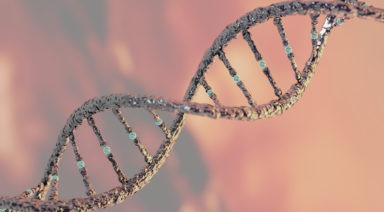
The double helix DNA structure most of us are familiar with is encoded with copious amounts of information. In fact, DNA can be used to store more data than any artificial medium – so much so that all the data ever recorded by humans could fit into a container the size and weight of a few pickup trucks.
Though our DNA contains such large amounts of data, the vast majority of it is considered extraneous by geneticists who regularly study it. Some refer to this 97 percent of DNA as non-functioning or “junk DNA.”
What if this data isn’t junk but actually encoded with information whose function has yet to be discovered? And what if there are more than two strands of DNA, but instead, up to 12 potential strands lying dormant in a subtle energy spectrum? Wouldn’t you want to activate them?
Activating Genetic Code
As humans, our potential for creativity, love, mathematics, and intellect exceeds far beyond our everyday output. Just the fact that some of us are born prodigies, savants, and virtuosos proves how much more potential our minds and bodies are capable of. And that potential isn’t unique to the small percentage born that way; we all have the capability. Just look at the proof found in acquired savant syndrome.
Our brains are the fastest data processors on Earth, far more efficient than any computer you’ve used. Though it may not seem like it, the human brain is able to calculate up to 38 quadrillion calculations per second, compared to your personal computer, which clocks in at somewhere between one and five billion. That fact alone gives some perspective into our true potential, and proponents of DNA activation believe that by implementing certain practices into one’s life, we can achieve even more.
DNA activation suggests the idea that there is an additional DNA template contained within each of us that goes beyond the double-stranded helix. Proponents say that, in reality, there are up to 12 strands ranging in subtlety that can be activated along with our “junk DNA.”
If you think this sounds ridiculous, you should note that our knowledge of genetics is still in a relatively nascent phase as we’re constantly learning more about its sequencing and structure. Just recently, molecular biologists observed three and even four-stranded DNA known as G-quadruplex secondary structures that form in telomeric regions – the ends of our chromosomes that slowly unravel as we age. It has been suggested that studies of how this G-quadruplex DNA affects us could lead to new cancer treatments.
DNA Energy Healing Frequencies
There are certain modalities one can use to actuate the dormant aspects of our genetics according to DNA activation theory, and one of those methods is through DNA healing frequencies or what some refer to as DNA music repair.
There are certain sound frequencies discovered to have profound effects on brain function and possibly even cellular health. It has been shown that binaural beats and exposure to specific frequencies can impact our body in positive ways.
Binaural beats operate in the theta wavelength between four to eight hertz and are conducive to deep relaxation and meditative states, which have endless benefits to the body and mind.
The 528 Hz frequency, also known as one of the Solfeggio frequencies, is considered an auspicious tuning for music and sound, believed to have incredibly positive potential for DNA activation. But how can simple sound waves produce a distinct impact at the molecular level?
One scientific study tested the effects of sound waves on the synthesis of nucleic acids in chrysanthemums, finding the synthesis of RNA was accelerated under certain frequencies. In another instance, a music professor at Skidmore College discovered that certain combinations of sound waves, tuned to the right frequency, can destroy cancer cells – as can the human voice.
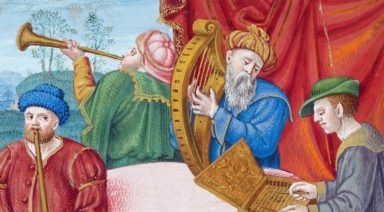
The 528 Hz frequency, thought to have first been used in Gregorian chants dating back to John the Baptist, is believed to activate and mend DNA. Dr. Glen Rein has devoted much of his career to studying the effects of sound and frequency on DNA and, specifically, the telomeric end caps of chromosomes that correspond with our biological age.
In 1998, Rein exposed in vitro DNA samples to 528 Hz and analogous Solfeggio frequencies in the form of Gregorian chants in scalar audio waves. He found the samples became more absorptive to UV light compared to samples exposed to other sound frequencies and other types of music, such as rock. This increase in absorption is known as hyperchromicity, causing DNA strands to separate and unravel. New bonds form in the DNA chains and crystal structure, subsequently increasing light absorption.
DNA Activation Through Meditation
Spiritual DNA activation proponents often speak of the need to connect with a higher self or etheric entity through meditation. Whether this entity is an archangel, an ascended master, or an enlightened divine being depends on the individual, as experiences often vary and are typically based on one’s spiritual path.
Guided meditations are available online or in the vast catalog found on the Gaia website, but these aren’t always necessary – individual, silent meditation is usually the end goal. Guided meditations are great for beginners, but once one is able to quiet the mind, you can experience greater depths of consciousness through silent or non-guided meditation. It certainly doesn’t hurt to listen to soft 528 Hz music while meditating for compounding activation modalities.

Affirmation and Positive Thinking
Our daily thoughts and intentions alter the frequency of our vibration and DNA. Simply switching the energy of your daily thoughts can have a profound impact on your physical being.
Too often are we consumed by the ego, an area of the brain scientists have recently pinpointed to be found in the default mode network. Though our consciousness may exist externally from our bodies, the ego exists internally and can consume our thought patterns, focusing our intentions and actions on the self. Recognizing this, acknowledging it, and allowing your mind to remove itself from the body and the ego can provide a third-person perspective.
This act of abstraction from the individual can help you remove yourself from egoic behavior, allowing you to instead think from a place of inclusivity, acceptance, and love. In turn, this can change our frequency and activate DNA to vibrate at a higher level.
Manifesting Genuine Relationships
We all wear many masks in the varied relationships we’re involved in throughout our lives. Work relationships, friendships, family, and lovers. And there’s good reason these relationships are varied, not everyone needs to know the same level of detail about you that others should be privy to.
However, there should be a level of consistency across all of these relationships if one is to truly awaken their full potential as a human being and activate their DNA to its highest level.
This final piece comes easiest as an amalgam of all the other practices of DNA activation, which, if practiced regularly, will naturally cultivate genuine relationships with everyone in your life. Giving an equal, honest version of yourself to others will, more often than not, manifest those genuine relationships you deserve.
DNA activation affects gene expression, determining an individual’s growth, functioning, and adaptability. As scientists delve deeper into the mechanisms of gene activation, they will eventually unveil opportunities for innovative medical interventions, personalized treatments, and a deeper understanding of our genetic heritage. This remarkable activation process holds the key to addressing diseases, unlocking hidden capabilities within our genomes, and redefining the boundaries of human potential.
Want to know more about the powerful impact your mind can have on your physical body? Check out Dr. Bruce Lipton’s advice for using the power of thought to control your genes in this episode of Inspirations.
About the Author
Reiki Symbols: How Many Are There and What Is Each One For
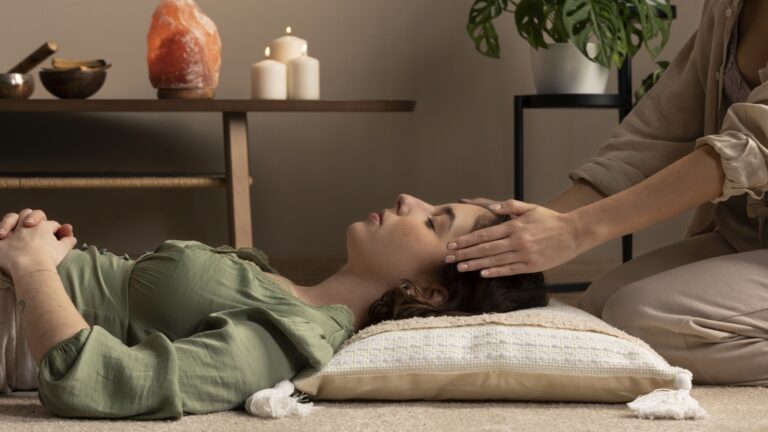
In Reiki practice, symbols are tools that practitioners use to give shape, structure, and greater effectiveness to the treatment. Each of these symbols has a specific function, and their application depends on the practitioner’s therapeutic purpose. In this article, we explore how many symbols exist, how they are used, and what role they play in the energetic practice of Reiki.
Table of Contents
- What Are Reiki Symbols And What Are They Used For?
- Origin And Evolution Of Reiki Symbols
- How Many Reiki Symbols Exist?
- The 5 Main Reiki Symbols And Their Function
- How Symbols Are Activated And Used In A Reiki Session
- Can Symbols Be Used Without Being Initiated Into Reiki?
- The Energy Behind The Symbols: Why Do They Work?
What Are Reiki Symbols And What Are They Used For?
Reiki symbols are energetic tools used by practitioners to channel and direct vital energy during a session. Each symbol is used with a specific purpose, such as balancing the body, calming the mind, or facilitating emotional healing. They are incorporated into the practice through visualization, hand-drawn gestures, or mental focus, and they assist in the healing process according to the goal the practitioner seeks to achieve.
Each of these symbols serves a specific function within the system. Some are designed to enhance the energy flow, others to release emotional blockages, relieve mental burdens, or even send Reiki to people who are not physically present. This functional diversity allows each session to be adapted to the recipient’s needs, working on different levels as required by the situation.
In addition to being support tools, the symbols give structure and direction to the therapeutic process. They are not used automatically but as part of a practice that requires attention, presence, and intention. Their strategic application allows the practitioner to guide the session more clearly, effectively, and with greater organization, deepening the effects of Reiki and facilitating a more holistic experience.
Origin And Evolution Of Reiki Symbols
The origin of Reiki symbols dates back to the late 19th century, when Mikao Usui developed this healing system in Japan. Usui integrated teachings from various spiritual traditions and meditative practices, from which the first symbols used in Usui Reiki emerged. These were transmitted privately, only to students who received direct initiations with the master.
Over time, the symbols began to spread beyond Japan thanks to Usui’s disciples and, later on, to the work of teachers like Hawayo Takata, who brought Reiki to the West. In this process of diffusion, the symbols were adapted, documented, and shared with a wider audience, which allowed Reiki to become established as a global practice.
Today, Reiki symbols are part of a path that has expanded far beyond its original lineage. Some contemporary schools have introduced additional symbols, either through channelings or personal adaptations, with the intention of broadening the possibilities of the practice.
How Many Reiki Symbols Exist?
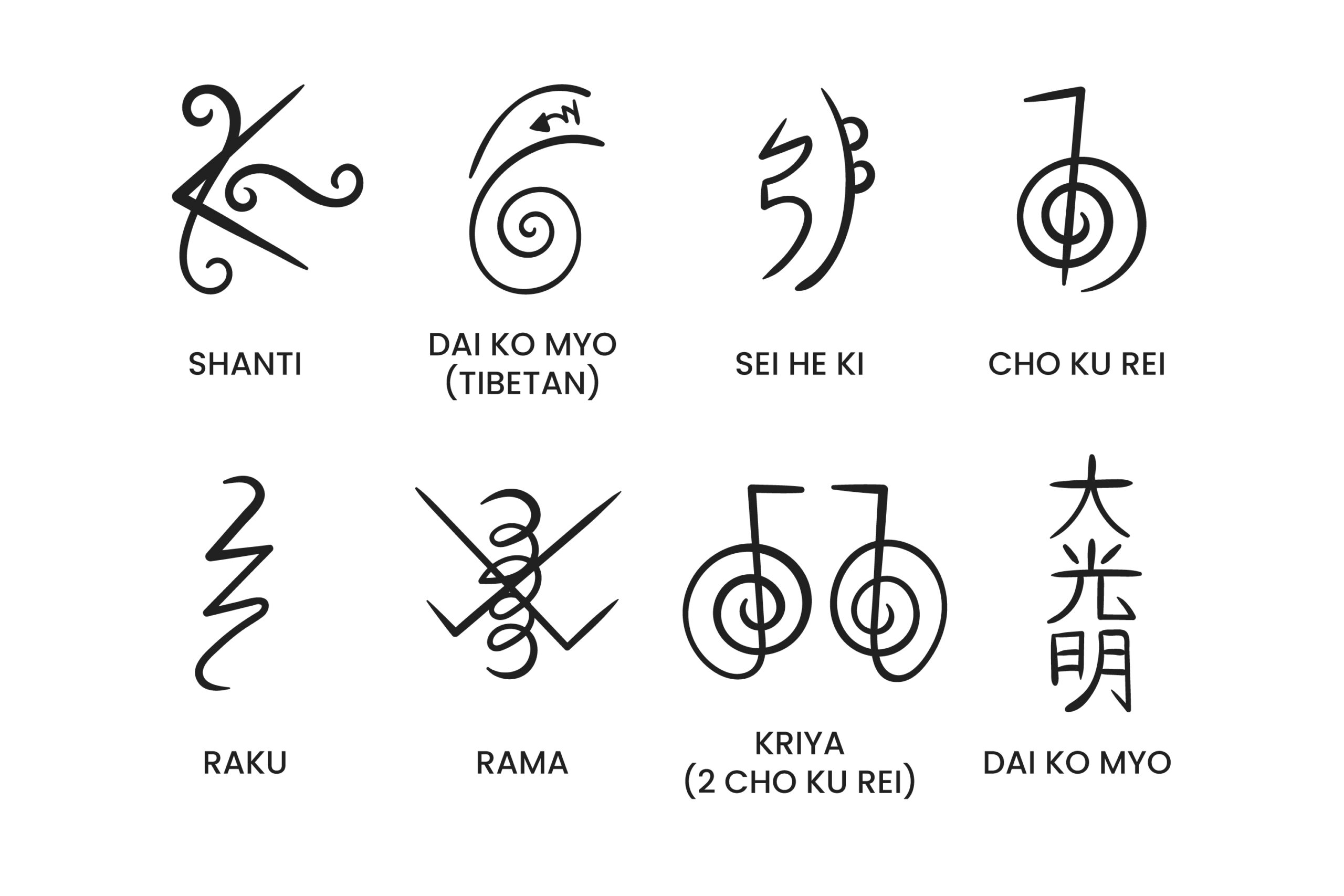
The traditional Reiki system, known as Usui Reiki, is composed of four main symbols that are transmitted across different levels of training. Over time, a fifth symbol was added, which eventually became consolidated in many modern schools as part of the essential set.
In current practice, it is considered that the five essential symbols are: Cho Ku Rei, Sei He Ki, Hon Sha Ze Sho Nen, Dai Ko Myo, and Raku.
Beyond these five, various branches have added their own, derived, or complementary symbols, resulting in a wide range of approaches. Nevertheless, the symbols of Usui Reiki remain the most widely taught and used around the world, as they represent the original structure on which most Reiki systems are built.
The 5 Main Reiki Symbols And Their Function
In Usui Reiki, five symbols are used to represent essential aspects of the practice: power, harmony, distance healing, mastery, and energetic closure. Each one plays a specific role and is integrated at different points in the therapy to enhance energy flow, balance emotions, work with consciousness, and complete the healing process in an orderly way.
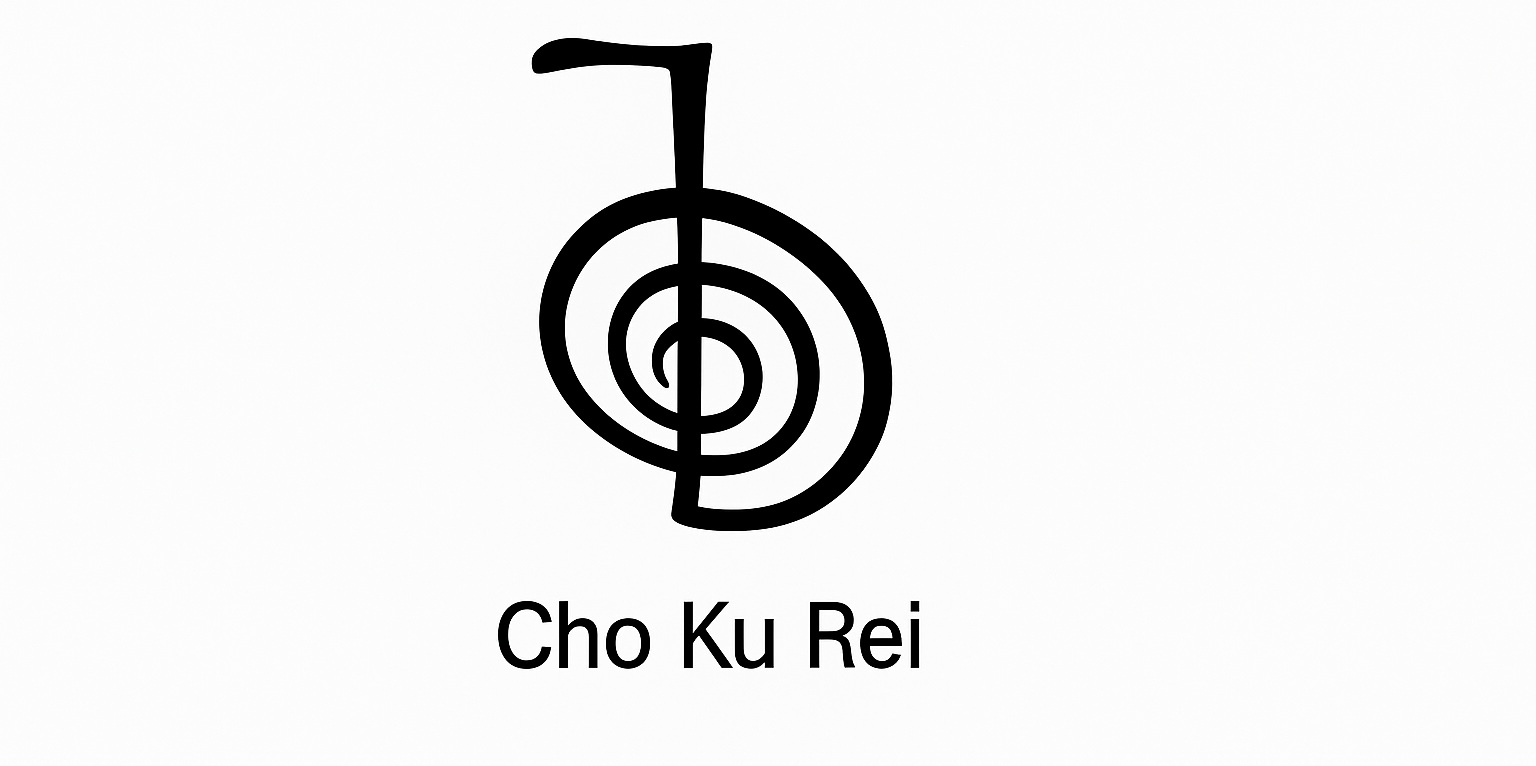
Cho Ku Rei is the symbol used to intensify and concentrate vital energy. It is applied to reinforce any treatment—whether physical, mental, or emotional—and is often used at the beginning of a session to increase Reiki’s strength. Its spiral shape acts as a channel that directs energy toward the area where greater intensity is needed, working as a force amplifier.
Beyond its role as an enhancer, it is also used to cleanse and protect spaces, as well as to seal the energy in the receiver at the end of the session. Thanks to its versatility, Cho Ku Rei is considered an indispensable resource that complements the action of the other symbols and provides safety and stability to every practice.
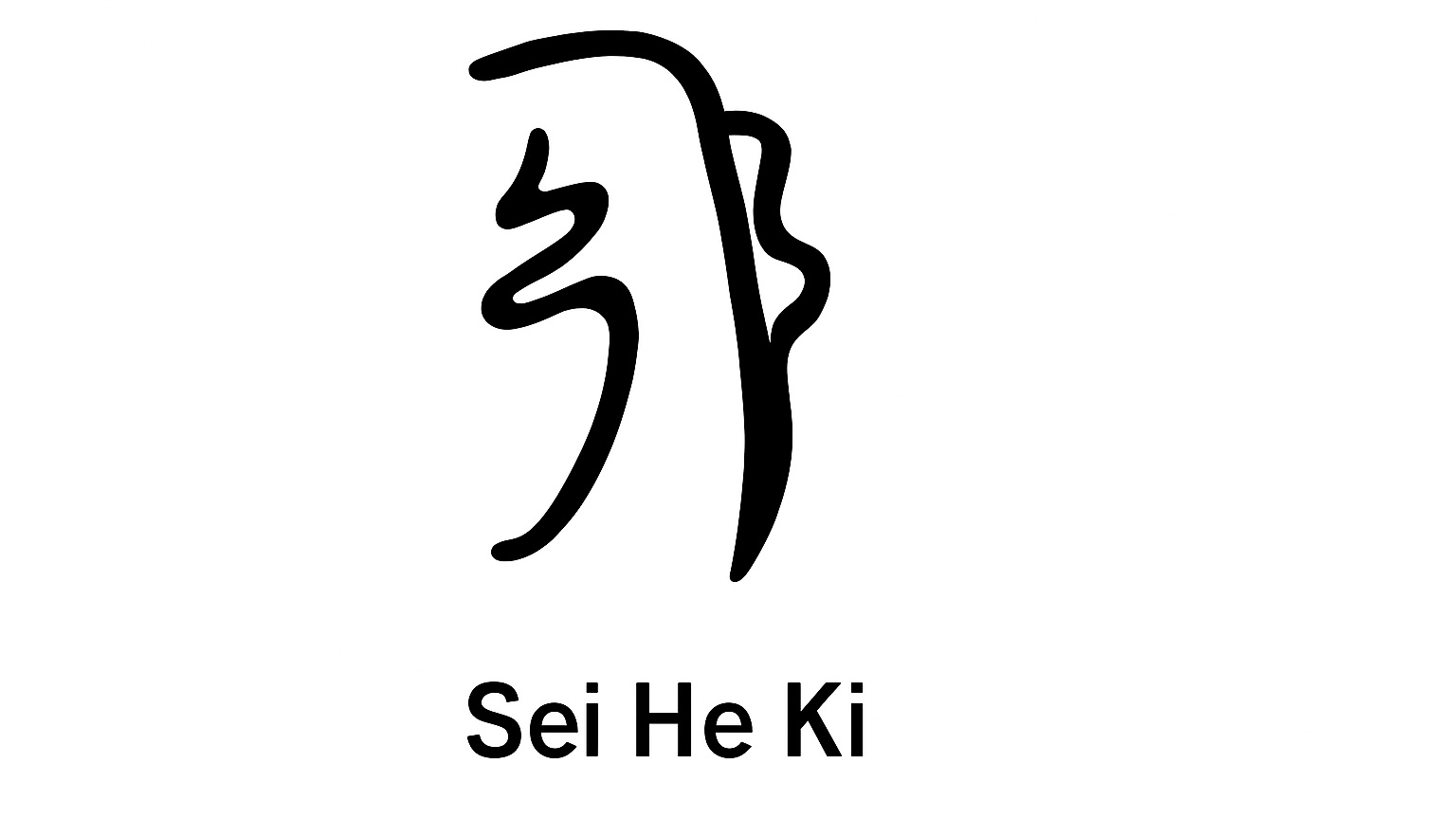
Sei He Ki is related to the balance between mind and emotions and is used when the goal is to release internal blockages that generate tension or discomfort. Its shape represents the union of the brain hemispheres and promotes integration between the rational and the intuitive, making it an effective tool to achieve states of calm and mental clarity.
This symbol is especially helpful in cases of anxiety, stress, or recurring thought patterns. It is also used to enhance memory, improve communication, and harmonize personal relationships. By balancing the inner planes, Sei He Ki allows energy to flow more freely, creating a state of holistic well-being.
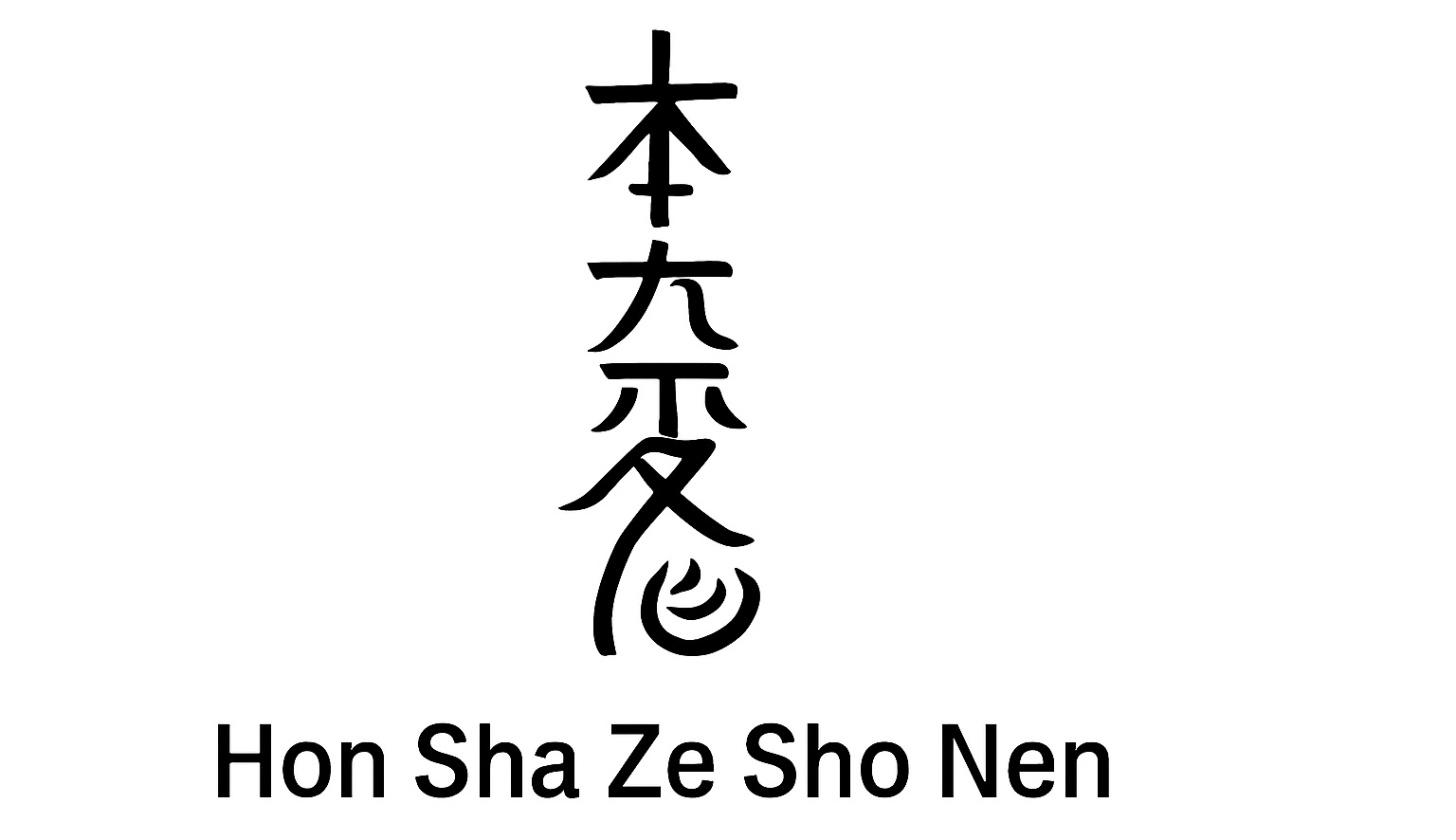
Hon Sha Ze Sho Nen allows Reiki to be sent to people or situations regardless of physical distance or time. This makes it a key tool for distance healing, as it connects the practitioner with the recipient without the need for physical presence. Its energy is also used to work on past memories and experiences that still affect the present.
Likewise, this symbol is used to project energy toward future goals or situations, bringing clarity and balance to the path ahead. By transcending the barriers of space and time, Hon Sha Ze Sho Nen expands the reach of Reiki and opens the possibility of working in more subtle planes of existence.
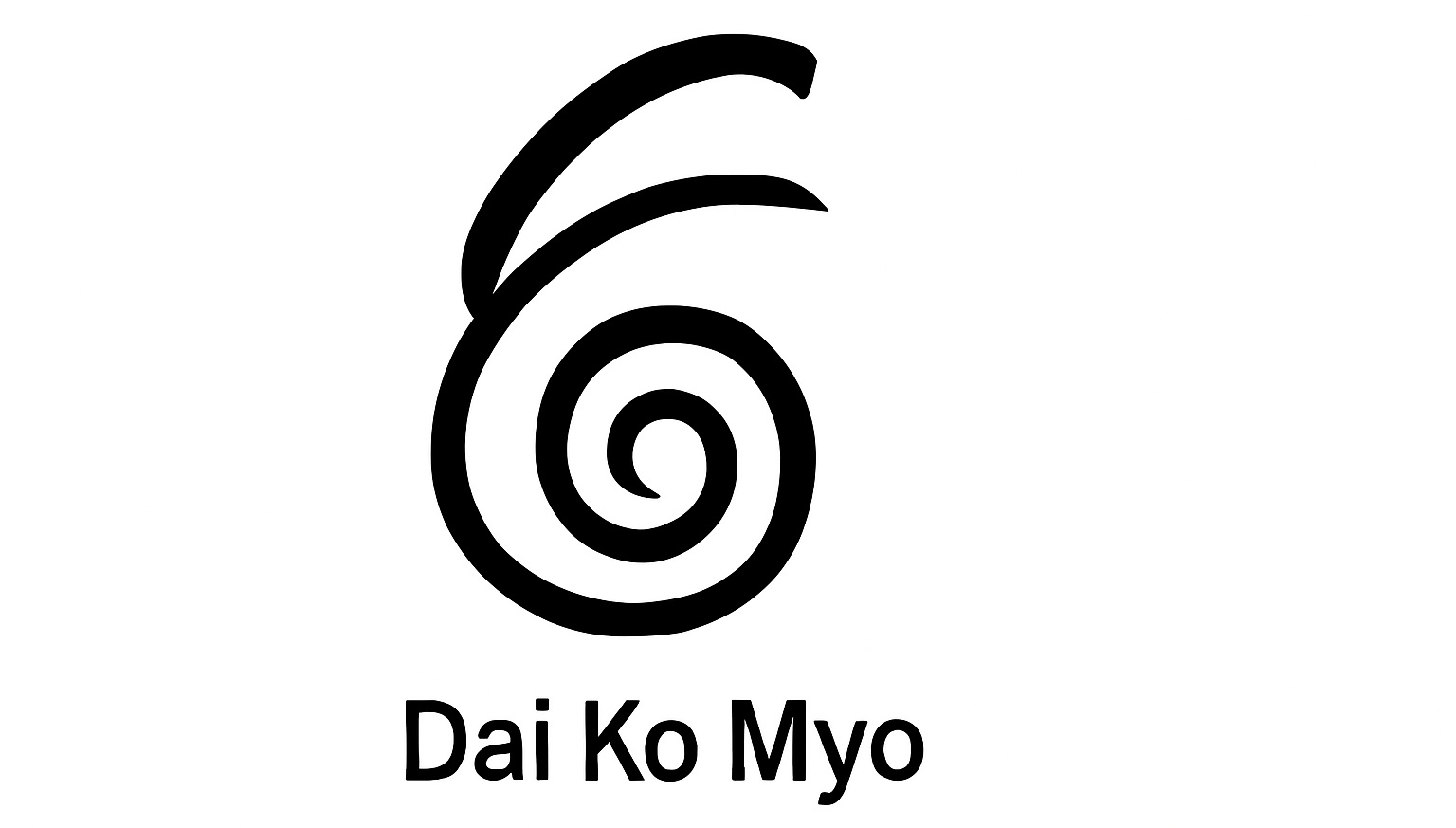
Dai Ko Myo is considered the master symbol in Reiki and is associated with deep healing and spiritual connection. It acts on a high level of consciousness, allowing it to release deeply rooted patterns and support personal transformation processes. It is used both in therapeutic practice and in the initiation of new practitioners.
Its energy is primarily directed toward strengthening the spirit and integrating body, mind, and soul. Working with this symbol stimulates energetic regeneration and reinforces connection with one’s life purpose. For this reason, Dai Ko Myo is seen as a tool for inner expansion that fosters personal evolution and openness to a higher state of harmony.
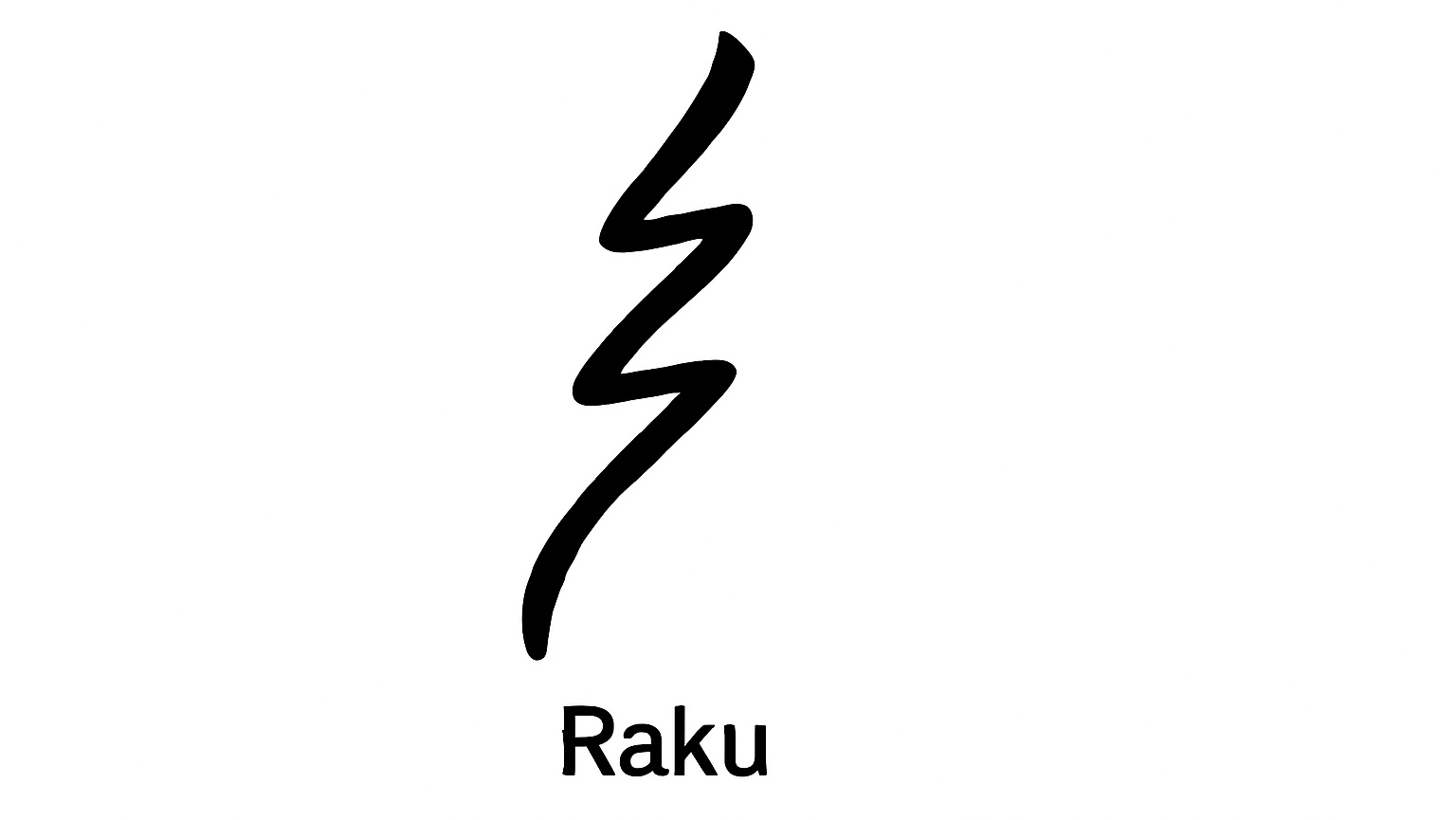
Raku is the symbol used to conclude a Reiki session, as its main function is to seal and stabilize the energy received by the recipient. Its downward shape helps to anchor energy in the physical body, ensuring it remains grounded and does not dissipate after the session ends. In doing so, it brings a sense of completion and balance following the work done.
During initiations, Raku plays an important role in consolidating the energy transmitted from master to student. It also establishes a clear energetic boundary that protects both the practitioner and the recipient after the session. Thanks to this closing function, the Raku symbol ensures the integration of the therapeutic experience in a stable and organized way.
How Symbols Are Activated And Used In A Reiki Session
During a Reiki session, symbols are activated through the practitioner’s conscious intention. This can be done by visualizing the symbol in the mind, drawing it in the air with the hand, or mentally projecting it toward the area to be treated. What matters is not the precision of the drawing, but the connection established with the symbol’s purpose.
Once activated, the symbol integrates into the Reiki energy flow and directs the corresponding vibration to the specific body area, emotion, or situation being worked on. For example, some symbols are applied at the beginning of the session to enhance the energy, while others are used at specific moments to address emotional blocks or promote relaxation.
The use of symbols is not rigid—it depends on the practitioner’s preference and sensitivity. Several symbols can be used in combination during the same session, depending on the recipient’s needs. This gives flexibility to the treatment and allows the practice to be personalized for a deeper and more balanced effect.
Can Symbols Be Used Without Being Initiated Into Reiki?
In Reiki, initiation is a process in which a master transmits to the student the ability to channel and work with vital energy. In most courses and books, it is taught that without this step, symbols do not function as simple drawings that just anyone can use. According to this view, their effectiveness is linked to the initiation, which opens the conscious connection with energy through them. Without this activation, the symbols are considered to be only graphic representations without the same therapeutic strength.
However, some believe that anyone can benefit from meditating with the symbols, even without having received formal initiation. From this perspective, they are seen as forms that contain their own resonance field, capable of influencing the practitioner’s mind and emotions. While their impact may not be as deep as in traditional Reiki, they are still recognized as useful tools for finding calm and personal focus.
In truth, how their use is understood depends on the school, the teacher, and the practitioner’s experience. While some insist initiation is essential, others argue that the symbols are accessible to anyone who approaches them with respect and awareness. Both perspectives agree that they are not mere decorative drawings, but intention-charged expressions that can influence the inner experience of the one using them.
The Energy Behind The Symbols: Why Do They Work?
Reiki symbols work because they act as keys that allow access to specific energetic frequencies. Each one is designed to focus the practitioner’s intention and connect with a particular aspect of vital energy—whether to amplify, harmonize, or direct it remotely. This interaction between form, intention, and energy is what gives them effectiveness in therapeutic practice.
From an energetic perspective, symbols operate as patterns that organize and channel universal vibration. When used, the practitioner does not create the energy, but facilitates its flow toward a specific goal. This explains why combining the symbols with conscious intention can lead to perceptible effects on the body, mind, and emotions.
Their function can also be interpreted through more modern frameworks of understanding. Sciences that study energy and consciousness suggest that symbols work as bridges between the mind and the energetic reality around us. In this sense, they are not only spiritual tools but mechanisms of interaction with subtle fields still under exploration.
This principle can be related to contemporary approaches investigating the nature of energy and consciousness. In the series Quantum Effect, available on Gaia, Randy Veitenheimer explores how we live in a vast energy field and how consciousness influences our reality. His teachings offer a complementary vision that helps explain why tools like Reiki symbols can have an impact on our everyday experience.