What Is a Birth Chart and What Does It Reveal About Your Personality?

You know what your sign is, and you say it without thinking when someone asks. But that word —Aries, Cancer, Libra— is only the tip of something much larger and more personal. Your birth chart is the complete map of the sky at the exact instant you were born, and it contains much more information than can fit into a single sign.
In this article, we explore what a birth chart is, what elements make it up, and what it can reveal about your way of being, feeling, and existing in the world.
Table of Contents
- What Is a Birth Chart
- Main Elements of a Birth Chart
- What Do the Houses Mean in a Birth Chart?
- What Each Planet Represents in the Natal Chart
- Venus, Lilith, and Other Important Points in the Birth Chart
- How to Read a Birth Chart at a Basic Level
- What Is the Purpose of Knowing Your Natal Chart?
What Is a Birth Chart
Imagine a photograph of the sky taken at the exact instant of your first breath, from the precise place where you were born. That is, in essence, a birth chart: a record of where the Sun, the Moon, and the planets were at that unique moment. Each of them appears positioned in one of the twelve signs of the zodiac, and that position is what is later interpreted. Since no two people are born in the same second and in the same place on the planet, no two charts are identical: yours is as particular as a fingerprint.
Astrology begins from a simple and very ancient idea: what happens above is connected to what we are down here. It is not that the stars decide your life, but that their position at the moment of your birth draws a symbolic map of your character, your talents, and your challenges. Understanding that map is a way of knowing yourself better: of putting into words traits of yours that perhaps you always sensed, but had never known how to name.
Unlike magazine horoscopes, which only look at the sign where your Sun is, the natal chart takes the entire sky into account. That is why it can tell you much more, and in a much more precise way, about who you are.
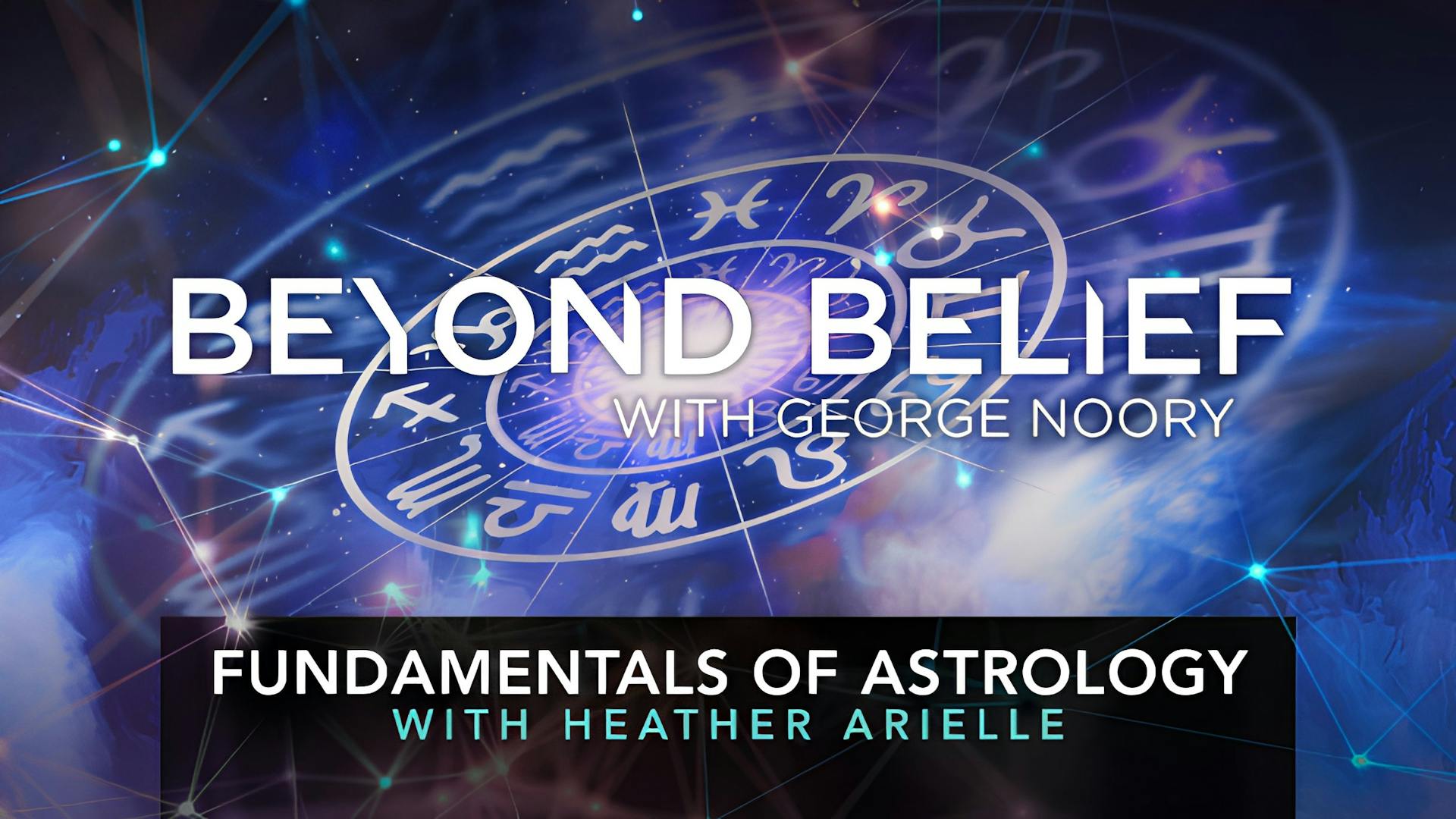
If you want to see how these symbols are interpreted in practice, the episode Fundamentals of Astrology, from the series Beyond Belief, available on Gaia, is a good place to start. In it, Heather Arielle explores the foundations of astrology —houses, planets, rising signs and the reading of a natal chart— showing how this symbolic language can help you recognize your personal cycles and make more conscious decisions.
Main Elements of a Birth Chart
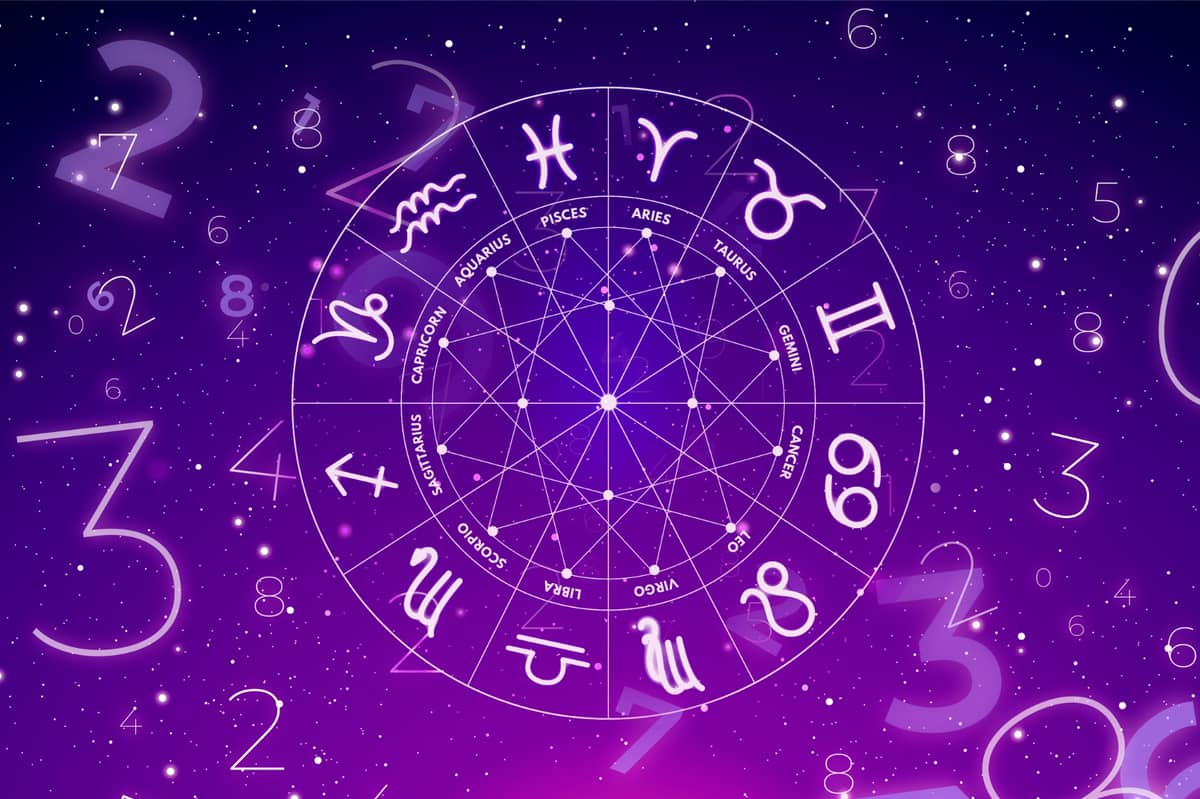
The first time you see your chart, it can look like a hieroglyph: a circle full of symbols, lines, and numbers that seem to say nothing at first glance. The good news is that behind that apparent chaos, there are a few key elements. Once you understand what each one is, the drawing begins to make sense.
-
The Sun and Essential Identity
When you say “I’m a Taurus” or “I’m a Scorpio,” you are actually talking about your Sun. Your sign is simply the place in the zodiac where the Sun was on the day you were born. And the Sun is the central piece of the chart: it represents the core of who you are, your underlying character, and what truly moves you. It is the part of you that shows most clearly when you are doing something you love and feel fully like yourself.
-
The Moon and the Emotional World
If the Sun is who you are, the Moon is how you feel. It represents your emotional world: the way you react internally, what you need in order to feel calm and safe, and what moves you even if you do not always show it. It is the most intimate part of you, the one that appears when you are in a place of trust and let your guard down. That is why knowing your Moon helps you understand why certain things affect you more than you might say out loud.
-
The Ascendant and the Way You Present Yourself to the World
The Sun is who you are and the Moon is how you feel; the ascendant is how others see you. It is the image you project without realizing it and your spontaneous way of responding to what is new, the thing others notice about you before they know you deeply. It depends on the exact time you were born, which is why it is so personal; without a precise birth time, it cannot be calculated properly. Sometimes it looks very different from how you feel inside, and that is where the feeling comes from that people perceive you differently from who you really are.
-
The Planets and Their Areas of Influence
You already know the Sun, the Moon, and the ascendant. Your chart also has other protagonists: the planets. The best way to understand them is to think of them as a cast of characters living inside you, each one in charge of something different: one of how you think, another of what attracts you, another of how you pursue what you want. None of them acts alone; together, they shape your way of being. Later, you will see what each one represents, but for now, that image is enough: an inner team working all at once.
-
The Astrological Houses and the Areas of Life
So far, we have talked about parts of you: the Sun, the Moon, the ascendant, the planets. The houses are something different: they represent the areas of your life. The chart is divided into twelve sections, and each one corresponds to a specific field: work, money, love, family, health. And what do they have to do with the planets? Each planet is placed within one of those twelve houses, and that tells you in which part of your life it acts with the most strength.
-
The Aspects Between Planets
The planets in your chart are not isolated: they “converse” with one another. In the drawing, those conversations appear as lines crossing the center of the wheel and connecting some planets to others. They are called aspects. Some are harmonious: two planets that get along well and strengthen each other. Others are tense: they create friction, that small inner struggle between what you want and what you end up doing. That is why aspects explain much of your contradiction and, also, your richness.
What Do the Houses Mean in a Birth Chart?
For the houses to make sense, it helps to see how the three basic pieces of the chart fit together. They work like a play. The planet is the actor: a part of you that does something; for example, Mars is your drive, your way of taking action and going after what you want. The sign is its character: the style in which it moves, whether calmly, intensely, or cautiously. And the house is the stage: the area of your life where that actor steps into the scene, such as work, love, or money.
What matters is that every planet has all three things at once: it is a part of you, it acts with the style of a sign, and it appears on the stage of a house.
The twelve houses, one by one, cover these areas:
- House 1: your image and the way you show yourself to the world.
- House 2: money, what you have, and what you value.
- House 3: communication, early studies, and siblings.
- House 4: home, family, and your roots.
- House 5: creativity, pleasure, romance, and children.
- House 6: daily work, routine, and health.
- House 7: partnership and one-on-one relationships.
- House 8: deep intimacy, what you share with others, and major transformations.
- House 9: travel, higher studies, and the search for meaning.
- House 10: vocation, career, and your public place in the world.
- House 11: friends, groups, and future projects.
- House 12: the inner world, rest, and what happens in silence.
Let’s look at a complete example. Imagine that your Mars is in the sign of Aries —which gives it an impulsive and direct style— and that it falls in the 6th house, the house of daily work. The reading would be something like this: you put your energy mainly into your work life (that is shown by the house), and you do it quickly and decisively, without overthinking things (that is shown by the sign).
That same Mars in Aries, but placed in the 7th house, the house of partnership, would direct that impulsive drive into your relationships. The actor and its character are the same; the only thing that changes is the stage: the area of your life where all of that is most visible.
What Each Planet Represents in the Natal Chart
The Sun, the Moon, and the ascendant are the main headlines of your chart; the other planets add the details. Each one governs a part of your inner world and expresses itself according to the sign and house where it is placed. Getting to know them is like getting to know the different characters that live within you.
-
Mercury, Venus, and Mars
These three move close to the Sun and touch the most everyday parts of your life. Mercury rules how you think and communicate: whether you get straight to the point or take detours, whether you learn quickly or need your time. Venus speaks of what you enjoy and what you value: your sense of beauty, pleasure, and what attracts you almost without trying. Mars is your engine: how you pursue what you desire, how you get angry, and how much initiative you bring to making things happen.
-
Jupiter and Saturn
After Mars, the rhythm changes. Jupiter and Saturn are the great teachers of the chart, and they often pull in opposite directions. Jupiter is expansion, confidence, and abundance; it shows where you grow with ease and where life invites you to open up and take risks. Saturn is the opposite: limits, responsibility, and sustained effort. It marks where you are asked to mature, take responsibility, and build with patience. Together, they represent that balance between casting off the moorings and keeping your feet on the ground.
-
Uranus, Neptune, and Pluto
The three most distant planets move so slowly that they mark entire generations, not just one person. Even so, the place they occupy in your chart says something intimate about you. Uranus is rupture and originality, the impulse to break out of the mold and do things your own way. Neptune dissolves boundaries: it rules imagination, dreams, spiritual sensitivity, and also the tendency to idealize. Pluto is depth and power, what dies and is reborn within you after the crises that transform you from the root.

Venus, Lilith, and Other Important Points in the Birth Chart
A chart does not stop at the planets. There are other points that astrologers also look at because they add very revealing nuances. Some are angles of the drawing itself, highlighted places on the wheel, and others are lesser-known celestial bodies. You do not need to master them to begin, but it is worth knowing four of the most commonly used ones. Let’s start with one we have already named: Venus.
-
Venus and the Way of Loving
We have already seen that Venus speaks of what you like and what you value. But Venus has a second side, just as important: the way you love. Its position describes what you look for in relationships, how you show affection, and what makes you feel truly loved. Some people need constant words and gestures; others feel loved through a calm presence, without so much display. Looking at your Venus helps you understand why you fall in love the way you do.
-
Lilith and Instinctive Energy
Lilith is not a planet, or a sign, or a house: it is a point calculated in the chart and known as the Black Moon. It represents your most instinctive and untamed side: the desire that does not ask permission and the part of you that refuses to fit into what is expected. It shows where you struggle to follow the rules and where you hold a strength, an anger, or a passion that you may have learned to silence. When listened to well, Lilith is not something dark: it is the voice that appears when you stop trying to please everyone and show yourself exactly as you are.
-
The Midheaven and Vocation
The Midheaven is another of those key points: it marks the highest point in your chart, the top of the sky at the moment of your birth, which is where its name comes from. Because it looks upward, toward what is visible, it speaks of your public life: your vocation, your professional image, and what you feel you are moving toward, even if you do not yet know how to name it. If the ascendant is the impression you give when you enter a place, the Midheaven is the mark you leave on the world. When your work comes close to what this point indicates, the effort feels lighter, because you feel you are moving in the right direction.
-
Chiron and the Wound That Can Become Medicine
Chiron is a small celestial body that astrology incorporated a few decades ago. It takes its name from a figure in Greek mythology: a wise being who knew how to heal others but carried a wound of his own that he could not heal. In your chart, Chiron points precisely to that: a sensitive wound, almost always linked to something that hurt early on and still touches a nerve. What is valuable is that this same wound, when you move through it, becomes your greatest capacity to understand and accompany others. That is why Chiron is said to be the wound that can become medicine.
How to Read a Birth Chart at a Basic Level
You do not need to be an astrologer to begin understanding your chart. In fact, you do not take the first step yourself: today, any astrology website or app can draw your chart for free. You simply give it your date, time, and place of birth, and it shows everything in order: which sign and house each planet occupies, and which lines, the aspects, connect them. With that image in front of you, you can read it like this:
- Start with your basic trio: Look for your Sun, your Moon, and your ascendant: they are the backbone of your chart and, together, they already tell a large part of your story.
- Notice which house each planet is in: The chart already shows you; all you have to do is look at which area of life, such as work, love, or money, each one is located in.
- Observe the lines in the center: These are the aspects: harmonious connections show you your natural talents, while tense ones point to the areas where you often feel an internal push and pull.
- Read the whole before the parts: One isolated detail says little; meaning appears when you see how all the elements combine.
Take it as a conversation with yourself, not as an exam. If one part does not fit, let it rest: many times, a piece of the chart only begins to make sense when life places before you the situation that explains it.
What Is the Purpose of Knowing Your Natal Chart?
At this point, the most important question remains: what is all this for? The natal chart does not tell you what is going to happen, nor does it hand you a written destiny. What it does is return a more complete image of yourself to you, with your light and your shadows, without asking you to change anything.
Knowing it often brings a form of relief. You understand why you react the way you react, why certain things are harder for you and others come naturally, why you repeat certain patterns. And when you understand that, you judge yourself a little less. Where you once saw a flaw, you begin to see a trait you can work with.
More than an oracle, the birth chart is a mirror and a compass. A mirror, because it shows you who you are with an honesty that is difficult to find anywhere else. A compass, because it helps you make decisions that are more faithful to your nature, instead of living according to what others expect of you. And that is, perhaps, its greatest gift: not turning you into someone different, but bringing you closer to the person you already are.
About the Author

What The Saturn Return Is And How To Consciously Navigate It
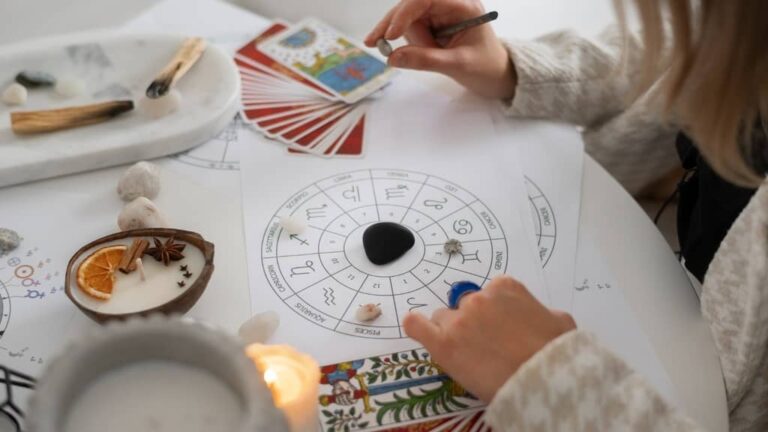
The Saturn return is one of the most significant astrological transits in a person’s life. It marks stages of closure, maturation, and redefinition that, although often felt as a crisis, actually represent a process of evolution and inner expansion. In this article, we explore what the Saturn return is, what makes it so important, and how to consciously navigate it to transform it into an experience of real growth and transformation.
Table of Contents
- What Is The Saturn Return And What Does It Represent Spiritually?
- The Three Saturn Returns Throughout Life
- Signs You’re Going Through Your Saturn Return
- What Challenges Can Arise During The Saturn Return?
- How To Consciously Navigate The Saturn Return
- The Saturn Return As A Portal Of Transformation
What Is The Saturn Return And What Does It Represent Spiritually?
In astrology, a “return” occurs when a planet comes back to the same point in the sky where it was in a birth chart. In the case of Saturn, this event takes place approximately every 29 years and lasts between two and three years. During that time, internal processes related to personal structure, assumed commitments, and the need to organize life on a more solid foundation are activated.
Saturn symbolizes structure, time, limits, responsibility, and learning through experience. It is not an “easy” planet, but it is deeply transformative. Its energy confronts what has been built up to that point, challenging lifestyles, belief systems, or decisions that no longer have a foundation. This is why many people experience crises, existential questioning, or long-term decisions when this transit occurs.
On a spiritual level, the Saturn return can be experienced as a stage of initiation. It is a time that invites growth, leaving behind what is no longer aligned with inner truth, and embracing the path from a more mature perspective. It also offers the possibility of revisiting one’s purpose, reorganizing priorities, and strengthening the connection with what is essential.
The Three Saturn Returns Throughout Life
The Saturn return doesn’t happen just once. Throughout life, up to three returns can be experienced: the first around age 29, the second around 58, and the third near 87. Each of these moments activates different processes depending on the stage of evolution and reflects an opportunity to integrate lessons, close cycles, and build with greater awareness. Although the challenges vary, they all share the same essence: they invite us to mature from a deeper place, aligned with inner truth.
-
First Return: Maturity And Personal Definition
The first Saturn return, between the ages of 28 and 31, marks the symbolic end of youth and the beginning of full adulthood. It is a stage of confrontation with identity, where tensions between family or social expectations and personal desires are revealed. Many people go through key decisions related to work, relationships, life projects, or emotional and financial independence.
Although it is often experienced as a crisis, it is actually an opportunity to leave behind what was chosen by inertia and begin to build from greater authenticity. Structures that no longer support growth begin to collapse—but not as a punishment; rather, as a call to create something more real. What is decided during this period has a lasting impact, which is why it is a crucial moment to take responsibility for one’s path.
-
Second Return: Balance And Inner Wisdom
The second return happens between ages 58 and 60, and marks a stage of deep review. It’s not just about what has been achieved, but about how meaningful what’s been built truly is. It’s a moment in which many people reconsider their role, their purpose, and the time they have left ahead. A desire may arise to simplify, prioritize what’s essential, and make space for what truly nourishes.
This return is often accompanied by a drive toward a life more aligned with spiritual, creative, or collective values. It’s common to feel a desire to share what’s been learned, to step back from certain external demands, or to reconnect with passions that had been postponed. It’s not just about “closing” a stage, but opening up to a more fulfilling way of living, in harmony with the experience gained.
-
Third Return: Cycle Closure And Legacy
The third return, near age 87, represents a culmination. At this stage, Saturn invites a look back at the path taken with honesty and depth. It opens space for contemplation, introspection, and reconciliation with one’s life story. It is a time to integrate what has been lived, heal unresolved wounds, and find peace with the decisions made.
On a spiritual level, this return holds a transcendent meaning. It allows one to understand the place they’ve held in the larger web of existence, to let go of control, and to connect with the legacy being left behind. It can be experienced as a transition toward a broader consciousness, where time is no longer measured in productivity, but in presence, surrender, and inner wisdom.
Signs You’re Going Through Your Saturn Return
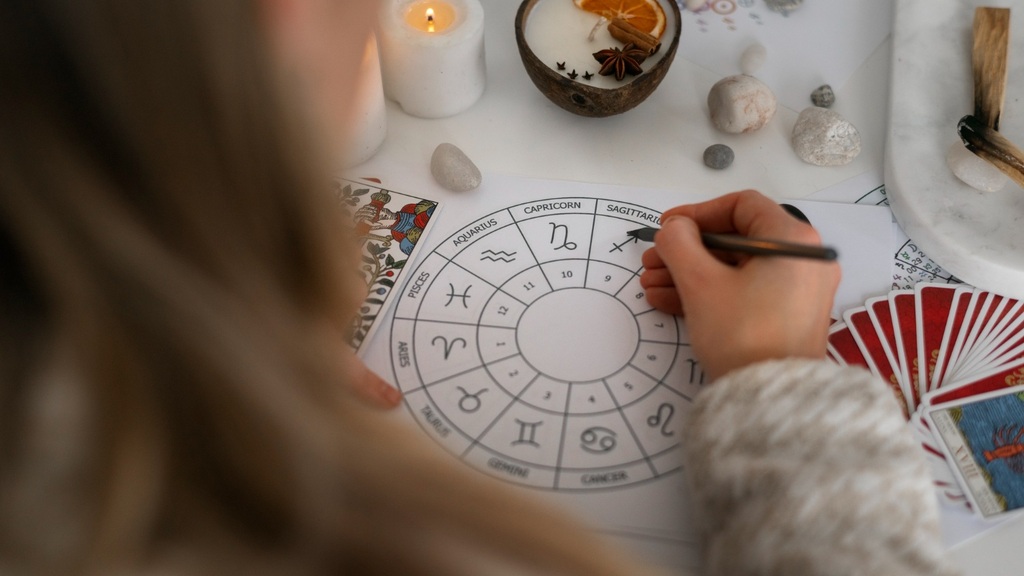
The Saturn return does not always begin with a specific event. In many cases, it’s perceived as an internal atmosphere that gradually sets in: a persistent discomfort, a sense of being out of place, or a restlessness that pushes you to revisit decisions that once felt solid. There arises a need to reassess vital structures—work, relationships, identity—not out of whim, but because something deep within begins to ask for a different direction.
During this period, it’s also common for tensions around time to emerge: a sharp awareness of what one no longer wants to repeat, and of all that has yet to be built. Daily life may feel heavy, slow, or disconnected. Some situations may come to a complete halt, forcing you to pause and look inward. What once offered security may begin to fall apart, and the new has yet to clearly take shape.
These signs are not failures along the path, but part of a process that seeks greater solidity and coherence. Saturn, upon returning, does not punish: it purifies. It dismantles the superficial to reveal what’s essential. When its movements are understood as an opportunity for conscious renewal, this transit can mark the beginning of a more authentic, freer stage aligned with a real purpose.
What Challenges Can Arise During The Saturn Return?
The Saturn return brings to light what can no longer be sustained. As the transit progresses, it begins to dismantle structures that once provided safety but now limit growth. It’s not an easy or comfortable process, but it is deeply revealing. Each challenge that appears acts as a threshold that invites letting go of the old to make room for something more real.
- Significant losses: Relationships, jobs, projects, or lifestyles may come to an end. Although the closure is painful, it is often the only way to recover direction and truth.
- Feeling stuck: The world seems to slow down. What once moved forward smoothly now stalls, creating the need to look more honestly at where you’re headed.
- Inevitable choices: Some decisions become unavoidable. Saturn forces you to take responsibility and take a stand, even if that means discomfort or rupture.
- Purpose crisis: What’s been built so far may lose its meaning. Deep questions arise about your path, the value of your accomplishments, and your loyalty to your most authentic desires.
- Awareness of time: The perception of time passing and the fleeting nature of certain stages intensifies. This awakening can cause anxiety, but also fuels a desire to live with greater clarity.
- Internal review: Priorities, values, and even the way you define yourself may shift. It’s a stage in which identity is purified and redefined from within.
- Physical and emotional manifestations: Bodily aches, insomnia, fatigue, or inexplicable sadness may be signs of the process. The body accompanies the soul’s movements.
How To Consciously Navigate The Saturn Return
Consciously navigating the Saturn return means accepting that inner movement is not resolved through control, but through listening. Instead of resisting change, the key is to accompany it with presence, patience, and commitment. This transit calls for maturity, but also for sensitivity to recognize which part of life has completed its cycle and which new structure wants to be born from truth.
- Therapy or emotional support: Speaking with someone who can offer clarity may help organize what internally feels chaotic. The return stirs up old wounds and patterns that can be processed more deeply.
- Journaling and introspective writing: Writing down what you think and feel helps you observe your internal processes more objectively. It can also reveal truths that had not yet been named.
- Rituals of cycle closure: Performing a symbolic act that marks the end of a stage helps release with greater awareness. It could be writing a farewell letter, lighting a candle, or simply taking a moment to give thanks and let go.
- Connection with the body: The body also goes through the transit and needs to be heard. Walking, breathing, resting, or moving with intention helps integrate the changes more fully.
- Spaces of silence and solitude: Withdrawing from external noise allows you to hear what the soul is truly asking for. Introspection is not isolation, but encounter.
- Meditation or spiritual practices: Cultivating a connection with the sacred—through your own faith or worldview—offers support when the external world trembles. It’s a way to anchor yourself beyond the forms.
- Trust in the process: Even if not everything makes sense right away, Saturn works in the long term. What seems like loss may later reveal its purpose as part of a greater reconfiguration.
The Saturn Return As A Portal Of Transformation
When navigated consciously, the Saturn return stops being experienced as a threat and reveals itself as a true threshold. It is a stage that demands depth, but also offers clarity. The pain or discomfort it brings is not a sign of error, but an indication that something is maturing and asking for a more genuine form.
Saturn, upon returning, does not punish: it purifies. Its function is to purify what can no longer be sustained and mark the beginning of a stage more aligned with the soul. The structures that emerge after its passage are firmer, more free from illusion, and more faithful to inner truth. That’s why many of the changes that hurt in the moment are later recognized as necessary.
The Saturn return can be experienced as a crisis or as an initiation. That difference does not lie in external events, but in the way they are navigated. When one chooses to inhabit this moment with maturity and openness, it stops being a feared transit and becomes a portal to a more conscious, more authentic, and more truthful existence.