What Is Spiritual Awakening and What Are Its 5 Stages

Spiritual awakening is a transformative process through which a person connects with their deepest essence and the spiritual reality surrounding them. Below, we explore what spiritual awakening truly means and detail the five key stages that make up this inner journey, providing a guide for those seeking to deepen their own spiritual growth.
Table of Contents
- What Does It Mean to Have a Spiritual Awakening?
- Signs of a Spiritual Awakening
- The 5 Stages of Spiritual Awakening
- Practices to Integrate Spiritual Awakening
- Differences Between Spiritual Awakening and Awakening of Consciousness
- The Matrix: A Metaphor for Spiritual Awakening
- The Best Books to Read During a Spiritual Awakening
What Does It Mean to Have a Spiritual Awakening?
Experiencing a spiritual awakening means entering a state of consciousness where one’s perception of life, the universe, and the self undergoes a radical shift. This transformation leads to a deeper and more meaningful understanding of existence, marking the beginning of a path toward spiritual understanding and self-realization.
During this process, an interest in exploring profound existential questions awakens, seeking meanings beyond mundane concerns. The connection with the cosmos and the nature of being takes on new significance, fostering a sense of unity with everything around us.
As one goes through this process, they often experience a renewed sense of peace, an intensified feeling of unity with the world, and a detachment from worldly desires and conflicts. It is not merely a passing phase but a profound change that alters how one relates to their environment and themselves.
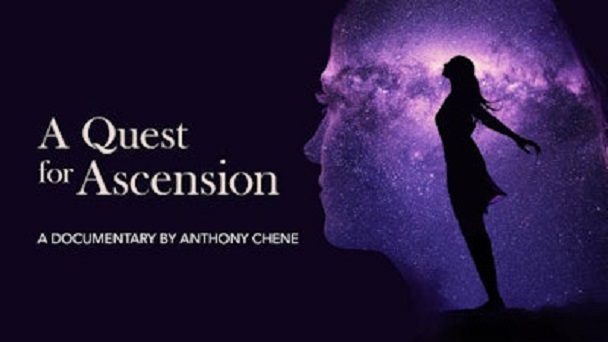
In the documentary A Quest for Ascension, available on Gaia, the topic of spiritual awakening is explored through important spiritual traditions such as early Christianity, shamanism, Buddhism, Hinduism, and Toltec wisdom. This documentary examines how ancestral wisdom can help us rediscover deep truths about who we truly are and the meaning of life, revealing the essential truth that all is one.
Signs of a Spiritual Awakening
Spiritual awakening often manifests through a series of clear signs that indicate a deep and ongoing shift in personal consciousness. These signs reflect significant transformations on both emotional and cognitive levels, acting as indicators of an internal process in full development.
- Existential questioning: A constant search for answers to big questions about the meaning and purpose of life, beyond the conventional explanations offered by society.
- Reevaluation of beliefs: A tendency to question and critically review fundamental beliefs about life, death, spirituality, and other essential topics.
- Increased intuition: A deeper and clearer connection with intuition, helping to make decisions more aligned with one’s authentic essence.
- Renewed sense of purpose: A renewed sense of direction and purpose in life, as if destined to fulfill a particular mission or role that contributes to collective well-being.
- Connection with nature: A stronger and more meaningful connection with nature, finding peace and harmony in its beauty and tranquility.
- More time in solitude: Comfort in spending more time alone, using those moments to reflect and connect with the inner self.
- Awareness of unity: The feeling of being part of something much greater, recognizing the connection with the whole and the interdependence of all life.
- Shift in perception of death: A changing view of death, seeing it as a natural part of the life cycle rather than something to be feared.
- Longing for meaning: A strong desire to live meaningfully, seeking to deepen the understanding of life and one’s role in the world.

The 5 Stages of Spiritual Awakening
The process of spiritual awakening can be understood through five stages, based on the archetype of the “Hero’s Journey” developed by Joseph Campbell. This scholar of mythology described the hero’s journey as a series of universal steps that heroes undergo in myths and legends, reflecting a profound personal transformation.
These stages not only represent a significant shift in one’s perception and understanding of themselves but also parallel the steps of the hero in their adventure toward discovery, trial, victory, and transformative return.
-
First Stage: The Call
The first stage, “The Call,” begins when disruptive events or deep dissatisfaction prompt the individual to question the foundations of their life. This awakening often starts with a feeling that something needs to change, whether due to a personal crisis or a deep longing for something more meaningful.
This moment may be accompanied by a series of signs, vivid dreams, or meaningful encounters that inspire the person to seek a deeper sense in life. Synchronicity plays an important role here, confirming the need for change.
-
Second Stage: The Dark Night of the Soul
In the Dark Night of the Soul, individuals face their deepest shadows and limitations. This stage is characterized by a period of intense introspection, where old identities and beliefs are challenged and often dismantled.
This period is seen as a test of faith and resilience, where the person must confront and overcome their inner demons. It is a stage of great suffering, but also immense transformation.
-
Third Stage: The Transformation
After the Dark Night of the Soul comes the stage of “The Transformation,” where the individual begins to integrate the new truths and perceptions they have discovered about themselves and the universe. This is a time of significant internal reconstruction, where values, beliefs, and new life purposes are redefined.
During this stage, the person may discover new abilities or talents that arise from their renewed understanding and spiritual connection. It is a period of great creativity and empowerment.
-
Fourth Stage: The Hermit
The Hermit stage is characterized by a period of introspection and voluntary solitude. In this phase, the individual withdraws from the distractions of the external world to deepen their new understanding and strengthen their spiritual connection.
During this time, the hermit develops a greater intimacy with their inner self and a deeper connection with the divine. It is a period of continuous learning and the establishment of spiritual practices.
-
Fifth Stage: Materialization
Finally, “Materialization” marks the culmination of the spiritual journey, where the individual emerges from retreat to put their renewed understanding and skills into practice. In this stage, concrete actions are taken that reflect internal changes, positively influencing the community and environment.
In this stage, the individual becomes a beacon of light and knowledge for others, sharing their wisdom and guiding others on their own spiritual journeys. Materialization creates a positive impact on the world, promoting collective change and evolution.
Practices to Integrate Spiritual Awakening
Going through a spiritual awakening can be as revealing as it is challenging. To integrate the shifts in perception, it’s essential to adopt practices that help anchor this new awareness. Meditating, journaling, and spending time in nature are effective ways to reconnect with the inner center.
Conscious writing allows you to give shape to your experiences, clarify thoughts, and process deep emotions. Contact with nature, in turn, helps regulate the emotional state and strengthens the sense of unity with life.
Creating spaces of silence, taking care of the body, and cultivating mindfulness help sustain balance amidst transformation. There is no one-size-fits-all formula: what matters is finding the practices that resonate with your process and maintaining them regularly.
Differences Between Spiritual Awakening and Awakening of Consciousness
Spiritual awakening and awakening of consciousness are closely related concepts but have clear distinctions in their focus and manifestations. Spiritual awakening focuses on the reconnection of the individual with their deepest essence and a higher sense of purpose that transcends the material self. It is associated with the search for meaning beyond the physical and tangible, inviting an exploration of spiritual and universal connections, and emphasizing transcendence and integration with the whole.
On the other hand, awakening of consciousness relates more to an increased perception and awareness of the environment and oneself within that context. This process involves heightened mental clarity and the ability to see clearly the structures and dynamics that govern personal and collective life. Although both processes can be simultaneous and complementary, each emphasizes different aspects of the human experience.
The Matrix: A Metaphor for Spiritual Awakening
The movie “The Matrix” serves as a powerful metaphor for spiritual awakening, representing the process of realizing the true nature of reality. In the story, the protagonist, Neo, discovers that the world he lives in is a simulation created to keep humanity under control. This discovery reflects the experience of spiritual awakening, where one becomes aware of the illusions and limitations of the material world and seeks a deeper truth.
Neo’s journey to free himself from the Matrix symbolizes the individual’s path toward enlightenment and connection with their true self. Like Neo, those who experience a spiritual awakening must question their beliefs and overcome internal and external obstacles. The choice of the “red pill” represents the courage needed to face the truth, leaving behind the comfort of ignorance to embrace freedom and self-knowledge.
The Best Books to Read During a Spiritual Awakening
During a spiritual awakening, certain books can provide valuable guidance on the journey. Here are some of the most influential works that can enrich the process for those undergoing this transformation:
- The Power of Now, by Eckhart Tolle: This book teaches how to live in the present moment and free oneself from emotional pain. Tolle explores the depths of consciousness and offers practices to focus on the now, an invaluable resource for those seeking a deeper connection with their essential being.
- Awareness: The Perils and Opportunities of Reality, by Anthony de Mello: De Mello combines Christian and Eastern wisdom to present stories and meditations that illuminate the path to spiritual awakening, emphasizing the importance of awareness in personal transformation.
- Siddhartha, by Hermann Hesse: This philosophical novel tells the spiritual journey of a man named Siddhartha in search of enlightenment. Through his experiences and encounters, the book offers profound lessons about life, the search for meaning, and the true nature of being.
- Conversations with God, by Neale Donald Walsch: This book presents itself as a dialogue between the author and God, addressing deep questions about life, purpose, and spirituality. It provides guidance for better understanding our relationship with the divine.
- Autobiography of a Yogi, by Paramahansa Yogananda: This book explores the life and teachings of one of the most influential yogis of the 20th century. Yogananda shares his mystical experiences and knowledge about meditation and yoga, offering inspiring guidance for those on their spiritual path.
About the Author

Name Numerology: What Your Name Says About You

Your name has been with you from the beginning: you hear it, sign it, respond to it, and carry it through every stage of your life. Rarely, however, do you stop to look at it closely. Numerology proposes exactly that: observing it not only as a form of identification, but as a key that can reveal aspects of your deeper identity.
In this article, we explore what your name reveals about you, which main numbers arise from it, and how to calculate them step by step.
Table of Contents
- Numerology and Its Relationship With Names
- The Three Main Numbers of Your Name
- How to Calculate the Numbers of Your Name Step by Step
- What Name Numerology Is For
Numerology and Its Relationship With Names
Numerology begins with a very ancient idea: that numbers are not only used to measure or count, but also hold a meaning of their own. Each digit, from 1 to 9, is associated with a set of specific qualities. The name is one of the elements this discipline uses as the basis for its interpretation, because it turns something as everyday as your letters into a symbolic key to who you are.
To arrive at that meaning, it starts from a simple principle: each letter corresponds to a number. In this way, your full name stops being only a set of sounds and becomes a sequence of digits that can be added together and interpreted. That sequence, once deciphered, begins to speak about your way of being.
There is something particular about working with the name: you did not choose it yourself, it was given to you at birth and, over time, became inseparable from who you are. Numerology uses it as a starting point to talk about you. What it offers, ultimately, is one more language for knowing yourself.
In the episode Numerology from the series The Other Side, available on Gaia, numbers are explored as a symbolic language for better understanding personal experience. There, numerology is presented not as a form of divination, but as a tool for observing who you are, how you show up in the world, and what patterns appear on your path.
The Three Main Numbers of Your Name
When working with the full name, there are three numbers that are considered especially important: the Destiny or Expression Number, the Soul Urge Number, and the Personality Number. Each one is calculated using a different part of the name and reveals a specific dimension of your way of being.
It may help to think of them as three levels of interpretation. One speaks of your visible potential, another of your inner motivation, and another of the image you project. They do not compete with each other: they complement one another.
-
The Destiny or Expression Number
The Destiny Number, also called the Expression Number, is calculated by adding all the letters of the full name. It is one of the broadest numbers in the analysis because it takes the entirety of the name into account, not just one part.
It is related to your talents, abilities, and personal resources. It speaks of the way you tend to act, create, solve, build, or communicate when you express your potential with greater clarity.
It does not indicate a fixed destiny or a series of inevitable events. Rather, it points to the tools you have available to move forward on your path and the way you can develop what is already within you.
-
The Soul Urge Number
The Soul Urge Number is calculated only with the vowels of the full name. In numerology, vowels are associated with a person’s innermost dimension: what they desire, value, and need in order to feel aligned.
This number can help you recognize what truly moves you, even when you do not express it in an obvious way. Sometimes it appears in quiet decisions: a choice that may seem illogical from the outside, but feels necessary within.
It can also reveal tensions between what you deeply want and what you do out of habit, obligation, or external expectation. That is why it is often a very useful number for reviewing motivations, relationships, and important decisions.
-
The Personality Number
The Personality Number is obtained from the consonants of the full name. Unlike the Soul Urge Number, it does not focus on what you feel inside, but on the way you show yourself to the outside world.
This number describes the first impression you can create, the type of energy you communicate, and certain traits that others often perceive easily. Depending on the result, it can speak of a more reserved, firm, sensitive, creative, practical, or expansive image.
Knowing it does not mean adjusting your behavior to be more pleasing to others. It helps you observe whether the way you are perceived matches what you feel you are, or whether there is something in the way you express yourself that you could refine in order to relate with greater authenticity.

How to Calculate the Numbers of Your Name Step by Step
To calculate these numbers, you first need to convert each letter into its corresponding value according to the Pythagorean table. Then you make different sums depending on the number you want to obtain: all the letters for the Destiny or Expression Number, only the vowels for the Soul Urge Number, and only the consonants for the Personality Number.
The process is simple, but it is best to do it calmly. Write your full name, separate vowels and consonants, and check each letter before adding. In names with accents or special characters, the base letter is usually used for numerological calculations.
-
The Pythagorean Table Letter by Letter
The Pythagorean table assigns a number from 1 to 9 to each letter of the alphabet. The full correspondence is as follows:
- 1: A, J, S
- 2: B, K, T
- 3: C, L, U
- 4: D, M, V
- 5: E, N, W
- 6: F, O, X
- 7: G, P, Y
- 8: H, Q, Z
- 9: I, R
With this table, you can convert any name into a numerical sequence. Then, you only have to add and reduce the result until you obtain a number from 1 to 9, unless a master number appears: 11, 22, or 33.
-
Practical Example With a Full Name
Let’s take the name Olivia Carter as an example. First, each letter is replaced by its numerical value:
O (6) + L (3) + I (9) + V (4) + I (9) + A (1) + C (3) + A (1) + R (9) + T (2) + E (5) + R (9)
The total sum is:
6 + 3 + 9 + 4 + 9 + 1 + 3 + 1 + 9 + 2 + 5 + 9 = 61
6 + 1 = 7
In this case, the Destiny or Expression Number is 7.
To calculate the Soul Urge Number, only the vowels are taken:
O (6) + I (9) + I (9) + A (1) + A (1) + E (5) = 31
3 + 1 = 4
The Soul Urge Number is 4.
To calculate the Personality Number, only the consonants are taken:
L (3) + V (4) + C (3) + R (9) + T (2) + R (9) = 30
3 + 0 = 3
The Personality Number is 3. In this way, the same name offers three different readings: one about the potential for expression, another about inner motivation, and another about the image projected toward others.
-
What to Do With Master Numbers (11, 22, and 33)
Master numbers in numerology are 11, 22, and 33. When a sum reaches one of these results, it is not reduced further. That is, if by adding the letters you obtain 11, you do not turn it into 2; if you obtain 22, you do not turn it into 4; and if you obtain 33, you do not turn it into 6.
These numbers are interpreted as vibrations of greater symbolic intensity. This means they may indicate a broader potential, but also more demanding challenges when it comes to integrating that energy into everyday life. They do not indicate that a person is “better” or “more advanced”; they simply require a more careful reading.
It is also useful to remember that each master number contains the base of its reduction: 11 is linked to 2, 22 to 4, and 33 to 6. That is why, when interpreting them, both their elevated qualities and their simpler, everyday expressions are observed.
What Name Numerology Is For
Knowing the numbers that arise from your full name can be a form of self-knowledge. This does not mean that every description will match you exactly, or that you should adjust yourself to a fixed interpretation. It works more like a mirror: it shows you certain tendencies so you can observe them, question them, and understand yourself better.
This reading can help you distinguish between what moves you inside, what you express through your actions, and what others perceive in you. Perhaps you discover that your Soul Urge Number points to a need for stability, while your Personality Number projects a much more changeable or restless image. That difference can give you clues as to why others sometimes expect an energy from you that does not always match what you truly need.
It can also be useful when making decisions. You can ask yourself: Does this respond to what truly moves me? Does it allow me to use my abilities? Does the way I am presenting myself reflect what I want to communicate? The answers do not depend only on a number, but the calculation can give you a concrete reference point from which to look more honestly.
As with the birth chart, numerology does not replace your discernment or fully define who you are. It offers a symbolic language for looking at your experience from another angle. Used with discernment, it can help you recognize patterns, organize inner questions, and make decisions that are more aligned with who you are, not only with what others expect to see in you.