What are Fractals?
If you look around you right now, depending on where you are, you’re likely to see to two distinct types of shapes: 1) blocky, linear and smooth if you’re in a manmade environment; or 2) branching, uneven and irregular shapes if you’re in a natural one. Why is there such a difference between the appearance of manmade and natural spaces? Why does one tend to look smooth, while the other looks rough? It comes down to one word: fractals.
A Brief History of Fractals
At the beginning of the 20th Century, mathematicians Pierre Fatou and Gaston Julia discovered fractal patterns while looking at complex mathematical systems. Back then, these objects defied linear analysis; they were considered aberrations or scary mathematical monsters, with infinite depth and complexity. They weren’t very popular and were forgotten until the late Belgium mathematician Benoit Mandelbrot discovered them again while working at IBM labs in Armonk, New York in 1980.
Fractals Contain Imaginary Numbers
To distinguish fractals from ordinary objects, you should know that fractal sets are created by algorithms that, in addition to ordinary integer numbers, also contain so-called “imaginary numbers”. This allows fractals to behave in much more complex ways, and describe more complex systems than ordinary numbers.
The Behavior of Fractals
Mandelbrot was the person who coined the word fractal. He used it to describe the behavior of financial markets and telephone line noise. The word fractal is derived from the word Greek “fractus,” meaning “fractured.” Mandelbrot noticed that telephone line noise is similar, whether you look at it over the course of an hour, a minute, or a second: you still see the same wave-form shape. In this sense, you can describe telephone line noise with a numerical dimension that applies at any time scale. The dimension defines the visual “roughness” of the signal; in other words, the dimension translates to how choppy it looks.
This is a very different type of geometrical logic than the one we were taught in school, where objects have a definite length and size. This is because, in school, we’re dealing with abstract objects that we imagine are perfectly linear and smooth. Nothing in the real world really looks like that!
If you take a look at almost anything natural under a microscope, you’ll see it’s full of fissures, pits and holes.
That’s because natural things are seldom perfectly flat beyond a certain scale. The closer you look, the more defects you’ll see.
Self-Similarity: Nature’s Preference
Nature seems to have a favorite type of shape: nature prefers that a structure looks similar whether you look at it close-up or from a distance. This is known as “self-similarity” and you can see it in almost any natural object or process you look at. You can see it in clouds, mountain ranges, coastlines, trees, your own hair, rivers, blood vessels, or the branching shape of your lungs.
In living things, fractal shapes allow them to maximize their surface area for exchanging energy or nutrients.
If all of your blood vessels were laid out end to end they would wrap around our Earth’s equator! Similarly, a fractal structure allows a tree to maximize the sun’s exposure to its leaves. There are many more leaves than branches and more branches than trunks.
Beyond Euclidian Geometry
Self-similar objects are those that look the same at any scale. They have lots of branches, are rough rather than smooth, and also tend to be very resilient to disturbances in their environments. The key characteristic of these fractal shapes is that, contrary to manmade things, they are not linear. Thus, they cannot be measured according to the principles of ordinary Euclidian geometry, which is the basis of modern geometry. You can’t get a definite measure of their length because their shapes do not resolve to a simple line.
The Challenge With Scale
A famous fractal example that Mandelbrot wrote about is the relation of fractals to the length of the coastline of England. While a standard automobile map would give a standard distance between two beaches on England’s coast, this is actually a fictitious number. The actual length, if you walked it, would be longer than the map shows because, in reality, you’re going to encounter rivers, inlets, eroded areas, and detours.
And if you were the size of a grain of sand walking along England’s coast, you would find even more spaces and detours, mainly between all the other sand grains that are larger than you. The smaller your ruler or yardstick, the greater the distance between two points on a self-similar, fractal object. This is because the coastline of England is not a straight but so-called “curvilinear.” (In case you are wondering, the fractal dimension of the West Coast of England is about 1.25: more dimensional than a straight line but less than a 2-D flat surface.)
Compare this with a Euclidean object like a flat sheet of glass. It’s smooth, with definite measurements of the distance between two points on the glass, whether measured in yards, feet, inches or even millimeters. It’s all the same distance at any real-world scale.
What is a Fractal Dimension?
Fractal objects are characterized as being “scale-free.” There’s no definite scale that defines them and their appearance looks the same no matter what the scale is. You can’t measure their absolute length but you can get a sense of their “roughness” and that’s what a fractal dimension is.
Clouds typically have a fractal dimension around 2.2 to 2.3, if you’re curious. That’s because clouds fill up more than a flat 2-dimensional surface like a tabletop, but are not entirely 3-dimensional because there’s so much space between the water drops. So they are actually objects that exist between dimensions! From the point of view of fractal geometry, clouds are truly interdimensional beings, as are many other natural things.
Take a tree, for example. The branching structure, as you move from the main trunk to the leaves or needles, become finer and smaller. You have one trunk but many branches and even more needles or leaves. The tree doesn’t completely fill it’s 3-dimensional space, as would a solid cube, but it’s much more than a flat surface. It’s an object between dimensions.
Fractal Flattening: The Hallmark of Modernity
Modern societies attempt to make things flat because they’re more manageable that way. Think of a highway, a dam, or an airplane propeller. Flatness adds to something’s predictability and controllability. I call this process “Fractal Flattening” and it’s a hallmark of modernity.
The author Dr. Edwin Abbott wrote a funny parody of this idea in 1884 in his book Flatland: A Romance of Many Dimensions. Abbott was making fun of Victorian England and its rigid attitudes. The story itself is about a society of flat shapes that don’t want to believe in or acknowledge the existence of complex shapes from Spaceland because they find them threatening to their social order.
Flattening Impacts Resiliency
The challenge and main drawback of flattening everything is that you reduce the amount of resiliency to sudden change and make things more vulnerable to catastrophes. For example, a fractal object like a tree can take a lot of wind as you see in a hurricane. Even if some branches snap off, you’ve still got all the other branches and the tree will grow back. It’s self-repairing, and so is the forest as a whole.
Now compare that to a manmade electrical grid with power lines going everywhere. If a few of those tree branches fall down on just a few powerlines during a hurricane, entire neighborhoods will lose power, sometimes for quite a long time. The system is not self-repairing and in fact, quite fragile.
Antifragile Systems Benefit From Stress
The author Nassim Taleb describes manmade systems that are vulnerable to stress as “fragile”. Conversely, those that benefit from disorder are “antifragile”. Antifragile systems are often characterized by fractal geometry, not linear structures. These anti-fragile systems benefit from chaos and grow stronger. (You can read more in Antifragile: Things That Gain from Disorder.)
The medical principle of hormesis states that some biological and living things can become stronger from stress. For example, small doses of a toxic agent can actually lead to immunity to that same agent. What is a poison at one dose can be a preventative medicine at another. Thus, fractal systems, because they are non-linear, can benefit from types of chaos that would topple manmade systems. In this way, stress can be beneficial to fractal systems.
Technology and Fractals
More recently fractals have been used to create the JPEG algorithm that is used to send pictures from one computer to another. The algorithm identifies self-similar patterns in pictures and allows them to be compressed. Similarly, fractals are used in satellite data compression. If you can identify repeating patterns in the data, you can summarize these as fractal equations which are faster to send wirelessly than every pixel in the raw picture.
In fact, modern cell phones use a fractal antenna shape to be able to work at different frequencies at the same time. Within the antenna are different shapes that correspond to the various radio bands that carry cell phone signals. These shapes are nested within one another so that even in a cell phone, many different frequencies are simultaneously at use. Research shows that fractal antennas perform at a higher efficiency than regularly shaped antennas like the old-fashioned whip antennas that used to be installed on cars.
Fractal Meditation
I often find it useful to meditate on fractal shapes when I’m walking or just relaxing. You’ll find if you do this it will help you feel connected to the larger natural forces that are all around you. It’s a great way to unwind and feel like your natural self.
Just spend a few minutes every day in the most natural environment you can find, or imagine one if you’re in a completely urban area. First, see and appreciate the branching structures you see around you whether they be trees, mountains, clouds, rivers, coastlines or entire galaxies.
Then visualize your own fractal structures like your hair, blood vessels, lungs, or beating heart which has its own unique fractal rhythm. Then imagine a connection between the fractal structures of your body and those in nature. Feel a sense of gratitude for this amazing geometry that nature has created for your body and your environment. Marvel at how well it works to keep you alive every moment of every day. And then see your boundless awareness stretching to the limits of the universe along with these fractal networks of matter and energy.
If you are struggling to call fractals around you to your mind’s eye, don’t distress. Watch this meditation series, featuring an enchanting flow of fractals.
Fractals and the Multiverse
One of my Taoist teachers, Mantak Chia, used to tell us that the structures that make up our body, like our hair, served as antennas to other worlds and dimensions.
He said we could pull in Chi energy from our environment and cautioned us not to cut our hair too short. In a sense, he was referring to how fractal shapes serve double duty as physical and resonant structures. In a sense, he was suggesting that we’re all fractal antennas!
We know that nature doesn’t waste anything. Wouldn’t it be amazing if all those fractal shapes we see in and around us not only contribute to physical resiliency but also serve as resonant antennas to parallel realities? In other words, the fractal shapes of trees allow them to collect a lot of energy from the sun. Perhaps it also lets them communicate with other tree worlds in parallel Earth realities. This is purely speculation on my part.
Take time to appreciate all the fractal structures in your life and how they support life in so many ways. And then the next time you’re designing something, consider whether it needs to be so straight, smooth or even. Perhaps your next project, task or work goal could benefit from some of nature’s fractal logic.
About the Author

The Toroid And Its Spiritual Power In The Creation Of The Universe
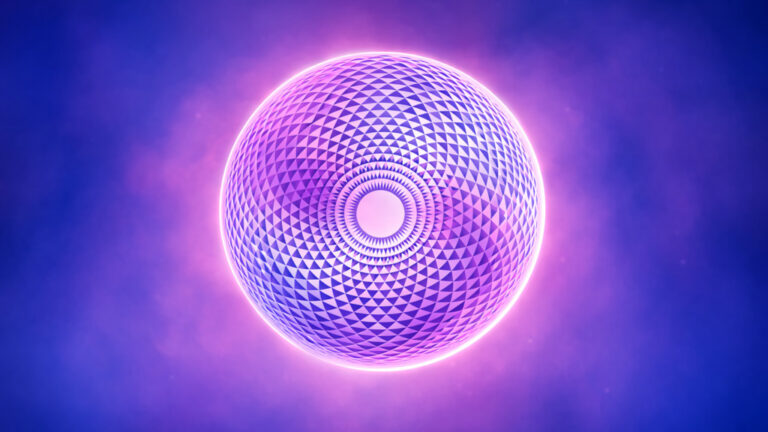
The toroid is a dynamic geometric figure that appears both in nature and in models of energy and consciousness. It represents a continuous flow that expands and contracts, symbolizing the balance between the internal and the external. In this article, we explore what the toroid is, how its energetic structure works, and its profound spiritual meaning.
Table of Contents
- What Is The Toroid And What Does It Represent Spiritually?
- Energetic Structure Of The Toroid: Form And Flow
- Origin And Use Of The Toroid In Different Traditions
- The Toroid As A Universal Symbol In Sacred Geometry
- How To Use The Toroid In Spiritual Practices
- The Power Of Toroidal Energy In The Expansion Of Consciousness
- Differences Between The Toroid And Other Sacred Symbols
What Is The Toroid And What Does It Represent Spiritually?
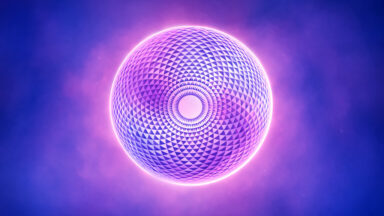
The toroid is a three-dimensional geometric shape that resembles a donut or ring with a flow of energy circulating from the center outward and then returning through the poles. This form is not only common in magnetic fields, cellular structures, or galaxies, but it is also considered a universal energy pattern. Its constant and self-regulating flow represents a self-sustaining system present in everything that has life.
From a spiritual perspective, the toroid symbolizes unity, the connection between the inner self and the universe, and the eternal cycle of creation. It is seen as a visible manifestation of how vital energy flows within each being and throughout the cosmos. Many traditions interpret it as a gateway to understanding expanded consciousness, since its perpetual movement reflects the natural rhythm of existence: inhaling and exhaling, giving and receiving, being born and being reborn.
Energetic Structure Of The Toroid: Form And Flow
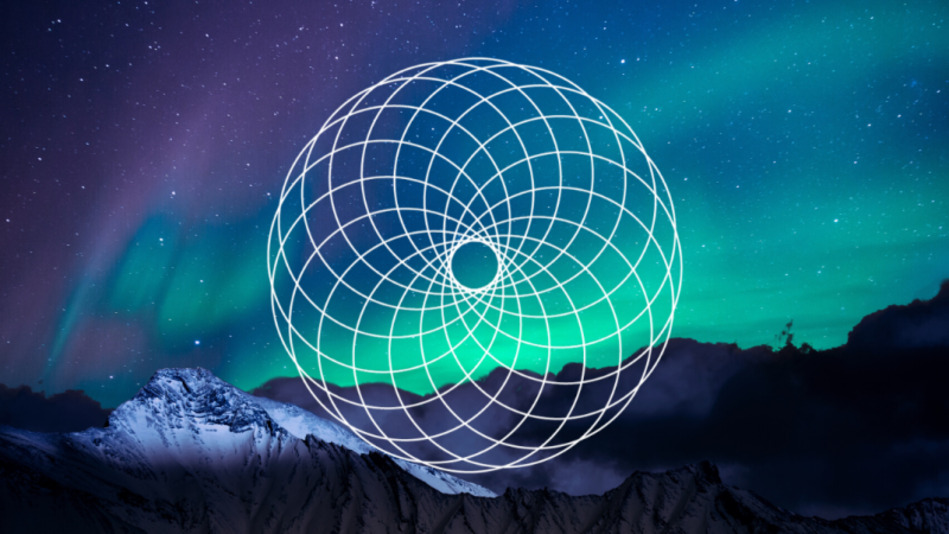
The structure of the toroid is based on a coherent energetic pattern that flows in a spiral from the center outward, and then returns through the poles in a continuous movement. This flow creates a toroidal form found in electromagnetic fields such as those of the Earth, the human heart, and even DNA. Its geometry reflects a perfect balance between expansion and contraction, making it a symbol of energetic self-regulation.
This flow organizes itself into a self-feeding structure, which allows energy to remain in motion without losing intensity. This principle is key in many energy healing practices, as working with toroidal forms can facilitate the cleansing of the auric field and the activation of energy centers. In addition, the toroidal shape allows energy to be distributed evenly in all directions, making it especially useful for vibrational alignment practices.
The toroid is also visualized as a model of expanded consciousness. In deep meditative states, many people report sensations of being immersed in an energetic sphere that pulses with its own rhythm, similar to a toroid. This subjective experience reinforces its spiritual meaning as a structure that connects the individual with the universal, serving as a bridge between the physical and the subtle.
Origin And Use Of The Toroid In Different Traditions
The concept of the toroid is not exclusive to modern science; it has been present in various cultures and spiritual traditions throughout history. In many ancient cosmologies, a circular or spiral movement is depicted connecting heaven and earth, spirit and matter. For example, in Hinduism, kundalini energy is described as a force that rises in a spiral, a dynamic that resembles toroidal flow.
In shamanic traditions, especially among Indigenous peoples of the Americas and Central Asia, the human being is visualized within an enveloping energy field that breathes and expands, very similar to the structure of a toroid. This field is understood as a matrix of spiritual power that can be harmonized through chanting, conscious breathing, and connection with nature. The drum, a central instrument in many rituals, is used to activate this flow and attune the person’s vibrational field with that of the Earth.
In Egypt and other Mediterranean cultures, the toroid appears implicitly in symbols that represent immortality, rebirth, and eternal energy. Although they did not name it as such, many of their graphics and hieroglyphs refer to circular forms that express the continuous return of energy to its origin. This ancestral understanding of energetic flows is now being rediscovered through quantum physics and sacred geometry.
The Toroid As A Universal Symbol In Sacred Geometry
Within Sacred Geometry, the toroid represents one of the most complete and harmonious energetic models of the universe. Its structure shows how energy moves in infinite cycles without losing strength, and how everything that exists is connected within a network of constant exchange. This form appears in multiple living systems and cosmic structures, making it a symbol of universal coherence.
On a spiritual level, the toroid is considered an energy field that connects all levels of being. It is the pattern that allows the circulation of prana or vital energy in practices such as yoga, qigong, or meditation. Its presence in energetic practices indicates its usefulness for activating and cleansing the auric field, encouraging the expansion of consciousness and the integration of the physical body with subtle planes.
In the series Sacred Geometry: Spiritual Science, available on Gaia, Dr. Robert J. Gilbert explores how the toroid acts as a key structure in the manifestation of energy. Through practical teachings and guided visualizations, the series shows how working with this geometric pattern can help align personal energy with universal fields, facilitating a deeper understanding of spiritual reality.
How To Use The Toroid In Spiritual Practices
The toroid can be integrated into different spiritual practices as a tool to harmonize the energy field, increase vitality, and facilitate deep meditative states. By visualizing its flow or working with objects that represent its shape, it is possible to activate a state of internal coherence and connect with broader levels of perception.
- Energy visualization: Imagining a toroidal field surrounding the body helps activate and cleanse the energy centers. This practice can be performed at the beginning or end of a meditation to enhance its effects.
- Conscious breathing: Coordinating the breath with the movement of the toroid (inhaling toward the center, exhaling outward) promotes calm and energetic expansion. It is useful for aligning body, mind, and spirit.
- Meditation with intention: Using the toroid’s shape as a focal point during meditation allows energy to be directed toward specific intentions. This supports conscious manifestation from a state of internal coherence.
- Working with crystals or physical geometry: Placing a toroidal object in the practice space helps stabilize the surrounding energy. It can also be used as an amulet or as the center of a spiritual altar.
The Power Of Toroidal Energy In The Expansion Of Consciousness
Toroidal energy not only describes a physical form but also represents a spiritual principle of integration and expansion. When meditating with this structure, an energetic field is activated that stimulates awareness of the present moment, allowing for a broader perception of reality. This helps the practitioner feel part of a greater system in which energy is in constant exchange with the universe.
The toroid, as a form of continuous flow, reflects the natural dynamics of consciousness: a pulse that moves from the center outward and returns. This image supports deep introspection and helps release mental or emotional blockages, promoting clarity and openness. Many people report experiences of unity, expansion, or connection with higher planes when working with the toroid.
When applied consistently, this pattern can become a tool for spiritual awakening. Its practice does not require technical knowledge, only attention and conscious intention. As this connection strengthens, the toroid becomes an inner guide that leads toward a state of greater balance, coherence, and presence.
Differences Between The Toroid And Other Sacred Symbols
Although the toroid shares certain principles with other sacred geometry symbols, its continuous flow dynamic distinguishes it by its ability to represent living, self-sustaining energetic processes. Unlike other symbols that are more static or structural, the toroid acts as an operational model of energy in motion, ideal for active practices of meditation, consciousness expansion, and energy healing.
- Flower of Life: Represents the static matrix of creation composed of interconnected circles. The toroid, by contrast, manifests that pattern in constant motion, showing how energy flows in real time.
- Metatron’s Cube: Contains all the fundamental geometric forms and is used as an energetic map. The toroid focuses on continuous flow and the self-sustaining nature of the energy field.
- Merkaba: Acts as a vehicle of spiritual ascension and has a more angular and defined shape. The toroid is more organic and reflects the natural movement of the human and planetary energy field.
- Sri Yantra: A symbolic diagram of the divine union between masculine and feminine, focused on static meditation. The toroid emphasizes dynamism and the constant interaction of energies.
- Seed of Life: Represents the beginning of creation and expansion from a central point. The toroid takes this idea and transforms it into a perpetual cycle of energetic feedback.