What Are Master Numbers and What Do They Mean in Numerology

In numerology, some numbers carry a different significance than the rest and are considered especially important within the numerological chart. These numbers appear in various calculations and are associated with a deeper level of personal development and more demanding processes.
In this article, we explore what master numbers are, why they are considered special, and what meaning they hold within numerology.
Table of Contents
- What Are Master Numbers and Why Are They Special?
- The Meaning of Master Numbers in Numerology
- How to Know If You Have a Master Number in Your Numerological Chart
- How to Integrate the Energy of Master Numbers Into Your Life
What Are Master Numbers and Why Are They Special?
Master numbers are those that, within numerology, hold a special significance and are interpreted differently from the rest. They are considered numbers with greater relevance within the numerological chart, as they are associated with deeper development processes and a broader potential.
Unlike other numbers, which are reduced to a single digit (for example, 14 becomes 5), master numbers are not simplified. This is because they are not interpreted the same way as single-digit numbers — they carry an additional meaning that can only be understood when kept in their original form.
The best-known master numbers are 11, 22, and 33, although some approaches also include 44 as an extension of this category. Each of these numbers combines the energy of its base number with a deeper level of development, which can manifest as greater sensitivity, responsibility, or capacity for influence.
Compared to single-digit numbers, which represent more defined and concrete qualities, master numbers imply a more demanding development process. This means their energy does not always express itself automatically — it requires awareness and inner work to manifest at its highest level.
In the series The Other Side, available on Gaia, numerology is presented as a tool for analyzing the relationship between numbers and human experience. In the Numerology episode, it is explained how this practice has evolved over time to illuminate behavioral patterns and inner processes.
The Meaning of Master Numbers in Numerology
Each master number holds a specific meaning within numerology and expresses a particular form of personal development. Although they share the characteristic of not being reduced and carrying a broader potential, each one is associated with distinct qualities, challenges, and forms of expression that influence the way a person lives their process.
-
Master Number 11
Master number 11 is associated with intuition, perception, and the ability to understand aspects that are not always apparent. It tends to appear in people with a heightened sensitivity, who easily pick up on what is happening around them and have a more direct connection with the emotional or symbolic.
At the same time, this sensitivity can generate instability or doubt if it is not managed consciously. The challenge of number 11 is learning to trust that perception without being overwhelmed by it, developing inner clarity and balance in the way what is perceived is interpreted.
-
Master Number 22
Master number 22 is linked to the ability to bring ideas into practice and build concrete results. Unlike the 11, which is more oriented toward perception, the 22 combines vision with action, making it possible to transform concepts into real and sustainable projects.
Its main challenge is sustaining that capacity over time without losing direction or falling under the pressure of achieving results. When expressed in a balanced way, the 22 can generate long-term impact, as it unites planning, commitment, and a clear vision of what it seeks to build.
-
Master Number 33
Master number 33 is related to accompaniment, responsibility toward others, and the ability to generate well-being in one’s environment. It is associated with an attitude of service, where the person tends to become involved in the growth or care of those around them.
However, this orientation can lead to overload if clear boundaries are not established. The learning of the 33 consists of helping without neglecting oneself, maintaining a balance between dedication to others and one’s own well-being.

How to Know If You Have a Master Number in Your Numerological Chart
Master numbers can appear in various results within a numerological chart, which is the analysis carried out from the date of birth and full name to understand different aspects of a person’s life. Through these calculations, it is possible to identify tendencies, challenges, and forms of personal development.
To find out if you have a master number, you first need to calculate the main numbers of your numerological chart and check whether an 11, 22, or 33 appears in any of them. If one of these numbers is present, it means that area of your chart expresses a more intense energy and a broader potential, which can manifest as greater sensitivity, responsibility, or depth in that aspect of life.
Master numbers can influence different areas of your chart, and each one shows how that potential expresses itself in your life:
- Life path number: Represents the general path of life and the most important lessons. If a master number appears here, it indicates a more demanding process, with challenges that drive deeper personal development.
- Destiny number: Related to what you are here to develop and express in the world. A master number in this position points to broader talents, but also a greater responsibility in how they are used.
- Soul number: Reflects what moves you internally and your deepest motivations. When a master number appears here, it indicates greater emotional intensity and a deeper inner search throughout life.
How to Integrate the Energy of Master Numbers Into Your Life
Integrating the energy of master numbers means understanding that this is a potential that develops over time. In many cases, this energy does not fully manifest from the beginning — it first expresses itself through the qualities of the base number, and over time it can evolve toward a deeper and more conscious form.
It is also important to learn to observe how it manifests in daily life. In many cases, this energy may first appear as challenge, doubt, or emotional intensity, before expressing itself more clearly. Identifying these patterns allows you to work with greater awareness and avoid rejecting aspects that are actually part of your own growth process.
Finally, integrating a master number means bringing that potential into the concrete. It is not only about understanding its meaning, but about applying it in decisions, relationships, and personal projects. When this energy is channeled in a practical and balanced way, it ceases to be an abstract idea and becomes a real tool for personal development.
About the Author
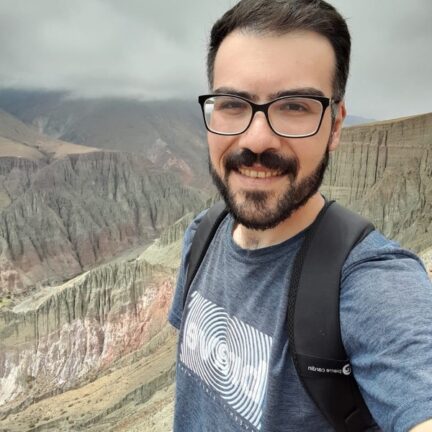
Who Is Matias De Stefano and What Is His Mission?

Matías De Stefano, born in Argentina and recognized as an indigo child from an early age, has become an influential educator of planetary consciousness with a mission that transcends cultural and spiritual boundaries. In this article, we explore his journey from his earliest childhood memories to his travels around the world—each marked by deep revelations and the activation of ancient energy networks.
Table of Contents
- Origins and Awakening of an Indigo Child
- Adolescence and the Path to Consciousness
- Harwitum: The Journey from North to South
- 11/11/11: A Transformational Milestone
- Roma Amor: The Journey to Reconnect the Energy Grid
- The Path of the Dragon: Activation of Leylines
- Iam: An Exploration of Universal Connection
- Gaia and the Expansion of His Message
- Matías De Stefano and His Future Projects
Origins and Awakening of an Indigo Child
From a very young age, Matías De Stefano was recognized as an indigo child, characterized by a heightened perception and an innate connection to spiritual knowledge. He grew up in Venado Tuerto, Argentina, where at just three years old, he began recalling details of past lives and the spiritual structure of the universe, sharing these visions with those around him.
As a child, Matías not only displayed an unusual maturity for his age but also had an exceptional ability to explain complex concepts about energy and the cosmos in an accessible way. These abilities became the foundation of his future mission, preparing him for a meaningful role in bridging ancestral spiritual traditions with modern quests for meaning and unity.
Adolescence and the Path to Consciousness
During his teenage years, he moved to Spain, where he continued his secondary education. This period abroad allowed him to explore new cultures and philosophies, broadening his worldview and deepening his understanding of the spiritual connections he had begun to explore since childhood.
After finishing high school, Matías enrolled in university with the intention of becoming a teacher, specializing in Education. Although he did not complete his degree, this phase was crucial for his spiritual and professional development. During those years, Matías deepened his study of spiritual dynamics and began outlining what would later become his most important projects.
It was during this time that he began to develop the idea for the Harwitum project and the organization of the 11/11/11 event, which would later mark the beginning of his global influence in the spiritual realm.
Harwitum: The Journey from North to South
The journey known as Harwitum began in 2011 and was an ambitious project that took Matías around the world, activating and reconnecting ancient energy lines that link sacred sites of spiritual and natural power. This north-to-south path aimed not only to revitalize Earth’s energy nodes but also to demonstrate the interconnectedness of all energetic points on the planet—from the pyramids of Egypt to the stone circles of Stonehenge.
During his Harwitum project, Matías visited key locations that represent the Earth’s energy nodes. In each place, he carried out ceremonies to revitalize these energetic connections, focusing on the reactivation of their spiritual and physical potentials.
This journey culminated in Antarctica, where he conducted a symbolic ceremony during the December solstice of 2012. This event not only marked the beginning of a new era in planetary consciousness—aligned with ancient Mayan prophecies—but also coincided with the creation of the Arsayian Foundation. This organization was founded to continue and give structure to the initiatives that began with Harwitum, aiming to expand and sustain the awakening of consciousness and the reorganization of social systems in harmony with the principles of Ater Tumti.
11/11/11: A Transformational Milestone
November 11, 2011, marked a key milestone in the trajectory of Matías De Stefano with the organization of a global event for meditation and the celebration of unified consciousness, held in Capilla del Monte, Argentina. This event, aligned with the numerology of 11/11/11, symbolized the opening to new dimensions of perception and served as a catalyst for the collective awakening of humanity. On that day, Matías coordinated ceremonies combining rituals and visualization practices focused on strengthening the global energetic network and raising the vibration of the worldwide community.
The impact of the event exceeded expectations, initiating a cycle of annual gatherings aimed at maintaining and expanding the energy generated on that day. The global resonance of this date not only reaffirmed Matías’s role in the consciousness movement but also strengthened his network of collaborators and followers around the world.
In the series The Journey of Remembering, available on Gaia, Matías De Stefano shares firsthand the key moments of his spiritual path, including the preparation and profound meaning of the 11/11/11 event. This docuseries offers an intimate and authentic view into the experiences that marked the beginning of his global impact on collective consciousness.
Roma Amor: The Journey to Reconnect the Energy Grid
Following the 11/11/11 event, Matías dedicated himself to the Roma Amor project in the historic city of Rome. This initiative was designed to strengthen and reactivate spiritual and cultural energy nodes through a series of activities that integrated ancestral knowledge with modern perspectives. In Rome—a place of significant spiritual and cultural importance—meditations, talks, and gatherings with both local and international figures were held, culminating in public events that attracted global attention.
One of the most remarkable moments was the encounter between Matías and Pope Francis, symbolizing the union of diverse spiritual and cultural currents. This meeting highlighted the importance of fostering interreligious dialogue and global cooperation. It reinforced the relevance of Matías’s mission on an international scale, showcasing his ability to connect ancient traditions with contemporary approaches to spirituality and peace.
The Path of the Dragon: Activation of Leylines
The Path of the Dragon was one of Matías De Stefano’s most emblematic expeditions, tracing a vibrant route across Asia and into the British Isles. Inspired by the form of a dragon—a classic symbol of wisdom and power—this route was intended to revitalize the “leylines”, invisible energy channels that, according to various traditions, cross and connect sacred sites around the world. This journey took Matías from the energetic Silk Road to temples in Bhutan, the vast landscapes of Mongolia, and the mysterious hills of Wales.
At each stop, Matías and his team performed carefully designed rituals to “awaken” and strengthen these energy channels, aiming to harmonize the spiritual and natural energies of each location. By activating these leylines, their goal was not only to rejuvenate ancient sites but also to deepen global understanding of how different cultures connect to and honor the Earth.
By documenting and sharing his journey, Matías inspired a growing number of followers to explore a deeper understanding of their own lives and their connection to the higher self. As he recounted his experiences and knowledge about the planet’s spiritual and energetic networks, he enriched his audience’s perspective, providing meaningful context for his program Iam.
Iam: An Exploration of Universal Connection
Iam is an initiative designed to help individuals reconnect with their essential origin and understand the interconnection of all forms of life. This project proposes an introspective journey, in which participants discover how, through multiple existences and experiences, we all emerge from a single source: the I Am. This concept reflects the belief that each human being is part of a greater whole—a “We Are” that, scattered throughout the universe, seeks to reunite and remember its common origin.
At the heart of Iam lies the desire to restore harmony between the dispersed parts of our consciousness. Using a blend of digital technology, in-person gatherings, and multimedia learning experiences, the project facilitates the reconnection of individuals with their ancestral stories and cosmic roles.
Each activity and gathering within Iam is designed to awaken ancestral memory, allowing individuals to see how their personal lives are interwoven with the broader fabric of history and the cosmos. This reconnection with one’s spiritual self not only aims to provide clarity and personal purpose but also encourages participants to contribute actively to building a more conscious and connected society.
Gaia and the Expansion of His Message
Through his series on Gaia, Matías De Stefano has expanded his reach, bringing his message to a global audience. In Initiation viewers explore ancient spiritual knowledge and rituals, gaining access to ancestral wisdom and understanding its relevance in the modern world. The series enriches viewers’ perception of our connection with the cosmos.
The Journey of Remembering offers a more personal perspective on Matías’s experiences and teachings. Through this production, viewers have the opportunity to witness his spiritual revelations and transformative moments, inspiring them to explore and deepen their own spiritual path.
Matías De Stefano and His Future Projects
Through various initiatives and collaborations, Matías De Stefano continues to expand his vision for the future, bringing his teachings on planetary consciousness and spiritual evolution to a global audience. His project Ontocracy, for example, explores new models of governance based on self-regulation and autonomy, inspired by biological systems that function without centralized authority. This revolutionary approach proposes a radical shift in how communities can organize and manage themselves, reflecting a deeper understanding of the interconnectedness among all living beings.
In addition, Matías continues with his series Iam, which guides individuals on the path toward their higher self, showing how they can deeply connect with themselves and co-create their reality. This project not only supports personal transformation but also aims to generate collective impact, encouraging participants to help shape a new civilization grounded in harmony and universal balance. With these projects, Matías not only envisions a more enlightened future but actively works toward making it a reality.