What Is Spiritual Awakening and What Are Its 5 Stages

Spiritual awakening is a transformative process through which a person connects with their deepest essence and the spiritual reality surrounding them. Below, we explore what spiritual awakening truly means and detail the five key stages that make up this inner journey, providing a guide for those seeking to deepen their own spiritual growth.
Table of Contents
- What Does It Mean to Have a Spiritual Awakening?
- Signs of a Spiritual Awakening
- The 5 Stages of Spiritual Awakening
- Practices to Integrate Spiritual Awakening
- Differences Between Spiritual Awakening and Awakening of Consciousness
- The Matrix: A Metaphor for Spiritual Awakening
- The Best Books to Read During a Spiritual Awakening
What Does It Mean to Have a Spiritual Awakening?
Experiencing a spiritual awakening means entering a state of consciousness where one’s perception of life, the universe, and the self undergoes a radical shift. This transformation leads to a deeper and more meaningful understanding of existence, marking the beginning of a path toward spiritual understanding and self-realization.
During this process, an interest in exploring profound existential questions awakens, seeking meanings beyond mundane concerns. The connection with the cosmos and the nature of being takes on new significance, fostering a sense of unity with everything around us.
As one goes through this process, they often experience a renewed sense of peace, an intensified feeling of unity with the world, and a detachment from worldly desires and conflicts. It is not merely a passing phase but a profound change that alters how one relates to their environment and themselves.
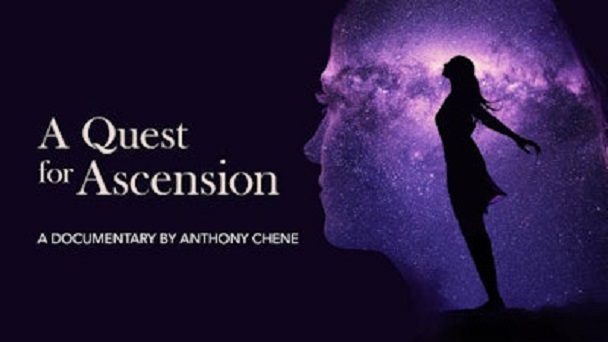
In the documentary A Quest for Ascension, available on Gaia, the topic of spiritual awakening is explored through important spiritual traditions such as early Christianity, shamanism, Buddhism, Hinduism, and Toltec wisdom. This documentary examines how ancestral wisdom can help us rediscover deep truths about who we truly are and the meaning of life, revealing the essential truth that all is one.
Signs of a Spiritual Awakening
Spiritual awakening often manifests through a series of clear signs that indicate a deep and ongoing shift in personal consciousness. These signs reflect significant transformations on both emotional and cognitive levels, acting as indicators of an internal process in full development.
- Existential questioning: A constant search for answers to big questions about the meaning and purpose of life, beyond the conventional explanations offered by society.
- Reevaluation of beliefs: A tendency to question and critically review fundamental beliefs about life, death, spirituality, and other essential topics.
- Increased intuition: A deeper and clearer connection with intuition, helping to make decisions more aligned with one’s authentic essence.
- Renewed sense of purpose: A renewed sense of direction and purpose in life, as if destined to fulfill a particular mission or role that contributes to collective well-being.
- Connection with nature: A stronger and more meaningful connection with nature, finding peace and harmony in its beauty and tranquility.
- More time in solitude: Comfort in spending more time alone, using those moments to reflect and connect with the inner self.
- Awareness of unity: The feeling of being part of something much greater, recognizing the connection with the whole and the interdependence of all life.
- Shift in perception of death: A changing view of death, seeing it as a natural part of the life cycle rather than something to be feared.
- Longing for meaning: A strong desire to live meaningfully, seeking to deepen the understanding of life and one’s role in the world.

The 5 Stages of Spiritual Awakening
The process of spiritual awakening can be understood through five stages, based on the archetype of the “Hero’s Journey” developed by Joseph Campbell. This scholar of mythology described the hero’s journey as a series of universal steps that heroes undergo in myths and legends, reflecting a profound personal transformation.
These stages not only represent a significant shift in one’s perception and understanding of themselves but also parallel the steps of the hero in their adventure toward discovery, trial, victory, and transformative return.
-
First Stage: The Call
The first stage, “The Call,” begins when disruptive events or deep dissatisfaction prompt the individual to question the foundations of their life. This awakening often starts with a feeling that something needs to change, whether due to a personal crisis or a deep longing for something more meaningful.
This moment may be accompanied by a series of signs, vivid dreams, or meaningful encounters that inspire the person to seek a deeper sense in life. Synchronicity plays an important role here, confirming the need for change.
-
Second Stage: The Dark Night of the Soul
In the Dark Night of the Soul, individuals face their deepest shadows and limitations. This stage is characterized by a period of intense introspection, where old identities and beliefs are challenged and often dismantled.
This period is seen as a test of faith and resilience, where the person must confront and overcome their inner demons. It is a stage of great suffering, but also immense transformation.
-
Third Stage: The Transformation
After the Dark Night of the Soul comes the stage of “The Transformation,” where the individual begins to integrate the new truths and perceptions they have discovered about themselves and the universe. This is a time of significant internal reconstruction, where values, beliefs, and new life purposes are redefined.
During this stage, the person may discover new abilities or talents that arise from their renewed understanding and spiritual connection. It is a period of great creativity and empowerment.
-
Fourth Stage: The Hermit
The Hermit stage is characterized by a period of introspection and voluntary solitude. In this phase, the individual withdraws from the distractions of the external world to deepen their new understanding and strengthen their spiritual connection.
During this time, the hermit develops a greater intimacy with their inner self and a deeper connection with the divine. It is a period of continuous learning and the establishment of spiritual practices.
-
Fifth Stage: Materialization
Finally, “Materialization” marks the culmination of the spiritual journey, where the individual emerges from retreat to put their renewed understanding and skills into practice. In this stage, concrete actions are taken that reflect internal changes, positively influencing the community and environment.
In this stage, the individual becomes a beacon of light and knowledge for others, sharing their wisdom and guiding others on their own spiritual journeys. Materialization creates a positive impact on the world, promoting collective change and evolution.
Practices to Integrate Spiritual Awakening
Going through a spiritual awakening can be as revealing as it is challenging. To integrate the shifts in perception, it’s essential to adopt practices that help anchor this new awareness. Meditating, journaling, and spending time in nature are effective ways to reconnect with the inner center.
Conscious writing allows you to give shape to your experiences, clarify thoughts, and process deep emotions. Contact with nature, in turn, helps regulate the emotional state and strengthens the sense of unity with life.
Creating spaces of silence, taking care of the body, and cultivating mindfulness help sustain balance amidst transformation. There is no one-size-fits-all formula: what matters is finding the practices that resonate with your process and maintaining them regularly.
Differences Between Spiritual Awakening and Awakening of Consciousness
Spiritual awakening and awakening of consciousness are closely related concepts but have clear distinctions in their focus and manifestations. Spiritual awakening focuses on the reconnection of the individual with their deepest essence and a higher sense of purpose that transcends the material self. It is associated with the search for meaning beyond the physical and tangible, inviting an exploration of spiritual and universal connections, and emphasizing transcendence and integration with the whole.
On the other hand, awakening of consciousness relates more to an increased perception and awareness of the environment and oneself within that context. This process involves heightened mental clarity and the ability to see clearly the structures and dynamics that govern personal and collective life. Although both processes can be simultaneous and complementary, each emphasizes different aspects of the human experience.
The Matrix: A Metaphor for Spiritual Awakening
The movie “The Matrix” serves as a powerful metaphor for spiritual awakening, representing the process of realizing the true nature of reality. In the story, the protagonist, Neo, discovers that the world he lives in is a simulation created to keep humanity under control. This discovery reflects the experience of spiritual awakening, where one becomes aware of the illusions and limitations of the material world and seeks a deeper truth.
Neo’s journey to free himself from the Matrix symbolizes the individual’s path toward enlightenment and connection with their true self. Like Neo, those who experience a spiritual awakening must question their beliefs and overcome internal and external obstacles. The choice of the “red pill” represents the courage needed to face the truth, leaving behind the comfort of ignorance to embrace freedom and self-knowledge.
The Best Books to Read During a Spiritual Awakening
During a spiritual awakening, certain books can provide valuable guidance on the journey. Here are some of the most influential works that can enrich the process for those undergoing this transformation:
- The Power of Now, by Eckhart Tolle: This book teaches how to live in the present moment and free oneself from emotional pain. Tolle explores the depths of consciousness and offers practices to focus on the now, an invaluable resource for those seeking a deeper connection with their essential being.
- Awareness: The Perils and Opportunities of Reality, by Anthony de Mello: De Mello combines Christian and Eastern wisdom to present stories and meditations that illuminate the path to spiritual awakening, emphasizing the importance of awareness in personal transformation.
- Siddhartha, by Hermann Hesse: This philosophical novel tells the spiritual journey of a man named Siddhartha in search of enlightenment. Through his experiences and encounters, the book offers profound lessons about life, the search for meaning, and the true nature of being.
- Conversations with God, by Neale Donald Walsch: This book presents itself as a dialogue between the author and God, addressing deep questions about life, purpose, and spirituality. It provides guidance for better understanding our relationship with the divine.
- Autobiography of a Yogi, by Paramahansa Yogananda: This book explores the life and teachings of one of the most influential yogis of the 20th century. Yogananda shares his mystical experiences and knowledge about meditation and yoga, offering inspiring guidance for those on their spiritual path.
About the Author

What Is the Third Dimension and What Is Its Spiritual Role

The third dimension is the level of existence in which form, matter, and the linear perception of time predominate. It is the plane where consciousness is experienced through the body, the senses, and duality. In this article, we explore what the spiritual 3rd dimension is from the perspective of Matías De Stefano, as explained in the series Initiation, available on Gaia.
Table of Contents
- What Is the Third Dimension?
- Differences Between the Third, Fourth, and Fifth Dimensions
- Depth and Matter in the Third Dimension
- The 3rd Dimension as the Plane of Sensory Reality
- Is Reality Real? The Illusion in the Third Dimension
- Spiritual Third Dimension: The Soul Incarnated in the Physical
- Why We Shouldn’t Escape the 3D
- The 3rd Dimension as the Foundation of the Higher Dimensions
What Is the Third Dimension?
The third dimension is one of the nine dimensions of the universe and represents the plane where energy takes physical form. Here, figures that arise from subtler dimensions acquire volume, density, and depth. It is not just a material space, but a structure of consciousness designed to experience reality through the tangible.
This plane is characterized by the perception of height, width, and depth, which allows for interaction with the environment through the senses. Consciousness at this level identifies with the body, with the linear passage of time, and with the idea of separation. It is at this point where contrasts are experienced: pleasure and pain, success and failure, light and shadow. All learning is built upon direct experience.
In the series Initiation, available on Gaia, it is explained that the third dimension is the setting where consciousness becomes matter to recognize itself through the senses. It is a necessary stage of the evolutionary process, where the soul can explore, practice, and transform its own energy into concrete experiences.
Differences Between the Third, Fourth, and Fifth Dimensions
These three dimensions are present simultaneously, but each one offers a different way of perceiving and processing reality. Understanding their differences helps to integrate the evolutionary path with greater clarity and awareness.
- Third dimension: This is the level of existence in which form, matter, and the linear perception of time predominate. Everything here is experienced through the body, the senses, and logic.
- Fourth dimension: This is the plane of time as a flexible structure, emotions, dreams, and energy in motion. It allows us to observe the internal processes behind what happens.
- Fifth dimension: This is the plane of expanded consciousness and a global vision. At this level, the unity of all things is perceived, and the soul’s purpose is accessed without judgment.
Depth and Matter in the Third Dimension
The main feature of the third dimension is depth. Unlike previous dimensions, which only allow for lines and flat shapes, this plane adds volume, enabling figures to become objects. Thanks to this depth, the abstract takes form and becomes tangible. This is the foundation on which all our material experience is built.
Matter in this dimension is not just something physical: it is the result of an energetic structure that has been densified. Every object is made up of patterns that originate from subtler dimensions but are organized in the third to form what we consider “real.” That is why, although objects appear solid, at their core they are fields of information vibrating at a specific frequency.
Understanding matter from this perspective allows us to see it not as something static, but as something in constant transformation. Nothing is completely solid or separate: everything is sustained by invisible relationships and by the energy that constitutes it. The third dimension is the point where those relationships become visible so we can explore them through the body and the senses.
The 3rd Dimension as the Plane of Sensory Reality
The third dimension is the only plane in which consciousness can be experienced through the five senses. Here, everything that is seen, touched, heard, smelled, or tasted acts as a path to knowing the world and oneself. This sensory interaction turns every experience into a learning opportunity. Consciousness immerses itself in matter to discover who it is through what it perceives.
This plane also allows the passage of time to be registered in a linear way, generating a sequence of moments: past, present, and future. That structure is essential for experience to have a narrative development, with causes, effects, and a sense of continuity. Thanks to this, we can build memories, make plans, and evolve within a logical framework. Without this sequence, organizing learning would be difficult.
Living in the third dimension does not mean being disconnected from the spiritual. On the contrary, this plane allows higher consciousness to be integrated through concrete actions. Every gesture, every relationship, and every decision offers the opportunity to align what we think, feel, and do. In this way, the physical doesn’t become a limitation, but a means to expand consciousness.

Is Reality Real? The Illusion in the Third Dimension
Although in the third dimension everything seems solid and separate, what we call “reality” is, in essence, a perception. What we touch, see, or feel is mediated by the senses and by the mind’s interpretation. That’s why what one person considers real can be completely different for another. Reality is not absolute—it is subjective and depends on the consciousness that observes it.
From a deeper perspective, matter is nothing more than energy organized into visible forms. What seems fixed is actually a vibration in constant motion. Even the most solid objects are made of expanding atoms, voids, and force fields. What we perceive as a “thing” is a mental construct based on stimuli and prior memories.
This understanding leads us to see the third dimension as a game of perception. It’s not a lie, but an illusion created so that consciousness can recognize itself in different scenarios. Understanding this doesn’t mean denying the physical—it means living it with greater awareness, knowing that what we experience is only one part of a much broader reality.
Spiritual Third Dimension: The Soul Incarnated in the Physical
The third dimension is not a realm foreign to the soul. On the contrary, it is the space where the soul projects itself in order to experience through the body and matter. To incarnate does not mean to “fall” into the physical, but to adopt a temporary form that allows one to feel, choose, create, and transform. From this perspective, living in this plane is an opportunity to explore consciousness from its limits.
When the soul incarnates in the third dimension, it faces the illusion of separation. This experience is necessary to develop identity, will, and a sense of self. It is through contrast that the possibility arises to recognize love, empathy, truth, or coherence. Each experience becomes a reflection that helps the soul remember who it truly is.
Embracing physical life as part of the spiritual path completely transforms how we inhabit this plane. Every sensation, every relationship, every obstacle has a purpose within the evolutionary process. The soul is not trapped in a body—it is using that body as a tool to expand, learn, and manifest its potential in a concrete plane.
Why We Shouldn’t Escape the 3D
There’s a common misconception that one must “escape” the third dimension to evolve spiritually. But this view stems from a rejection of the physical and the human experience, as if they were a mistake or a burden. In truth, this plane is not a punishment or a lower stage, but an essential part of consciousness’s journey. True growth happens by integrating it—not by avoiding it.
The third dimension brings challenges, but it also offers unique tools: the body, time, emotions, direct action. This is where everything learned in subtler levels is put into practice. If this plane is not fully lived, it becomes impossible to sustain the frequency of higher dimensions. Skipping stages only creates imbalance and confusion on the inner path.
To accept and inhabit this plane with presence does not mean resignation—it means embracing its purpose. The soul chose this dimension to evolve, and to escape it is to deny itself a vital part of the process. Only someone who has fully lived in the physical can integrate higher consciousness with stability, clarity, and coherence.
The 3rd Dimension as the Foundation of the Higher Dimensions
Far from being a separate dimension, the third is the base upon which the others are built. Every spiritual experience requires an anchor point in physical reality. Ideas, emotions, and intentions cannot expand unless they find a structure to support them. In this plane, that structure is the body, the environment, and everyday action.
Higher dimensions don’t float in some “beyond”; they are constructed from here. Every clear thought, every balanced emotion, and every coherent action creates the conditions to access more elevated states. There is no ascension without roots. The third dimension gives us those roots—the stability necessary to grow without losing center.
That’s why the more conscious life is in this plane, the more possibilities there are to open doors to other levels of reality. The depth developed through physical experience allows for expanded perception without disconnection. Instead of being an obstacle, the third dimension is the essential support for the soul’s evolution through all the other dimensions.